I must add--as you may have read previously in my blog--I agree somewhat with Mr. Savage to the point of over-diagnosis. I've even contemplated if Jenny McCarthy's son possibly has other diagnoses, and not autism. I wonder if a lot of the so-called "recovered" children were never really autistic to begin with. I have seen allergies wrongly labeled as ADHD and behavioral problems. This does happen. There are also parents, a very small amount, who essentially "shop" around for an autism diagnosis. I would feel comfortable saying there probably are children out there labeled as autistic, who in fact are not. But, surely, no one would even ponder that 99% or anywhere near that number, of those said to have autism really don't (and furthermore, that they are brats).
I will also say that I feel we have become a society who wants only instant gratification, and that includes forcing pills down your child's throat so they behave more appropriately. To put a child on medications (especially say a 2 or 3 year old) first, without attempting therapy and other help, should be strongly discouraged. And, to medicate a child just so they are more docile, to prevent stimming (which is not self-injury), and so forth (and not because the child has severe issues, is harming themselves, severe mood swings, etc.) really should not be an option. All too often, autistic individuals are drugged to near-coma states, locked up, and forgotten about. This should not be tolerated.
I also feel for Mr. Savage, apparently his brother died in a NY mental hospital. That has to be awful, to go through that first-hand. I don't know much of his experience, other than a brief statement I found. But agreeing with Mr. Savage on his views regarding medications for children and sympathizing with him over his brother, does not excuse the ignorant and inappropriate statements he made.
7/21/08
A Savage Side Note


6/13/08
Days of Our Lives, With Autism
Yes, autism once again comes to daytime soaps. "Days of Our Lives" will have an autism story line, starting June 24.
BURBANK, CA (June 10, 2008) – The growing autism crisis – which has recently drawn increasing national attention -- is addressed in a personal manner beginning in the June 24 episode of NBC's daytime drama “Days of our Lives” in an insightful story based on the experiences of the series' head writer, Dena Higley...
...Dr. Lexie Carver (Renee Jones) and Commissioner Abe Carver (James Reynolds), are told their 3-year-old son, Theo, has autism. The news of Theo's diagnosis is understandably hard for the couple to comprehend, but through the love and support of family and friends, and the love for their son, they learn a lot about their family and how to cope with this tremendous, new challenge.
Higley is married to Mark, her husband of 21 years, and together they have raised four children -- two biological and two adopted. Their eldest, son Connor, was diagnosed with autism at the age of 3. Now 19, Connor drives his own Mustang, has a black belt in Tae Kwon Do, recently graduated from high school and is preparing to go to college in Florida in the fall...
You can read the full story here. It's complete with words like "emotional trauma" and "autism crisis." Oh, they do mention "hope" and "achievement" as a "possibility." As if it's something that may happen. I think the story of Connor Higley (an autistic individual who has a black belt, drives, and is on his way to college) has potential to show the world another side of autism. But I won't hold my breath.
 This may be the last happy family portrait for the Carvers, knowing Autism Speaks' record. The early days of diagnosis (and perhaps all of childhood) will be dark and depressing we can assume. I wonder if there will be any silver linings, if they'll show any good from Lexie and Abe's day with their autistic child. One has to hope that at the very least neither Abe nor Lexie say they are pondering driving off a bridge with their autistic child.
I guess we can breathe a sigh of relief, since Autism Speaks has yet to fall to Katie Wright's belief in that autism is caused by vaccines and that biomedical intervention is the only way to go. Phew. Could you imagine TACA or Safe Minds taking this on? You'd have a child who was talking, smiling, giggling on the day the receive their vaccines. The next morning, the child is "in his own world," and the mother cries out "somebody took my son!" They are angry and devastated. Doctors lie to them, say there is nothing wrong, then ultimately diagnosis this child with autism. Desperate, they find their way to a DAN! doctor, spent thousands on various tests, and have their answer. The story line could be "vaccine injury" or "mercury poisoning" etc. They would show the child's treatments: GFCF diet, 20+ supplements, B12 injections, and chelation. Over the weeks, the child would begin speaking and "coming back" to the family. Ah yes...what a soap opera that would be.
On a side note, there's this study using soap opera (yes, soap operas) as therapy for autistic individuals.
6/8/08
Is Jenny Really An Autism Mom--and Why Should We Care?
Why am I concerned as to whether or not Jenny's son really is autistic? Why have I bothered to spend a few hours researching various conditions for these related posts? There are several reasons. First, I am not attacking Ms. McCarthy, I am simply trying to put some pieces together and ponder some possibilities (perhaps even offer insight). She herself has said several times now that her son no longer has autism, and that neurologists tell her he never had autism.
Most concerning is that her message is one of "recovery from autism," proclaiming that she "healed" her son. Why should parents pay attention at all, and even gain hope from, her son's supposed recovery in light of her now saying a. he no longer is diagnosed as having autism and b. doctors now say he never had autism? If you maintain that a certain treatment or diet "recovered" your child, there had better be zero doubt that this child has that which you claim to have recovered him from.
 How can Jenny McCarthy claim to be an "autism mom" or to have "recovered" her autistic child, if there's any possibility her son never even had autism? Why should any of us, and anyone in the public, listen to her? I think these are legitimate questions, and ones we all have the right to ask.
Is Jenny Really An Autism Mom? (Part 3)
On Autism and Diagnosis:
A final point on whether or not Jenny's son truly did have autism is on how his diagnosis came to be. Apparently, he was diagnosed by the "best doctor" in town or some such. Even the best doctors can make misdiagnoses, and even mistakes. Part of this depends on the information he is receiving, either from the parents or from other physicians. The other part is the doctor's own experiences through his education, training, and with other patients. Evan may very well have appeared autistic in this physician's office. He was lining objects up and flapping. With such an observation, combined with a history of speech delay and seizures, it's not hard to see how the diagnosis of autism could be reached.
However, I feel it's important to note that this was a second opinion. Ms. McCarthy wasn't happy with the epilepsy diagnosis she had received from a previous doctor. It's possible that autism clicked with her (she herself says "this man is right," see below), an autism diagnosis made more sense to her perhaps. It was a diagnosis that tied up those loose ends she was concerned about (the stimming, the language loss, etc.). I know we felt a certain sigh of relief when given particular diagnoses for our daughter. It was a "oh, now I get it" reaction. There was information to be given, some resolution, and sometimes more resources. It may seem odd to people who don't have children with health or developmental issues, why a parent would feel an ounce of relief from a diagnosis. But, as a parent, we often see a new diagnosis as something that wraps our concerns up in a nice, neat package. It almost makes the issues we are facing easier to consume and easier to understand.
From Jenny's interview on Oprah:
Two days later, a doctor diagnosed Evan with epilepsy. "[The doctor said], 'There's got to be someone with seizures on your side of the family.' I said, 'No, actually I know every branch. I know what's going on. There's nothing. No one [with] epilepsy," she says. "And they discharged us." Jenny says every instinct she had was telling her that her son was not epileptic—so she went for a second opinion. After spending 20 minutes with Evan, a neurologist gave Jenny what she describes as a devastating diagnosis—Evan had autism. "And boy, my mommy instinct said, 'This man is right,'" she says.I realize there are doctors so familiar with autism, they can apparently look at a child and give a fairly accurate diagnosis. That being said, do you want a "fairly accurate" diagnosis for your child, or a diagnosis based on hours of observation and information gathering? Our daughter had been followed by a neurologist for almost 3 years before we went for the official autism evaluation. She already had many diagnoses (apraxia, sensory processing disorder, developmental delay, static encephalopathy, and so on), and was receiving therapy for her needs. However, it was apparent her social and behavioral issues, combined with everything else, warranted an autism evaluation (to give us an answer, and to assist her in receiving proper school services, etc.).
With a rather hefty folder filled with records from our child's pediatrician, multiple specialists (including neurologist and geneticist), and her therapists, we headed into the psychologist's office. This psychologist was one of two "autism experts" in our area. She is one of those who can look at a child, and fairly accurately say autism or not. Still, she insisted on asking my husband and I questions, have us fill out surveys (together and separate, with her and at home), reviewing our child's extensive records, and interacting and attempting to play with my child. This was clearly a responsible thing to do. She was better able to educate us on autism (and specifically what that meant to our daughter), intervention and school recommendations, medications, and so on.
We went for 3 hour-long appointments, over the course of 3 weeks. And then, at the end of the month, we went back for our last appointment. We were handed a multiple page document, and the doctor reviewed her diagnosis (moderate autism, with a history indicative of moderate to severe autism). I have to say, I'd prefer to commit to 4 hours of testing and discussing to come to a diagnosis than 20 minutes of observing and asking questions.
Since a third opinion was never sought, it seems, we can't know what yet another physician would draw from Evan's case. Would the next doctor feel that his severe seizures had affected his language, and that perhaps he did have other neurological manifestations? We can't say for certain, but again, it could be a possibility.
*Disclaimer: I do not have any personal knowledge of Jenny McCarthy or her son's medical history, other than that made available to the public (via media outlets, et al). These are simply questions I feel worth raising, and ideas worth investigating.
Is Jenny Really An Autism Mom? (Part 2)
A Look At Auditory Processing, Allergies, and Autism:
Aside from, or in addition to, the possibility of epilepsy being the cause of developmental delays (and hence leading to a wrong diagnosis of autism) in Jenny's son, we can also look at auditory processing symptoms being similar to those of autism. In addition, a child suffering from food intolerances and/or allergies can have behavioral issues (or what looks like behavioral problems, from pain, discomfort, etc.). In recent interviews, Jenny has said her son continues to have some "auditory processing" issues.
More on Central Auditory Processing Disorder:
Early Signs & Symptoms:Nearly all of the CAPD symptoms can be seen in autistic children (specifically those with speech delays or language impairments), but again, there is more to the diagnostic criteria for autism than the symptoms listed for CAPD. Doctors really need to use caution when they throw out an "autism" diagnosis, especially when language and speech disorders can mirror symptoms of ASD's. I've seen this type of "warning" on speech apraxia websites, cautioning that there are some similarities with autism. So, is it possible that Jenny's son's proper diagnosis could be CAPD, with epilepsy?
* Difficulty following verbal directions.
* Echolalia (repeating back words and phrases without comprehension).
* Re-auditorization (repeating back what was heard, and then showing comprehension).
* A child who says "huh" or "what" and requires more repetitions of verbal input messages.
* Speech sound discrimination difficulties, especially in noise.
* Highly distractible/active.
* Unintelligible speech, but with adequate vocal inflection and gestures.
* Difficulty with memorizing names and places.
* Difficulty repeating words or numbers in sequence.
* May have speech or language "delays."
With regard to allergies or food intolerances causing or worsening behavioral or psychiatric issues, we can look at this study (Untreated Celiac Disease and Development of Mental Disorders in Children and Adolescents):
The two adolescents described in these cases had suffered from episodes of major depression and other mental disorders before receiving a diagnosis of CD. The subject in case 2 had severe psychiatric symptoms years before adolescence. Soon after commencement of a gluten-free diet, coinciding with a decrease in circulating IgA antiendomysium and IgA antitransglutaminase antibodies, both youngsters considerably improved without any specific psychiatric treatment, and both remained in remission for at least 1.5 years of follow-up. Although the possible role of unrecognized psychosocial factors in explaining the remission cannot be excluded, it seems likely that in these cases major depression and severe behavioral problems, along with their improvement, were causally related to CD and its treatment with a gluten-free diet.Certainly not direct proof of food intolerances (or in this case specifically Celiac Disease) can lead to or cause psychiatric disorders, but enough information to consider the possibility. So, again, if Jenny's son is a child with epilepsy (and associated delays) along with CAPD and/or food intolerances, all of that could add up to what looks like autism. It also would further explain this so-called "recovery" and why such improvement (apparently in speech and behavior) supposedly followed a switch to the GFCF diet (keep in mind, it may have been the epilepsy treatment helping the speech).
Since unrecognized CD may predispose the sufferer to serious mental disorders and behavioral problems, it should be taken into account in differential diagnosis in all age groups. The mechanisms involved in the etiology and pathogenesis of mental and behavioral disorders related to CD, and even to celiac-type gluten sensitivity, remain unresolved.
JUST MORE HYPOTHETICAL FOOD FOR THOUGHT...
*Disclaimer: I do not have any personal knowledge of Jenny McCarthy or her son's medical history, other than that made available to the public (via media outlets, et al). These are simply questions I feel worth raising, and ideas worth investigating.
Is Jenny Really An Autism Mom? (Part 1)
A Look At Epilepsy, Speech Delay, and Autism:
THIS IS ALL HYPOTHETICAL FOOD FOR THOUGHT. Jenny proclaims herself as the "Autism Mom" who speaks for all other "autism moms" and the "autism community." But, what if her son never really had autism? It's a fair question to ask, as Jenny herself has said in recent interviews: neurologists who see him now for epilepsy say he never had autism. What if, instead, he had a culmination of other disorders, that appeared similar to autism? Suppose a physician gave the "autism" diagnosis without really absorbing this child's medical history? Then what? Can anyone really consider Jenny an "autism mom" or as someone to "represent" anyone in the autism community? She has made quite a bit of money off of autism and out of promoting "recovery" for autistic children. Perhaps that is why she dismisses the neurologists who now tell her that her son was never autistic?
Okay, let's go back and review some medical history (as we know it, by Jenny).
We know that Jenny's son has epilepsy, he had at least 2 very serious seizures (to which I do absolutely sympathize with Jenny, I have seen my daughter turn blue, foam bubbling out of her mouth--those seizures are horrible to witness and scary as hell). Seizures, especially one that causes a child to go into cardiac arrest can cause neurological damage. Perhaps, that damage resulted in some "autistic-like" symptoms? It is very feasible that the epilepsy led to speech delays. Look at this study (that is very similar to the story of Jenny's son):
A 2-year-old boy presented with an early form of benign partial epilepsy with centro-temporal spikes (BCERS) and a severe speech delay. Family video analysis revealed an early regression of babbling and stagnation since the age of 12 months. Complete recovery occurred with anti-epileptic treatment. The deficit corresponded to a transient speech apraxia attributed to an epileptic disconnection of networks coordinating speech articulation. This observation is, to the best of our knowledge, the first demonstration that delayed emergence of language can be due to an epileptic dysfunction interfering with prelinguistic skills and therefore mimicking a developmental delay.Bold for emphasis by me, specifically the regression, stagnation, and "recovery" following proper seizure treatment. Interesting when we know that Jenny's son is/was treated for seizures (have not been able to confirm whether he is still on a seizure treatment). Also important to note, not every seizure medication will work for every patient with seizures. It is often trial and error until the correct medication and dose is found. Some patients have to try several drugs before properly controlling, and therefore treating, their epilepsy.
Jenny's son had adverse reactions to at least one seizure medication, so who knows how long it took for the anti-epileptic treatment to begin working (and when his "recovery" began). It's also unclear if her son still takes seizure medication. On CNN, she did say that "seizures, we still worry about" Now any parent with a child who has seizures, especially those as severe as Evan's, understands that their child requires epilepsy medicine (typically for at least 1-4 years following the last seizure, depending on type of seizure(s) and patient's history). So, certainly, her son is still on medication--if she, and the neurologists, still worry about seizures (again, especially with a history of such severe episodes).
I've seen many statements about Evan being misdiagnosed with epilepsy. As if, the autism itself explained the seizures, and erased an epilepsy diagnosis. It is true that a percentage (around 30%) of autistic people have seizures, but seizures are not part of the criteria for autism. My daughter has a seizure disorder and autism, adding "autism" to her medical records did not make her seizures an unnecessary diagnosis. I wonder why it seems Jenny is quick to say that the epilepsy was a mis-diagnosis, but the autism was an accurate one?
Moving on, epilepsy occurring at the same time as speech delay in young children is not that rare. And, it's well accepted that young children with speech delays can present similarly to children with autism. There may be some red flags in those children. Physicians need to be very skilled in diagnosing autism, and also in pediatric epilepsy and speech delays, in order to help differentiate between the them (and understand what a combination of any of those might present as). There is a definite link between some types of epilepsy and developmental delays:
It appears there's more than just a little evidence out there to suggest a child with epilepsy can also have developmental delays (specifically in areas of speech). It's clear that children with developmental delays can sometimes have "autistic-like" symptoms, and can also have sensory integration issues (which can lead to stimming and restrictive or repetitive movements, play, etc.). I would dare to say that there are more than a few children out there who were at one point diagnosed with autism, when in fact, they had epilepsy along with developmental delays.Certain types of epilepsy can be linked with learning, behavioural and speech and language difficulties. This is increasingly recognised and the risks are greater if epilepsy occurs before 2 years of age. Parkinson found that from a small study of children referred for assessment of their epilepsy, 40% had undiagnosed language impairment of varying degrees of severity.
Epilepsy can cause temporary loss of function in one or more parts of the brain. If these parts are involved with understanding, organisation and communication processing difficulties in using language can result. These difficulties can be severe, causing general delay in language development or a disordered pattern of language abilities.
The following epilepsy syndromes have associated language difficulties. They include:
• Landau Kleffner Syndrome
• ESES or Tassinari's Syndrome - now called CSWS (Continuous Spike Waves of Slow Sleep)
• Lennox-Gastaut Syndrome
• Temporal Lobe EpilepsySometimes the disability can be extremely subtle - such as high level language impairment disorder. They may have pragmatic difficulties and, therefore, will not have a clear understanding of language use. They can appear socially inept and can misread others' intentions. In these cases the child may exhibit bizarre or socially unacceptable behaviours or the child's language may appear to be 'odd' in an inconsistent way. They may have poor turn taking skills, excessive or restricted topic maintenance, and poor skills in greeting, questioning, seeking the attention of others, describing or commenting.
Some children may have episodes of slurred or disfluent speech. These episodes can occur suddenly and be unconnected with stress or other obvious 'trigger' factors. They can be caused by changes in medication and/or as a result of epileptogenic activity i.e. electrical activity in the brain which does not necessarily manifest itself as an obvious epileptic attack.
Lastly, Dr. Fernando Miranda pushes for more EEG's and MRI's to be a part of the autism diagnosis process. He has apparently found children at one time diagnosed with autism to have various epilepsy disorders (and more than likely, not autism). I for one am thankful that my daughter has had an MRI and several EEG's, the information gained can sometimes be invaluable--both to rule out or rule in various conditions.
*Disclaimer: I do not have any personal knowledge of Jenny McCarthy or her son's medical history, other than that made available to the public (via media outlets, et al). These are simply questions I feel worth raising, and ideas worth investigating.
4/28/08
Questions for David Kirby

"But I have personally identified at least a dozen (and there are reports of many more) children with cases in the court who meet the exact same medical criteria as Hannah, and whose cases will almost surely be compensated as well—each time with the attendant media fanfare."
I'm curious, how did he go about "personally identifying" these "dozen" children? Can Mr. Kirby offer any documentation of these children? Are parents whose court cases are pending in vaccine court consulting with him? Exactly what criteria is Mr. Kirby using, and what records does he have access to in order to "identify" these children?
Lastly, and most interesting to me, are the children that "meet the exact same medical criteria as Hannah." I am assuming these children have had muscle biopsies and diagnoses of mitochondrial disease, exactly like Hannah. Otherwise, they could not be categorized as having the "exact same medical criteria" as Hannah. So, I would be curious to know--have these children undergone mitochondrial and genetic testing? What were those results? How did Mr. Kirby gain access to those medical records?
More Mito Docs Speak...

Why any parent would prefer to try and gain understanding of the complexities of mitochondrial disease (something which is a difficult task for most pediatricians and other docs to do even) from a P.R. guy, or a lawyer, or anyone other than the mito experts is beyond me. If your child has a broken bone, would you take medical advice from your stock broker? Now, your stock broker is probably very intelligent, nicely groomed, and well-spoken, but again, wouldn't you rather ask his opinion on the markets than medicine? So, why are so many parents listening to David Kirby and others like it's the gospel?
Make an appointment with Dr. John Shoffner, or Dr. Salvatore DiMauro, or Bruce Cohen, to name a couple. Let them explain the ins and outs of mitochondrial disease. Ask them if vaccines cause it. Ask them what they think of the outcries from those on the anti-vax side. Then, and only then, can real discussion on this topic begin. When you have THE experts on mitochondrial disease, saying that vaccines didn't cause mitochondrial defects in Hannah Poling, what is there to question?
I suppose the anti-vax brigade will claim that "well, they are doctors on the CDC's payroll" or some such nonsense. Take your head out of your asinine conspiracy theory for just a moment. If the running idea is that all these docs are corrupt, out to make a buck, and covert agents for the government--wouldn't they be the ones saying, "yes, kids with autism probably all have mito disease, come get tested by me."
Talk about rolling in the dough. To get a good and thorough evaluation of mitochondrial diseases and other genetic abnormalities, you are easily looking at $20,000 - 40,000. That is PER patient. If every child involved in the omnibus gets such thorough evaluations, these doctors will be millionaires in no time. So, why would these doctors state that vaccines don't cause mitochondrial disease, and therefore, vaccines do not cause the autism (or autistic features) that can sometimes occur along with mitochondrial disease?
They aren't doling out shots in their clinics, so they're not getting paid by Big-Bad-Pharma to be spokespeople for the vaccines. Why would they "cover up" a link between mito and vaccines? For no reason, that's why. There is no link. These physicians have high ethical standards, and if it was found that vaccines indeed caused mitochondrial disease, they would be the first to say it. They are striving to find a cure for mitochondrial disease. There is no reason for them to deny a possible cause to a disease they are fighting to get rid of.
**Hats off to Kristina & Kevin for their coverage on this ever-developing story!
4/9/08
Can We Agree On This: Your Child Does NOT Have Autism?
So, I've been milling over this for a few weeks now. I realize some of my friends may disagree with me on it. I wonder if we are able to get past this hurdle, that perhaps those who are working for adult services can move forward, with real change?
Can we agree that perhaps, there are forms of autism--or perhaps something completely else (not autism, but rather vaccine encephalopathy or something like that?), that are either caused by or worsened by vaccines? Perhaps there are a very small number of children who have something going on with their mitochondria or their immune system, and it makes them susceptible to autistic-like features post-vaccine (or illness, allergen exposure, etc.). For those whose doctors can prove their child is such a case, step aside. I am not for the rebranding of autism ala Kirby, but for cases like these, I say call what your child has something other than autism.
Step aside, stand on a soapbox with a name other than autism. I realize you parents are passionate about your children, and about how you feel your child "became" autistic. But, what you may not realize, is that all the time you are in the media, writing, and visiting message boards spreading stories of so-called recovery and cures for autism, you are taking away from our message. Those of us who have either tried biomed treatments and had no success, those of us who have been tested for and found a proven genetic link, and those of us who feel strongly our child was born autistic--we are fighting for rights and services for our children when they become adults and for the many adult autistics living in the world today.
Every time someone goes on television or writes an article, telling the world that autism is reversible, or that an autistic child can be recovered, you are telling the world that there is no need for adult programs. If the message is that autism can be "cured," then why would anyone want to support or create services for adult autistics? if we can make a distinction between what your child has (not autism) and what my child has (autism), we can all move along further toward our (very different) goals.
Ethically, I have many disagreements with how autistics are often referred to by those who are adamant about recovery. I am saddened that so many parents have great difficulty seeing the gifts that their children are, and I also fear that such beliefs can pull some over the edge. But, for the sake of my child's future and for the benefit of adult autistics, I would be willing to overlook this for now. Allow us to make real change for our children--those who won't recover, and who will need some type of support throughout their adult years.
I am so tired of trying to fight the massive media attacks on vaccines, the profiles of those who have "successfully recovered" their children, and all the viciousness I feel from those who disagree with me. I want to blog and discuss all areas related to autism. However, lately it is those who are attempting to rebrand autism and find blame that are consuming the autism world. I'd love to move past this. Changing the diagnosis is the only way I can think of to make progress.
This is what I wrote when I was feeling much more stressed (& and frustrated, among other emotions) the other day:
TO THOSE WHO FEEL THEIR CHILD'S "AUTISM" WAS CAUSED BY MERCURY, VACCINES, ENVIRONMENTAL TRIGGERS, AND SO ON:
CAN YOU START CALLING YOUR CHILD'S CONDITION MITO DYSFUNCTION OR VACCINE INJURY OR SOMETHING OTHER THAN AUTISM? THEN YOU CAN PACK YOUR BAGS AND LEAVE THE ISLAND. MY CHILD HAS AUTISM, NOT FROM VACCINES OR ANY OTHER ENVIRONMENTAL FACTOR. PERHAPS ONE DAY, IT WILL BE PROVEN THAT SOME CHILDREN HAVE AUTISTIC-LIKE FEATURES OR SYMPTOMS BECAUSE OF ALLERGIES OR SOMETHING ELSE. FINE. GET YOUR DAN TREATMENT AND 'HEAL' YOUR CHILD. BUT, DO NOT SPEAK FOR ME OR MY CHILD. DO NOT POUR MILLIONS OF DOLLARS INTO THIS VACCINE FAR-FETCHED THEORY. YOU ARE NOT HELPING US. YOU ARE NOT DOING ANYTHING FOR MY CHILD. WHEN MY CHILD BECOMES AN ADULT, YOU WILL HAVE DONE NOTHING TO HELP HER. YOU WILL NOT HAVE CREATED ANY NEW PROGRAMS OR SERVICES FOR ADULT AUTISTICS. MY CHILD WAS NOT HIT BY A BUS, SHE WAS NEVER MOWED OVER. SHE WAS BORN WITH AUTISM. SHE IS DOING WONDERFUL, AND I LOVE HER MORE THAN WORDS COULD EXPRESS. I NEED ASSURANCE THAT THE FUTURE WILL BE A HOPEFUL ONE. I WANT OPTIONS FOR HER, AND I WANT SOCIETY TO RESPECT HER AND SEE HOW TRULY AMAZING SHE IS. YOU DO NOT SPEAK FOR ME, I AM NOT PART OF THE SO-CALLED AUTISM COMMUNITY YOU CLAIM TO BE REPRESENTING. GO FIGHT YOUR FIGHT, BUT DO NOT CLAIM IT AS MY BATTLE TOO.

3/8/08
"Evidence of Mitochondrial Dysfunction In Autism and Implications for Treatment"
That caught your eye, huh? Please read this publication: www.scipub.org/fulltext/ajbb/ajbb42208-217.pdf
Sounds rather startling at first. But then, when you dig a bit further, the reality of it all gets much clearer.
First of all, having mitochondrial dysfunction is NOT the same as having mitochondrial disease. It is not surprising that people with various neurological disorders would have abnormal lab results for these various markers. But it is a big leap to take those irregularities to mean someone has a mitochondrial disease. Or, to make an ever bigger leap to assume that those "cases," are those in which toxins played a role. This article wants you to assume that your child is not born with autism.
Then you come to the part where the "treatment" for these autistic children with "mitochondrial dysfunction" is, guess what? The DAN! Protocol, followed by supposed evidence of the benefits of HBOT. OH BOY! So, I do a few checks, and the two authors of this "piece" (it's not a study, merely a 4 3/4 page article, with 5 pages of references) are, no shock here, DAN! doctors. They have a facility in Melbourne, FL. They encourage IV chelation, HBOT, etc. to "treat" autism. They have now put a big fancy new label of "MtD" on autism, perhaps to convince more parents to "treat" their child?
The label and use of "MtD" instead of autism suggests that autism is in fact a physical disease, an illness, which requires treatment or a cure. This is precisely what TACA, DAN!, and others who view and depict autistics as less than human, that is what they would like you to believe. That also inflates their already fat pockets. This is all a disgusting ploy to get more money. And, we've all seen how parents struggling to "cure" their autistic child instead of love and accept them, we've seen the damage that can result in. I now see exactly where Mr. Kirby was going with his article. I'm fairly certain I have tracked down all of these so-called studies he is referring to and where his "fuzzy" statistics (depicted as fact, backed by scientific evidence & studies) came from.
I think I am more appalled then ever. I see now why this frenzy was started, and the vaccine lawsuits are the tip of the iceberg. It goes way beyond those court cases. I realize now that it is indeed all about money for the DAN! doctors and treatment centers and spreading their hurtful message. This furthers their agenda, that we should not accept autism or autistics.
3/7/08
Does My Autistic Child Have Mito?

FOR some years now, researchers have known that children with mitochondrial disorders can develop autism-like symptoms, or even full-blown autism. A 2005 study of 69 Portuguese children with autism found mitochondrial abnormalities that disrupted energy production in five of them, (Developmental Medicine and Child Neurology, DOI: 10.1017/S0012162205000332).
The big question is whether the girl whose family is due to receive damages would also have developed autism-like symptoms in the absence of vaccination (see main story).
Researchers contacted by New Scientist say that in very crude terms, children with mitochondrial disorders are especially at risk of neurological and muscular abnormalities because muscle and brain cells need so much energy. If mitochondria are faulty and don't supply enough energy, these cells are damaged. Lack of energy can also lead to encephalopathy, or disruption of brain structure, which can in turn cause autism-like symptoms. "Anything that messes up development can cause something that looks like autism," says Lindsey Kent of the University of St Andrews in the UK. But such symptoms are unusual. Mostly, children present with a wide range of developmental disorders of varying severity.
Kent also points out that mitochondrial diseases are very rare - just 5.7 per 100,000 individuals worldwide - and the subsets of disorders linked with autism even rarer. Kent says she is surprised that the court ruled in favour of the girl, arguing that the symptoms would probably have developed whether or not she had been vaccinated. "She has a clear mitochondrial genetic mutation, which is probably the cause of her developmental regression, autistic features and epilepsy," she says. "Whether or not the vaccine unmasked this will never be known, but it seems quite surprising."
Salvatore DiMauro, who has studied links between autism and mitochondrial mutations at Columbia University in New York, agrees. "My guess is that if she had a mitochondrial mutation, sooner or later she would have shown something abnormal," he says.
DiMauro says it's significant that the girl's genetic mutation was in the 16S ribosomal RNA gene, because these are very rare. Only four others are known. The gene plays a pivotal role in protein production, so any mutation that damages this function could have a huge impact on other mitochondrial genes and energy production by cells. "In the girl's case it would be important to prove protein synthesis is disrupted," he says.
DiMauro adds that in children who are "energy-challenged" because of mitochondrial disease, stresses including vaccination could trigger autism-like symptoms. "Children get worse in any stressful event, from having flu to having a vaccination," he says.
Kent says it's imperative in the wake of the ruling that parents don't lose confidence in vaccines. "That's what concerns me more than anything," she says. "My advice would be to carry on getting children vaccinated."
She says that screening for mitochondrial defects prior to vaccination would be very expensive, and unnecessary as most are very rare, and damage from mitochondrial disorders usually becomes apparent very early in infancy.
Andy Coghlan
It's also been said:
“When a common disease has features that set it apart from the pack, or when it involves three or more organ systems, think mitochondria.”
What if my autistic child has a mild form of mito?
Typically what we might think of as signs of "mild mito" would actually be more life-affecting than it sounds. Basically, the children I know who are "mildly" affected, they have developmental disabilities, migraines, seizures, failure to thrive and/or feeding difficulties (some have feeding tubes), some have chronic infections, gastrointestinal issues, trouble with temperature regulation, some require at least part-time use of a stroller/wheelchair, symptoms similar to 'mild' CP, etc. Regressions like seen in the case of Hannah Poling can also occur, following fever or illness. If a child has mitochondrial disease and it is affecting their body, even mildly, you will know.
Typically, labs are drawn because a physician is inquiring into why the child is having headaches, limping, nausea, illnesses, etc. The results (often a comprehensive metabolic profile, CMP) would point doctors in the direction of metabolic or mitochondrial disorder.
Before a good doctor would put your child through mito testing, they would review all of your child's medical history. If there is nothing significant aside from autism, the doctor will typically suggest alternative screening or to follow-up if child were to become ill or have more symptoms. They are not going to submit a child to invasive testing, without multiple signs or symptoms of mitochondrial disease.
In fact, when we saw the highly-regarded physician who ruled out mitochondrial disease (via biopsy) for our daughter, he remarked that our daughter didn't fit the classic mold of autism. That with all of her health issues and lab results, it was likely she had a genetic or other disease contributing to her medical conditions. Going into the testing, it looked fairly certain that our child would be found to have an underlying genetic disorder (some tests ran included Prader-Willi and Rett Syndrome) or mitochondrial disease. Remember, this is a child with a very large medical file. Her doctors still feel that in the future, a gene or other disorder will be identified that envelopes all of my child's health issues. So, if you bring a child in to see a "mito doc," and your child has classic autism, with no extenuating circumstances, they probably will send you home. There would be no evidence to warrant invasive testing.
If a parent has real concern for their child and some symptoms are there, request a CMP. This will more than likely put all your worries to rest.
For more information:
Mitochondria Research Society: discusses the variability of symptoms
United Mitochondrial Disease Foundation (UMDF)
Mitochondrial Diseases: One family shares their experience with mitochondrial disease, great section to read is "When Should I Suspect Mito?"
Mitochondrial and Metabolic Disease Center at UCSD
Important Note:
The term "mildly affected" in regards to mitochondrial disease is similar to the term "high functioning" in autism. It is subjective. If your child is said to be a "high functioning" autistic, typically because one is verbal, do they not struggle at all? I've known "high functioning" autistics who are unable to live by themselves, or work, or handle social situations. So, the level of functioning is in the eye of the person labeled, not the labeler. Likewise in "mildly affected" mitochondrial disease, that person could still die young or be hospitalized at a higher rate than the general population, and suffer very serious health issues.
DISCLAIMER: I am not a physician. I am simply a parent who has knowledge of mitochondrial disease and have more experience with mito than most parents. Other families with autistic children have reached out to me, wanting more information on mitochondrial disease. There is a lot of noise and excitement brought on by the concession case. I hope to help further explain mito to these families. The Content is not intended as a substitute for professional medical advice, diagnosis, or treatment. Always seek the advice of your physician with any questions you may have regarding a medical condition. Never disregard professional medical advice or delay in seeking it because of content found here. Thank you.
Autism & Mitochondrial Disease: Investigating Mortality Rates
What's curious, if this 'pool' of people with mitochondrial disease (with autism or autistic features) does exist, how is their health? Their mortality rate hasn't been altered, even a little? Even if the argument is made that this 'pool' of people would have a less severe form of mitochondrial, it would generally accepted that a person with mild mitochondrial disease would still be at a greater risk of associated diseases, raising the mortality rate.
A study done by Baylor College of Medicine, Texas Children's Hospital, State University of New York, Georgetown University, and Stanford University concluded this:
Patients with cardiomyopathy had an 18% survival rate at 16 years of age. Patients with neuromuscular features but no cardiomyopathy had a 95% survival at the same age. Conclusions. This study gives strong support to the view that in patients with RC defects, cardiomyopathy is more common than previously thought and tends to follow a different and more severe clinical course. Although with a greater frequency than previously reported, mitochondrial DNA mutations were found in a minority of patients, emphasizing that most mitochondrial disorders of childhood follow a Mendelian pattern of inheritance.
According to documented studies, the mortality rate amongst autistic individual is 3.4% (about double the expected rate). It must be noted that the deaths were attributed to choking (while unattended), pneumonia, and meningitis for institutionalized individuals. Those living independently or with their parents, one died following an epileptic attack, two others were from drug overdoses.
Another study, the largest ever done on autism and mortality, also concluded the mortality rate to be about double that of the general population. One could possibly draw the conclusion that the individuals who died while institutionalized, might have had a mitochondrial disorder. Perhaps that is why there were at risk and subsequently died from lung and breathing issues. That would still be a very small percentage--roughly 1.7%--of autistic people who might have an underlying mitochondrial disease. That is a fairly baseless conclusion, though, given that the same study concluded that individuals with more severe mental retardation had a three-fold increase in deaths from all causes (except cancer). So, no one is to say whether those 4 people died simply as a result of poor care or treatment in an institution or by an undiagnosed mitochondrial disease. There are too many variables. Either way, we are still looking at a relatively low rate of mortality, as opposed to the rate for individauls with mitochondrial disease (as high as 10-50%, depending on diagnosis, see below).
If 10-20% of autistic children (2,667-5,333), were to have mitochondrial disease, how is it that their mortality is absolutely unaffected. Apparently all have milder forms of mito? That none of them have died as a result of their mitochondrial disease? What is the hospitalization rate for autistic children? What is the same rate for children with mitochondrial disease (even mildly affected)?
We can see a trend from this study done by
Mitochondrial disease followed an episodic course, with periods of stasis or slow developmental progress, punctuated by neurodegenerative events in 18 (60%) of 30 patients. Intercurrent infection was recognized as a precipitant of neurodegenerative events in 13 (72%) of 18 patients with a history of episodic degeneration.
Conclusions Children and adults with mitochondrial disorders are at high risk for hearing loss and life-threatening complications of intercurrent infections. A constellation of audiologic abnormalities, multiorgan system involvement, and history of neuromuscular setbacks with infection strongly suggests mitochondrial disease. Knowledge of these features can lead to more rapid diagnosis and improved medical and surgical management for this special group of patients with fundamental defects in bioenergy metabolism.
I've yet to read about all these autistic children who have lost their hearing or have life-threatening, recurrent infections. So, we are to assume that every single child currently diagnosed with autism but who really has mito, somehow continually dodges the typical symptoms and health issues clearly marked by mitochondrial disease?
Is this worth studying? Yes. Scientists have done some preliminary studies, and they all conclude that further investigations are warranted. I don't think anyone is denying that a small percentage of children currently diagnosed with autism may eventually be diagnosed with mitochondrial disease. But, we must use caution and be careful when people begin to inflate those numbers, and misquote study findings.
3/1/08
Autism Speaks' 100 Day Kit
Autism Speaks has created a "100 Day Kit" for newly-diagnosed families. It is said to walk a family week by week, through those first 100 days after receiving an Autism diagnosis. I've never been a supporter of Autism Speaks, as anyone reading my blog can plainly tell. But, I am also one to give credit if and when credit is due. My initial reaction for this, is that it could be a great resource for parents. But, having vivid images of "Autism Everyday" and most of the talking points coming out of Autism Speaks reps, I also fear what could be in this kit.The 100 Day Kit includes basic information about autism and dealing with the news of a diagnosis. The personalized kit lists local service providers, support groups, recreational activities, sources of legal information, conferences, local autism and disability organizations and information about the local chapter of Autism Speaks. It provides insight into getting services for a newly diagnosed child and explains various available treatment options. A week-by-week action plan helps walk a family through the steps it needs to take to ensure that it is on the right track. The kit also includes a glossary of terms associated with autism, as well as a safety plan and a list of recommended books and informational web sites.
Will they advise newly-diagnosed families watch their "documentary" (not how I would categorize Autism Everyday)? Who exactly are the service providers? What books are they recommending? What treatments do they suggest? Do they make mention of DAN! or chelation etc.? My other concern is the support groups they list, the majority of them are cure-related or pathetic "why me?" gatherings. Those first 100 days are crucial, and at a time when parents are emotional and confused, a kit like this will make a tremendous impact. This issue is: will it be a positive impact? Will parents find themselves three months later seeing all the potential in their child? Or, will they be the next bunch of parents for Autism Everyday Part II?The 100 Day Kit was created by the Autism Speaks Family Services staff in conjunction with a professional advisory committee comprised of twelve autism professionals, a parent advisory committee that included parents from across the country, and members of the Autism Speaks Family Services Committee.
Shuttering to think exactly who was a part of this committee. The fact that Allison Tepper Singer is their executive vice president for communications and awareness, tells us a lot. Autism Speaks' irresponsibility in picking their "leaders" is apparent. I want to get my hands on this kit, it is available online. When I have some more time, I will read and digest its contents.
I hope this will be a helpful tool for families, it would be one of the first major things Autism Speaks has really done that would personally touch families. Only time will tell if this ends up being a saving grace for Autism Speaks, or the same old, disparaging, negative views we are accustomed to from this group.
The press release is available here: http://www.autismspeaks.org/press/100_day_kit.php


 This Way of Life

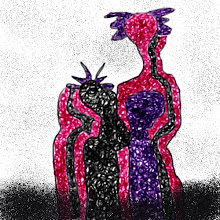


 "Autism is a way of being. It is pervasive; it colors every experience, every sensation, perception, thought, emotion, and encounter, every aspect of existence. It is not possible to separate the autism from the person."
- Jim Sinclair
"Autism is a way of being. It is pervasive; it colors every experience, every sensation, perception, thought, emotion, and encounter, every aspect of existence. It is not possible to separate the autism from the person."
- Jim Sinclair


