If someone feels they are an Indigo and they believe in this concept, that is one thing. I don't agree, but who am I to judge? However, if your beliefs are in any way detrimental to children, I take issue. Major issue. Here is the start of my concerns over the Indigo concept.
From here, it is suggested that "vibrations" will interrupt seizures, among other startling claims:
From vibrations sounded mentally that will interrupt seizures and stabilize brain function to attitude adjustments which free mind and body from long-standing, stagnation-producing concepts to the mental and emotional state of the comatose, the research is astounding and deserves to be noted, explored, and utilized more widely.
This site offers ill-advice for a febrile seizure:
If a seizure occurs, keep your child upright if possible and make sure she is breathing well. Reassure her. If she vomits, turn her on her side.
As a mother of a child who has seizures, this is awful advice. We have always been told to immediately put our child on a safe, flat surface (it would be impossible, at least during my child's grand-mal/tonic-clonic seizures to sit her up). If she begins to vomit, we turn her slightly on her side so she doesn't choke. Here is what NINDS advises:To prevent accidental injury, the child should be placed on a protected surface such as the floor or ground. The child should not be held or restrained during a convulsion. To prevent choking, the child should be placed on his or her side or stomach.
I fear that there may be children out there who are not being properly treated for seizures (thankfully, it seems Jenny does take her son's seizures seriously and he is treated medically for them, but others may not be so wise). It seems likely that a child diagnosed with ADHD, autism bipolar, etc. whose parents feel s/he is a Crystal, may not be afforded all available help or treatments. There are people who, despite the best efforts (at alternatives like talk therapy), they need antidepressants or anti-anxiety medications. Without, they can be at risk for suicide or other negative outcomes.
As I read more into the Indigo concept, I couldn't help but draw even more similarities to Scientology. The dangers that have come from Scientology's stance against all things psychiatric have been widely, and tragically, documented. I came upon this, and it would seem that New Earth Magazine looks highly upon L. Ron Hubbard (founder of Scientology):As an aside, L.Ron Hubbard of Scientology says that the more they can avoid the indoctrination of the school system, the better off they are in this world.
I think extreme caution has to be used when a group disregards medically-accepted diagnoses and treatments. They continually dispute scientific studies, promote conspiracy theories, and regurgitate the same information and sound bites over and over again. When this group storms Washington, D.C. and promotes an ongoing campaign to alter the (historically substantial and successful) vaccine system in the U.S., it is concerning. When this same group and its bombshell messenger employs tactics in an attempt to oust a government official, we need to take note. When they are given nearly free range on the media, to push their propaganda, we cannot sit idly by.
I've mentioned my concerns previously with regard to Ms. McCarthy and her message. Personally, I have nothing against her as a human being. I can relate to her, when she speaks of her son's seizures. However, the reality I face is that there is a startling lack of services for teen and adult autistics. My daughter is still rather young, and I do have time. However, I know plenty of other families and individuals who are in great need of those lacking services NOW. And, it's clear that unless major initiatives are made soon, we'll face the same issues with our daughter in a few years.
Jenny, despite what some will claim, has done nothing to further this effort. She continues the stigma that autistics have been "kidnapped" or her personal favorite, "hit by a bus." She focuses on recovery, telling the world she doesn't know of any adult autistics (so why bother creating any new programs?). Her loud cries that she would never vaccinate a child again and that she feels you should alter a proven vaccine program, is risky.
I worry for what the future will bring my child--will she have proper assistance? paths to independence? acceptance? And now I fear if I can protect her from outbreaks of whooping cough, measles, and the like. It's clear that this disturbing message will sink even further from my goals. We have no time to waste, to get programs created and funded for teen and adult autistics. This is all a huge distraction, one that unfortunately, all of the public is listening to.
You now know where this is headed. There is nothing funny here at all.
6/11/08
Warning: This Is Nothing To Laugh At


6/8/08
Is Jenny Really An Autism Mom--and Why Should We Care?
Why am I concerned as to whether or not Jenny's son really is autistic? Why have I bothered to spend a few hours researching various conditions for these related posts? There are several reasons. First, I am not attacking Ms. McCarthy, I am simply trying to put some pieces together and ponder some possibilities (perhaps even offer insight). She herself has said several times now that her son no longer has autism, and that neurologists tell her he never had autism.
Most concerning is that her message is one of "recovery from autism," proclaiming that she "healed" her son. Why should parents pay attention at all, and even gain hope from, her son's supposed recovery in light of her now saying a. he no longer is diagnosed as having autism and b. doctors now say he never had autism? If you maintain that a certain treatment or diet "recovered" your child, there had better be zero doubt that this child has that which you claim to have recovered him from.
 How can Jenny McCarthy claim to be an "autism mom" or to have "recovered" her autistic child, if there's any possibility her son never even had autism? Why should any of us, and anyone in the public, listen to her? I think these are legitimate questions, and ones we all have the right to ask.
Is Jenny Really An Autism Mom? (Part 3)
On Autism and Diagnosis:
A final point on whether or not Jenny's son truly did have autism is on how his diagnosis came to be. Apparently, he was diagnosed by the "best doctor" in town or some such. Even the best doctors can make misdiagnoses, and even mistakes. Part of this depends on the information he is receiving, either from the parents or from other physicians. The other part is the doctor's own experiences through his education, training, and with other patients. Evan may very well have appeared autistic in this physician's office. He was lining objects up and flapping. With such an observation, combined with a history of speech delay and seizures, it's not hard to see how the diagnosis of autism could be reached.
However, I feel it's important to note that this was a second opinion. Ms. McCarthy wasn't happy with the epilepsy diagnosis she had received from a previous doctor. It's possible that autism clicked with her (she herself says "this man is right," see below), an autism diagnosis made more sense to her perhaps. It was a diagnosis that tied up those loose ends she was concerned about (the stimming, the language loss, etc.). I know we felt a certain sigh of relief when given particular diagnoses for our daughter. It was a "oh, now I get it" reaction. There was information to be given, some resolution, and sometimes more resources. It may seem odd to people who don't have children with health or developmental issues, why a parent would feel an ounce of relief from a diagnosis. But, as a parent, we often see a new diagnosis as something that wraps our concerns up in a nice, neat package. It almost makes the issues we are facing easier to consume and easier to understand.
From Jenny's interview on Oprah:
Two days later, a doctor diagnosed Evan with epilepsy. "[The doctor said], 'There's got to be someone with seizures on your side of the family.' I said, 'No, actually I know every branch. I know what's going on. There's nothing. No one [with] epilepsy," she says. "And they discharged us." Jenny says every instinct she had was telling her that her son was not epileptic—so she went for a second opinion. After spending 20 minutes with Evan, a neurologist gave Jenny what she describes as a devastating diagnosis—Evan had autism. "And boy, my mommy instinct said, 'This man is right,'" she says.I realize there are doctors so familiar with autism, they can apparently look at a child and give a fairly accurate diagnosis. That being said, do you want a "fairly accurate" diagnosis for your child, or a diagnosis based on hours of observation and information gathering? Our daughter had been followed by a neurologist for almost 3 years before we went for the official autism evaluation. She already had many diagnoses (apraxia, sensory processing disorder, developmental delay, static encephalopathy, and so on), and was receiving therapy for her needs. However, it was apparent her social and behavioral issues, combined with everything else, warranted an autism evaluation (to give us an answer, and to assist her in receiving proper school services, etc.).
With a rather hefty folder filled with records from our child's pediatrician, multiple specialists (including neurologist and geneticist), and her therapists, we headed into the psychologist's office. This psychologist was one of two "autism experts" in our area. She is one of those who can look at a child, and fairly accurately say autism or not. Still, she insisted on asking my husband and I questions, have us fill out surveys (together and separate, with her and at home), reviewing our child's extensive records, and interacting and attempting to play with my child. This was clearly a responsible thing to do. She was better able to educate us on autism (and specifically what that meant to our daughter), intervention and school recommendations, medications, and so on.
We went for 3 hour-long appointments, over the course of 3 weeks. And then, at the end of the month, we went back for our last appointment. We were handed a multiple page document, and the doctor reviewed her diagnosis (moderate autism, with a history indicative of moderate to severe autism). I have to say, I'd prefer to commit to 4 hours of testing and discussing to come to a diagnosis than 20 minutes of observing and asking questions.
Since a third opinion was never sought, it seems, we can't know what yet another physician would draw from Evan's case. Would the next doctor feel that his severe seizures had affected his language, and that perhaps he did have other neurological manifestations? We can't say for certain, but again, it could be a possibility.
*Disclaimer: I do not have any personal knowledge of Jenny McCarthy or her son's medical history, other than that made available to the public (via media outlets, et al). These are simply questions I feel worth raising, and ideas worth investigating.
Is Jenny Really An Autism Mom? (Part 2)
A Look At Auditory Processing, Allergies, and Autism:
Aside from, or in addition to, the possibility of epilepsy being the cause of developmental delays (and hence leading to a wrong diagnosis of autism) in Jenny's son, we can also look at auditory processing symptoms being similar to those of autism. In addition, a child suffering from food intolerances and/or allergies can have behavioral issues (or what looks like behavioral problems, from pain, discomfort, etc.). In recent interviews, Jenny has said her son continues to have some "auditory processing" issues.
More on Central Auditory Processing Disorder:
Early Signs & Symptoms:Nearly all of the CAPD symptoms can be seen in autistic children (specifically those with speech delays or language impairments), but again, there is more to the diagnostic criteria for autism than the symptoms listed for CAPD. Doctors really need to use caution when they throw out an "autism" diagnosis, especially when language and speech disorders can mirror symptoms of ASD's. I've seen this type of "warning" on speech apraxia websites, cautioning that there are some similarities with autism. So, is it possible that Jenny's son's proper diagnosis could be CAPD, with epilepsy?
* Difficulty following verbal directions.
* Echolalia (repeating back words and phrases without comprehension).
* Re-auditorization (repeating back what was heard, and then showing comprehension).
* A child who says "huh" or "what" and requires more repetitions of verbal input messages.
* Speech sound discrimination difficulties, especially in noise.
* Highly distractible/active.
* Unintelligible speech, but with adequate vocal inflection and gestures.
* Difficulty with memorizing names and places.
* Difficulty repeating words or numbers in sequence.
* May have speech or language "delays."
With regard to allergies or food intolerances causing or worsening behavioral or psychiatric issues, we can look at this study (Untreated Celiac Disease and Development of Mental Disorders in Children and Adolescents):
The two adolescents described in these cases had suffered from episodes of major depression and other mental disorders before receiving a diagnosis of CD. The subject in case 2 had severe psychiatric symptoms years before adolescence. Soon after commencement of a gluten-free diet, coinciding with a decrease in circulating IgA antiendomysium and IgA antitransglutaminase antibodies, both youngsters considerably improved without any specific psychiatric treatment, and both remained in remission for at least 1.5 years of follow-up. Although the possible role of unrecognized psychosocial factors in explaining the remission cannot be excluded, it seems likely that in these cases major depression and severe behavioral problems, along with their improvement, were causally related to CD and its treatment with a gluten-free diet.Certainly not direct proof of food intolerances (or in this case specifically Celiac Disease) can lead to or cause psychiatric disorders, but enough information to consider the possibility. So, again, if Jenny's son is a child with epilepsy (and associated delays) along with CAPD and/or food intolerances, all of that could add up to what looks like autism. It also would further explain this so-called "recovery" and why such improvement (apparently in speech and behavior) supposedly followed a switch to the GFCF diet (keep in mind, it may have been the epilepsy treatment helping the speech).
Since unrecognized CD may predispose the sufferer to serious mental disorders and behavioral problems, it should be taken into account in differential diagnosis in all age groups. The mechanisms involved in the etiology and pathogenesis of mental and behavioral disorders related to CD, and even to celiac-type gluten sensitivity, remain unresolved.
JUST MORE HYPOTHETICAL FOOD FOR THOUGHT...
*Disclaimer: I do not have any personal knowledge of Jenny McCarthy or her son's medical history, other than that made available to the public (via media outlets, et al). These are simply questions I feel worth raising, and ideas worth investigating.
Is Jenny Really An Autism Mom? (Part 1)
A Look At Epilepsy, Speech Delay, and Autism:
THIS IS ALL HYPOTHETICAL FOOD FOR THOUGHT. Jenny proclaims herself as the "Autism Mom" who speaks for all other "autism moms" and the "autism community." But, what if her son never really had autism? It's a fair question to ask, as Jenny herself has said in recent interviews: neurologists who see him now for epilepsy say he never had autism. What if, instead, he had a culmination of other disorders, that appeared similar to autism? Suppose a physician gave the "autism" diagnosis without really absorbing this child's medical history? Then what? Can anyone really consider Jenny an "autism mom" or as someone to "represent" anyone in the autism community? She has made quite a bit of money off of autism and out of promoting "recovery" for autistic children. Perhaps that is why she dismisses the neurologists who now tell her that her son was never autistic?
Okay, let's go back and review some medical history (as we know it, by Jenny).
We know that Jenny's son has epilepsy, he had at least 2 very serious seizures (to which I do absolutely sympathize with Jenny, I have seen my daughter turn blue, foam bubbling out of her mouth--those seizures are horrible to witness and scary as hell). Seizures, especially one that causes a child to go into cardiac arrest can cause neurological damage. Perhaps, that damage resulted in some "autistic-like" symptoms? It is very feasible that the epilepsy led to speech delays. Look at this study (that is very similar to the story of Jenny's son):
A 2-year-old boy presented with an early form of benign partial epilepsy with centro-temporal spikes (BCERS) and a severe speech delay. Family video analysis revealed an early regression of babbling and stagnation since the age of 12 months. Complete recovery occurred with anti-epileptic treatment. The deficit corresponded to a transient speech apraxia attributed to an epileptic disconnection of networks coordinating speech articulation. This observation is, to the best of our knowledge, the first demonstration that delayed emergence of language can be due to an epileptic dysfunction interfering with prelinguistic skills and therefore mimicking a developmental delay.Bold for emphasis by me, specifically the regression, stagnation, and "recovery" following proper seizure treatment. Interesting when we know that Jenny's son is/was treated for seizures (have not been able to confirm whether he is still on a seizure treatment). Also important to note, not every seizure medication will work for every patient with seizures. It is often trial and error until the correct medication and dose is found. Some patients have to try several drugs before properly controlling, and therefore treating, their epilepsy.
Jenny's son had adverse reactions to at least one seizure medication, so who knows how long it took for the anti-epileptic treatment to begin working (and when his "recovery" began). It's also unclear if her son still takes seizure medication. On CNN, she did say that "seizures, we still worry about" Now any parent with a child who has seizures, especially those as severe as Evan's, understands that their child requires epilepsy medicine (typically for at least 1-4 years following the last seizure, depending on type of seizure(s) and patient's history). So, certainly, her son is still on medication--if she, and the neurologists, still worry about seizures (again, especially with a history of such severe episodes).
I've seen many statements about Evan being misdiagnosed with epilepsy. As if, the autism itself explained the seizures, and erased an epilepsy diagnosis. It is true that a percentage (around 30%) of autistic people have seizures, but seizures are not part of the criteria for autism. My daughter has a seizure disorder and autism, adding "autism" to her medical records did not make her seizures an unnecessary diagnosis. I wonder why it seems Jenny is quick to say that the epilepsy was a mis-diagnosis, but the autism was an accurate one?
Moving on, epilepsy occurring at the same time as speech delay in young children is not that rare. And, it's well accepted that young children with speech delays can present similarly to children with autism. There may be some red flags in those children. Physicians need to be very skilled in diagnosing autism, and also in pediatric epilepsy and speech delays, in order to help differentiate between the them (and understand what a combination of any of those might present as). There is a definite link between some types of epilepsy and developmental delays:
It appears there's more than just a little evidence out there to suggest a child with epilepsy can also have developmental delays (specifically in areas of speech). It's clear that children with developmental delays can sometimes have "autistic-like" symptoms, and can also have sensory integration issues (which can lead to stimming and restrictive or repetitive movements, play, etc.). I would dare to say that there are more than a few children out there who were at one point diagnosed with autism, when in fact, they had epilepsy along with developmental delays.Certain types of epilepsy can be linked with learning, behavioural and speech and language difficulties. This is increasingly recognised and the risks are greater if epilepsy occurs before 2 years of age. Parkinson found that from a small study of children referred for assessment of their epilepsy, 40% had undiagnosed language impairment of varying degrees of severity.
Epilepsy can cause temporary loss of function in one or more parts of the brain. If these parts are involved with understanding, organisation and communication processing difficulties in using language can result. These difficulties can be severe, causing general delay in language development or a disordered pattern of language abilities.
The following epilepsy syndromes have associated language difficulties. They include:
• Landau Kleffner Syndrome
• ESES or Tassinari's Syndrome - now called CSWS (Continuous Spike Waves of Slow Sleep)
• Lennox-Gastaut Syndrome
• Temporal Lobe EpilepsySometimes the disability can be extremely subtle - such as high level language impairment disorder. They may have pragmatic difficulties and, therefore, will not have a clear understanding of language use. They can appear socially inept and can misread others' intentions. In these cases the child may exhibit bizarre or socially unacceptable behaviours or the child's language may appear to be 'odd' in an inconsistent way. They may have poor turn taking skills, excessive or restricted topic maintenance, and poor skills in greeting, questioning, seeking the attention of others, describing or commenting.
Some children may have episodes of slurred or disfluent speech. These episodes can occur suddenly and be unconnected with stress or other obvious 'trigger' factors. They can be caused by changes in medication and/or as a result of epileptogenic activity i.e. electrical activity in the brain which does not necessarily manifest itself as an obvious epileptic attack.
Lastly, Dr. Fernando Miranda pushes for more EEG's and MRI's to be a part of the autism diagnosis process. He has apparently found children at one time diagnosed with autism to have various epilepsy disorders (and more than likely, not autism). I for one am thankful that my daughter has had an MRI and several EEG's, the information gained can sometimes be invaluable--both to rule out or rule in various conditions.
*Disclaimer: I do not have any personal knowledge of Jenny McCarthy or her son's medical history, other than that made available to the public (via media outlets, et al). These are simply questions I feel worth raising, and ideas worth investigating.
6/5/08
FYI: Jenny On Fox Tomorrow Night
Jenny McCarthy will be on Fox News' On The Record with Greta Van Susteren tomorrow night (10pm E/9pm C).
The Autism Whisperer Cometh
From Jim Carrey's speech during the "Green Our Vaccines" really.Autism is everywhere. It's on every street, in every town. It's a warning from the universe that there is a serious imbalance in our environment and that immediate changes must be made.
Woah--almost sounds like some of that new-age Indigo type of talk. I wonder if he is a crystal? He continues on,
To quote Burton Goldberg, an expert on the new age of medicine, 'autism is the canary in the coal mine.'Bev at Asperger Square 8 has a different take on the canary metaphor (which apparently is also popular with a one Dr. Bryan Jepson). Dr. Burton Goldberg, I feel it should be noted (since we are referencing autistic children, vaccines, and other medical-related issues) received his Doctor of Humanities Hon. from a Capital University of Integrated Medicine (it may also be of interest that this school closed down in June 2006). He is a publisher, and the self-proclaimed "Voice of Alternative Medicine." That's right--he is not a medical physician.
Mr. Carrey continued on with the importance of trusting a mother's instinct, not trusting the government, and bashing the drug companies. He then adds, in reference to the pharmaceutical companies:
...they are far too busy fighting the scourge of restless leg syndrome.Roars of laughter, hollering, and applause. He continues,
Also known as lazy ass disease.This also is met with screams and yelps and more laughter. I loved it the one time when I was at a fund-raiser for cancer research, the speaker cracked a joke about people with diabetes. It was hysterical! Oh, wait, that never happened. That would never happen--would it? No, I think only people with the mindset that autistic individuals (along with any person with a neurological or mental difference, disability, or disorder) are not afforded the same respect or rights as others would say such a thing.
There is making light of one's differences, and then there is outright bashing. This was not funny (although it appears the audience was rather entertained), and certainly not amusing to the people who really do suffer from Restless Leg Syndrome. My mother has it. She is not on one of the new medications for it, but on some nights she does take Ambien. It is something that has plagued her for as long as I can remember. She simply has had an official name for it in recent years; but she stayed awake many a night well before a name existed for this condition. I simply can't imagine making fun of someone else in such a manner, at such an event. But, then again, we are speaking of the same group of people who time and time again present themselves as less than professional (see below for more on that!).
Jim Carrey does actually say that "these children have a purpose" at the end of the speech. However, the tape shifts to Jenny's speech. So, I'm unsure what he perceives as the purpose of "these" children. Is it to be a part of society, respected and welcomed? Or is it to make some great change via the "greening" of vaccines?
Jenny goes on to speak, and describes herself as a mom of a child "who had autism." I wonder if she's changed her mantra--which used to be that he'd never be "cured" of autism. In every article, they define her as the mother of an autistic child. I believe my favorite Jennyism from that day was this:
"...and the ingredients like the freakin' mercury..."What class. Once again, please don't group me in with the "autism community" and the "autism moms" you, Jenny, claim to represent.
Can someone who has watched the YouTube video posted here, please explain what the headless child sculptures are at the end? Please, please, tell me that is in no way related to this rally or to autistic people.
6/4/08
Is it autism--or isn't it??
This one from ABC News especially caught my eye. The article itself isn't anything earth-shattering, but I was impressed by the link to the National Network for Immunization Information on the bottom of the article (above the TACA link, and in bold no less). Kudos to ABC for being balanced on this. What really struck me, was the video of Jim and Jenny's interview from Good Morning America. This particular part, when Diane Sawyer is narrating how Jenny's son "recovered" from autism:"but doctors now say he was likely never autistic to begin with. Undaunted she remains an advocate fighting for Evan and other children..."
I wonder--is it doctors that ABC consulted with for the story, or physicians who are familiar (as in face to face) with Jenny's son? I think we are owed clarification on this. This idea, of children being wrongly diagnosed with autism is something I've visited before in the comments at Autism Vox here (and my other statement). I think there are children who have dietary sensitivities and allergies, who have some autistic-like (or ADHD-like) symptoms. Perhaps they get prematurely diagnosed, when really the issue is something else. Now, I will say this, in an environment of acceptance and love, a premature diagnosis doesn't necessarily do any harm to the child. I don't think there is any child who would not benefit from, say, speech or occupational therapy, etc. Harm can occur, however, when parents (and Jenny is not alone on this one, far from it) claim that this diet or this treatment "recovered" or "cured" their child.
As in the case of Jenny's son, he apparently had significant changes when the GFCF diet was started. Perhaps his issue was sensitivities to foods and gastrointestinal problems. My daughter has had her fair share of G.I. issues. We have managed them rather well, our physicians are incredible. Had we not been on the ball with her tummy troubles, or had our doctors made wrong diagnoses, I imagine our child would be in tremendous pain much of the time. Luckily, most of her issues were addressed before she was two. For a child who cannot verbalize at all, or only limited, how does that pain get expressed? Through screaming, self-injury, etc. If a child has a speech delay plus gastrointestinal issues, this could very well look like autism.
But let's make one thing clear: having autism and having something "else," are two very separate things. There are children who may exhibit autistic-like symptoms or signs, as well as signs of ADHD, etc. when really there is a food intolerance or other sensitivity. For those children, diet alterations will make all the difference. For a child with autism, you cannot assume that dietary changes will add up to speech or any other drastic changes, let alone "recovery." I've yet to meet one parent in real life who has said "we started the GFCF diet, and weeks later my child was doing X." I have heard some parents say they think they've seen some small positive changes, and in one case, a mother felt her child's sensory issues were "a little better." I'm not bashing the GFCF diet. I've known several people with Celiac Disease who are thriving due to it. I think it has its place. I also feel that if your child and your family can stick to such a diet, and if some positive comes from it, then go for it. Strangely enough, a lot of our foods are gluten-free (we shop at Whole Foods and such, these cookies are awesome!). However, it so happens that my youngest will not consume any of those foods (she eats about 5 different foods regularly, that's it). A few of the parents from my daughter's school also say they too are unable to follow the diet. Their child, like mine, may eat only one fast-food brand of chicken nugget, or a specific brand of frozen pizza, etc. Some of us have worked for years to get our child to eat anything resembling a meal. For us, if you simply present a new food on our daughter's plate, it will send her into a rage. She barely eats as it is. So, if anyone can realistically offer how to switch her to GFCF, be my guest. But, for some, if not many, of us, this diet is not feasible. And so I beg of you, do not point your finger saying we are failing our children by not following the diet--or any other "treatment." As the saying goes, walk a mile in my shoes...
Let me also say this--I'm happy that Jenny's son had so much improvement once he began the GFCF diet. That is fabulous. I hope he continues to do as well as he seems to be doing. I don't think there is a single parent out there who wouldn't love to give their child certain foods and within two weeks have that child be speaking. The world is a nicer place when you abide by what they have declared as "normal" and "typical." Don't we all want our kids to have an easier time in society? I have never and will never seek a "cure" for my child. That's not to say we haven't worked tirelessly on providing her with all she needs, on keeping on top of the school to ensure they are helping her, and seeking out the best (for our daughter) doctors and therapists. We don't want our child to have meltdowns, to gag at the mere sight of a certain food, to injure herself (or others), etc. And, yes, if it was as simple as altering our pantry, and my child would not have the struggles she currently has, I'd jump at that.
But my daughter's "autistic-like" symptoms are actually autism, and that's a major difference here. She isn't acting a certain way because of a belly ache, or allergies. The reality is that a lot of our kids are square pegs (and we embrace every side--even those sharp edges) and society constantly tries forcing them into round holes. For many of us, the answer isn't in diets or supplements, it is in parenting and working with our child, loving them unconditionally, and perhaps along the way, even rounding those corners just a tad. But more importantly, it is our duty to accept who they are, and work to make this world a friendlier, maybe even more square, place for them.
I am saddened that Jenny's preachings on autism and recovery make my battle (the one of acceptance for those on the spectrum and for the creation of programs for autistic individuals, especially adults) much harder. If you are going to represent the "autism community," let's be 100% certain your child is indeed autistic first though. And, I would also caution, as I have before, that when we describe an autistic child as "recovered," there comes great responsibility. Responsibility for those who never "recover" and the issues that stem from that (at best you are left with parents feeling like they messed up, kids feeling that they're never quite good enough). Responsibility for your child who you claim to be "recovered" when in a few years may no longer be able to wear that label. Many parents will tell you that the teen years can be very difficult for autistic kids. So, the child who seemed to be "doing so much better" can suddenly be a child requiring much care and services as a teenager. There's just a lot of burden that does, and should, come with announcing your child is "recovered," and especially at such a young age.
5/21/08
If you read nothing else today...
It should be this! Kev (LeftBrain/RightBrain) continues to do an outstanding job reporting on the Autism Omnibus hearings. Specifically today on Elizabeth Mumper's (medical director for DAN/ARI and founder of the Rimland Centre) testimony.
Some highlights: If you are testifying & referencing a study for a statistic (to support your beliefs), make sure those statistics are actually in the study! How accurate is the Porphyrin test (especially with regard to results in both autistic and non-autistic children), and does it detect mercury in the brain? Do not miss this!
Something interesting I came across was this: Dr. Mumper states she has never treated a child for mercury poisoning. Which, is somewhat startling to me, seeing as she is a DAN! doctor. I came across a few things that made her statement all the more puzzling. Here, from a vaccinetruth.org: Chelation Use in Autism Spectrum Disorders
And then here, on the DAN/ARI website, scroll down to the box at the bottom and read the "Treatment Options for Mercury/Metal Toxicity in Autism and Related Developmental Disabilities: Consensus Position Paper." You will see that Dr. Mumper was one of the signed physicians on this paper.
The role of heavy metals such as mercury in autism has been heavily debated, and many parents are turning to chelation as a potential treatment. Dr. Elizabeth Mumper presented her findings from treating children at the Advocates for Children Pediatric Clinic in Virginia.
She reports that she has treated 280 children with autism who showed altered metabolism of porphyrins in blood and urine. She uses this disruption in porphyrin levels as an indirect marker for heavy metal exposure, and in addition noted that these patients show a disruption in the methionine synthase pathway, also measured in urine and blood. In addition to chelation therapy, children receive vitamin supplementation to compensate for possible loss of essential metals lost during succimer treatment.
Although no statistical analyses were conducted on the effectiveness of chelation therapy in children with autism, Dr. Mumper has cited positive responses from parents who report an improvement of symptoms following oral succimer chelation therapy as part of the DAN! protocol.
So, let's see--it would appear she believes in Mercury/Metal Toxicity, has treated 280 children who she claims had markers for "heavy metal exposure," and that these children's parents have "cited positive responses" from her treatment. I'm curious if all of those parents realize that Dr. Mumper was treating their child for a "diagnosis" (heavy metal exposure) based on a test that she now states does not provide any evidence that mercury is in the brain.
I also wonder if all of those 280 sets of parents (or the many more that have been "treated" since) believed their children were not being treated for mercury poisoning. This idea, of mercury poisoning, is plastered throughout the DAN/ARI and Generation Rescue websites. In fact, many of the parents and activists affiliated with DAN, Generation Rescue, et al refer to autism as "mercury poisoning."
5/19/08
Jenny's New Book

I have no doubt this will be another bestseller. Good for Jenny and TACA. Bad for us. I've written on my concerns of such a book previously. I'm curious to see what the criteria for being "healed" from autism is? Is there a set of tests or surveys? Are the families profiled subjected to testing, if so with what and by who?
Bigger than my doubts on what "recovery" from autism is, is the issue I have with this mentality. The idea that "recovery" is within every autistic child's reach, and that we as parents (or more often, as mothers) are staring down some doom and gloom timeline to "fix" our kids. We have seen parents who feel they have done all they were "supposed" to do, they had tried everything, and still had not gotten "rid" of their child's autism. Children have been murdered by their parents (and other carers) or died during chelation and some of these other so-called treatments. This idea that your child needs to be cured, that it's like they've been "hit by a bus," and that we should try various treatments (keeping in mind that like chemotherapy, these treatments won't help every child) until they are "recovered," can be very dangerous. Nobody, especially the media, wants to tell this side of the the cure autism movement.
Celebrating only the autistic children who are able to supposedly be "healed" or "recovered" only devalues the life of autistic individuals. It distracts society from the dire need for adult services, and blurs the reality that autistic children do really grow up to be autistic adults (yes, Jenny, once again--there ARE autistic adults). It also further burdens parents who do not see the same progress in their child--especially if they bought into the propaganda and tried all those supposed treatments. This growing mindset, and a book such as this, can be very dangerous.
4/17/08
More Autism Awareness (a film, a study, and a press release)

"Autism Yesterday"
The film "Autism Yesterday" (yes, obviously a shot at Autism Speaks' "Autism Everyday") will premiere tonight at The Holland Center in Minnesota. It is a Generation Rescue documentary, which "explores an emerging truth many parents are discovering: autism is a reversible condition..." The film features five families, chronicling "heart-wrenching stories of despair, hope, and recovery." You can watch the trailer here, and decide for yourself. You can read the complete article on www.bio-medicine.org.
Autism Diagnosis 15-20 Years Ago...
More support, it appears, for the theory that autism cases are not necessarily on the rise over the last 15-20 years, but rather physicians are better trained to diagnose, more services are available to identify those children, and that how the diagnosis protocol has changed. Professor Dorothy Bishop, a fellow at the University of Oxford, has completed a study worth looking into. It suggests that children in the 1980's and 1990's who were diagnosed with severe language disorders would be diagnosed as autistic today.
"We can't say that genuine cases of autism are not on the increase as the numbers in our study are very small," she says. "However, this is the only study to date where direct evidence has been found of people who would have had a different diagnosis today than they were given fifteen or twenty years ago."You can find the article and more information on the study here.
Awareness on World Autism Day from Easter Seals.
Regrettably, I missed this on World Autism Day. It is the only press release by any major organization highlighting the need for adult services. Easter Seals has their own autism website, on there is a section entitled, "Stories of Hope." It's nice to see a charity showing adult autistics being successful and also thriving families who support their children.
In the event you missed it too, here are some snippets from their press release (full release is linked in the title above):
“World Autism Awareness Day provides us with an opportunity to help raise awareness about autism services and treatments available to families today and the need for the United States to share what it knows about effective interventions with other countries around the globe,” says James E. Williams, Jr., president and chief executive officer, Easter Seals. “There are a number of wonderful organizations researching and seeking a cause and cure for autism. Easter Seals is unique as the nation’s leading provider of services and support for children and adults living with autism.
Critical Need for Services
Every family living with a person who has autism faces unique challenges. Early detection and intervention are the essential first steps.“There is an urgent need for increased funding and services -- especially for adults with autism,” adds Williams. “We want to help change all of this and make a difference for families living with autism today.”
Finally. Thank you.
Autism Is Treatable
While autism is a baffling, lifelong disability, it is treatable.“People living with autism -- at any age -- are capable of making significant progress through personalized interventions and therapy; and, can and do lead meaningful lives,” says Patricia Wright, director, autism services, Easter Seals.
Treatable doesn't always mean injections, chelation, and HBOT sessions. I think they are utilizing this term, simply because that is what people want to hear (treat my child, fix them) and it is more marketable (look who they are up against for raising money, Autism Speaks, TACA, etc.). I like the point Patricia Wright makes, about how at any age, autistic individuals can make progress. So many parents see their child as an hourglass, with time running out to help them. You wouldn't believe how panicked parents are when their child is a toddler or preschooler ("if he doesn't do X by 5 years, he'll never do it," or "I'm afraid I missed all this important time, since T didn't get a diagnosis until she was 4" and so on). It's a great point, and also that Ms. Wright adds "and, can and do lead meaningful lives." Bravo.
Easter Seals + Autism
More than a generation ago, Easter Seals was front and center during the polio epidemic, working tirelessly to help children and adults with polio gain the skills necessary to live independently. And now, Easter Seals is working nationally to provide help, hope and answers to families living with autism today by delivering personalized services and treatments, as well as advocating in Washington DC to encourage Congress to finance research to improve services and supports for people with autism.
I can easily support an organization wanting Congress to finance research that will improve services and supports for people with autism (especially adults). I realize I won't agree 100% with all their campaigns or messages, but their overlying theme is that of support for autistic individuals, with a focus, most importantly, on adult autistics. What other major organization even mentions "adults" and "autism" in the same sentence? Some spokespeople for these major groups aren't even aware that adult autistics exist. So, I'll find it hard to not support Easter Seals, even if I can't stand behind 100% of their projects or partnerships. The greater good that hopefully will come from Easter Seals' campaign will benefit ALL autistics. One of the bills Easter Seals is working to pass, is the Expanding the Promise for Individuals with Autism Act of 2007.


 This Way of Life

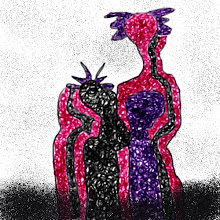


 "Autism is a way of being. It is pervasive; it colors every experience, every sensation, perception, thought, emotion, and encounter, every aspect of existence. It is not possible to separate the autism from the person."
- Jim Sinclair
"Autism is a way of being. It is pervasive; it colors every experience, every sensation, perception, thought, emotion, and encounter, every aspect of existence. It is not possible to separate the autism from the person."
- Jim Sinclair


