STOP FOR A MOMENT. TAKE A DEEP BREATH & EXHALE. IT'S AUTISM--NOT THE END OF THE WORLD.
Having an autistic child is not the end of the world--far from it. It is my hope that through this blog, at least a handful of people will get to understand that. My child is amazing, she brings us tremendous joy. We have good days & bad days, but we CHOOSE to focus on the good. Our belief is that by loving our daughter, giving her the most comfortable environment we can, and by most of all accepting her differences, she will continue to blossom--in her OWN way.
I'm not entirely sure what this presentation will turn out like, what the focus will be, and so on. I thought I'd send this along though, hopefully we can ensure that our voices can be heard (once again).
ABC News Seeks Submissions for iCaught: OnCall+ Autism Thursday, July 3, 2008 By: Carin Yavorcik
Share your stories via video
ABC News is presenting an opportunity for you to share your personal experiences as part of a special hour on Good Morning America Now: "OnCall+ Autism." You can also send a question about autism that may be answered by a top medical expert in the field.
ABC News is looking for video submissions on the following topics: 1) Your thoughts on living with autism or with loved ones with autism 2) Any questions you might have on autism to be answered by our medical experts
Most digital cameras now have a video function that allows the user to record 30-second to 1-minute videos. Once recorded, you can upload the video to your computer the same way you'd view digital snapshots. ABC News is specifically requesting 15- to 45-second videos.
How to submit:
1) Via cell phone: Record a 15- to 45-second clip and email it to: icaught@abcnews.go.com
2) Via the web Click on the red "RESPOND NOW" button
Videos submitted by the end of July may appear on ABC News NOW!
This is a new story, yet the theme is nothing short of disgustingly familiar. Another autistic child being kicked out, this time from an airplane. We've seen this play out time and time again, with children being booted from school, church, the movies, and Boy Scouts. Where is all the Autism Awareness?
Here we are, trying to live our lives with our children. And all too often, the treatment we receive from those in society ranges from rude to cruel. The stares, snickers, and whispers are one thing. But lately, it seems the job of parenting an autistic child and that of simply being an autistic person has become increasingly more difficult. The message that we, and our children, are an inconvenience and need not be tolerated is becoming quite clear. There was a time when it was thought community was where you turned to when you needed assistance. The idea of reaching out--whether to your church, your school, or other community groups, seems more difficult for autistics each day.
Now, I will say, I look at things on both sides. In fact, prior to my experiences with my youngest, I may have agreed with the airline's position. I may have believed that kicking this mother and child off the flight was the only option. And to any who feel this way, I say walk a mile in our shoes. I have seen time and time again, the intolerance toward autistic people, and people with disabilities in general, is shameful. I am not surprised that this flight crew was forceful and abrupt, and that they did not attempt to work with this mom and her son. It was only a few weeks ago, that AutismVox wrote about an incident in the security line with her son. What more is needed, for society to become tolerant of our children? The sad truth is, most would prefer we keep our kids away.
With all this "autism awareness" everywhere, I ask you this: where is all the understanding? Does it matter that someone knows what autism is, or the figures 1 in 150, or that Jenny McCarthy"recovered"her son? No, obviously it doesn't. It's gotten us nowhere. Proper care is still very limited, we are still lacking in options for teen and adult autistics, services are frustratingly limited. Autistic children and adults are being abused and killed, as I wrote about recently. Autistic individuals, and their families, are discriminated against. All of the money raised in the name of "autism awareness," all the signs at Toys R Us, the pretzels, the CNN coverage...and where has that gotten any of us?
It's a double edge sword. It's great that AMC is accommodating.
But it sucks that we have to go to a "special" time because most people don't understand and are not willing to accept.
I think what she says is so true. I was hesitant to comment that my initial reaction about these "special move showings" was very mixed. I too think it's nice when businesses (as well as schools!) make accommodations, and this is no exception. There is a theater about 40 minutes away who also offers such showings. We've never gone, because of the drive. Also, for now, the 2-3 times per year we go to the movies, things have gone fine. I was startled reading this article, as my child has gotten up and danced around, jumped, scooted up and down the steps. So far, and I guess we are lucky, no one has complained. We try to go to shows that are less crowded, prepare my daughter ahead of time, and always have an aisle seat.
I suppose if my child were kicked out of a movie, I would drive the extra distance to the special showing. However, at the same time, I think I would take extreme issue with the theater. I would certainly let my views heard, to say the least. I have been in the movie with a baby crying (and not just for a second, I mean repeated crying, and this was in an R-rated movie). We all see the obvious "turn off your cell phones!" messages on the big screen--and yet, phones ringing is still an issue. Plenty of adults are annoying in the theater--critiquing each part or just talking aloud. In every children's movie I have gone to see, there's always been at least a couple of children speaking or whispering, laughing louder and longer, etc. The point is--whatever movie you are seeing, chances are there will be some distraction. You are in public, people. What do you expect?
It would be nice if the public wouldn't simply point at our children and say their behavior is unacceptable. It's a double-standard. If you truly cannot sit in a public theater and put up with some noise or distraction, then I suggest you stay home and rent a movie. The same goes for you if you are at a family restaurant (I'm talking about say Chili's, Friday's, etc. not Tavern On the Green!) and a child is "annoying" you. Stay home! If you go out into public, you must be tolerant of others, plain and simple.
One the flip side of that, I do appreciate special accommodations. My child happens to do fairly well in theaters, but I can see the benefit of lower sound, altered lighting, and no trailers. I can see this as being the only way for some families to attend the movies together. There is something to be said about being in a comfortable environment, where everyone understands your child. I know that when we get together with families from my daughter's special ed class, it seems to be an easier, more relaxed time. None of us need to explain or feel judged if our child behaves a certain way. No one stares if our child stims or has a meltdown. We've all "been there, done that." It is so nice to be with a group that you can relate to, and who relates to you. It feels safe, and I suspect our children feel the same way.
It would be nice if our children would all be accepted, and society would be more tolerant. I think, as messages like this come into the mainstream, we will get closer to that. For now, it seems like a nearly unattainable Utopia, and as such, our only option may be separate programs (in some cases) for our children. I do push strongly for inclusion, no doubt. But, I do see a place for special accommodations--even if that may mean exclusion some of the time.
It all started because Meaghan Ross wanted to dance.
Last summer, Meaghan's mother, Marianne Ross, took her to see the movie Hairspray. Because Meaghan has autism, and Marianne knows she can get excited during movies, she chose an early-in-the-day showing, when the theater would be nearly empty.
During the show, the Elkridge 8-year-old was so enchanted by the upbeat music and energetic dancing that she began to move her body. She wanted to dance in the aisles, but instead she was asked to leave the theater, her mother said.
"She got kicked out because she can't really sit still," said Ross. "She flaps her hands and gets really excited. ... I was just so upset when she was kicked out. She was just the picture of pure joy."
Pure joy--that's often how I describe my daughter in those moments. Those times when she is dancing, jumping, flapping, and giggling. I'd never think my child would get in trouble for being happy. Go figure.
Meaghan's mom was amazed that the AMC general manager agreed to her request: create a showing just for children with special needs. The first movie had 300 people in attendance, and they've had them monthly since November. The movies are at 9:30 in the morning, there are no trailers, and special care is taken with regard to the sound and lighting. AMC is considering adding this to other markets. I've heard of similar programs at other theaters. I think many of us can relate to what these parents have to say:
"It's just ... everybody understands," said Ross. Before the show starts, the lights are adjusted until "everybody is satisfied," she said. The sound is likewise adjusted, and during the movie, people often move around or talk. "Anything goes," she said. "We're all in the same boat."
"The world is so cruel to people who are different," said Michele Schwarzman. But at the AMC films, she said, "we can sit in the theater and nobody will comment."
If you missed the piece this morning on Good Morning America, you can find it online here. There were some wonderful moments, both from Ari Ne'eman and Kristina Chew. I was delighted that ABC included the Ransom Notes campaign, and how our community came together and dissolved it. Transcripts from the show are also available on ABCNews.com as well.
Ari Ne'eman said this early on in the interview, when speaking about a cure for autism, and why some parents are upset over this:
"I think that one of the key issues to remember is that anti-cure doesn't mean anti-progress," he said.
That is so important. People hear "acceptance" and they assume ignorance and even laziness. Accepting my child, accepting autism, does not mean I sit around and allow her to struggle through her life. What it means is that first and foremost, I see her and treat her as the unique, beautiful individual she is. I respect her and love her. I have learned so much from her, she is a gift, and I really am lucky. I do all I can to help her, to ensure she has the skills she needs to reach the next step (realizing it may take a long time to get there, and there may be hurdles along the way).
"Where does disability come from? It comes, in many respects, from a society that doesn't provide for an education system that meets our needs. From people who often discriminate or bully or even injure us, and from a society that is largely intolerant," Ne'eman said.
Society is very intolerant, we see that time and time again. I have always thought of my home as refuge from the world--and now for my youngest, refuge from a society that can be very cruel. I see it in stranger's eyes when she is having a meltdown in the store (the "can't you control you child?" or "what is wrong with you?" stares and glares). Or the perplexed look on another child or even parent's face if she is struggling to do something (a milestone achieved by children younger than her) or when she is hyper, spinning in circles or making odd vocal noises. You don't realize how judgmental the world is until those moments. I always had such hope for the world, it's easy to become jaded when you are in my shoes. Judge me, that's one thing. But, I never dreamed society would judge a young child. It's disgusting.
Lenny Shaffer, a writer with an autistic son, says of the movement, "You're a handful of noisy people who get a lot of media attention, but you don't represent a broad swath of the autism community."
Ne'eman believes history is on his side.
"I can't think of the civil rights movement throughout history that hasn't been faced with resistance and misunderstanding on the part of its detractors," he said.
I really have to disagree with Mr. Shaffer's perception of the "Neurodiversity" or autism acceptance or autistic pride (or whatever else one may call it) movement. I see our numbers growing each day. I see it most apparent out in the world, with parents of other children in our community. To be honest, most of the parents who I know who feel as I do, they simply go about their day and their life. They aren't seeking media attention or attending rallies. They have no beef with the government or with vaccines or anything else. They focus on helping their child, dealing with the schools, and just with living life with autism. Those who feel it is wrong for us to "accept" autism, they tend to shout louder and love the camera. But, I honestly feel that we are a rather large, and growing, part of the autism community.
"We really try and understand him on his own terms," she said.
That is her advice for parents dealing with a child's autism diagnosis and feeling hopeless.
I couldn't agree more with Kristina. I'm grateful for having (by coincidence and luck I suppose) known a few parents of older autistic children just prior to and around our diagnosis time. They gave very similar advice. There was always a lot of optimism in their message. I have never forgotten their words. My daughter has made tremendous progress, I credit part of that to the fabulous doctors and therapists we have (and knowing she was delayed and needed help before age 1). The other part, and I strongly believe this, is that she has a loving place of acceptance to live in. We do not force her into how we think she should be. We realize she often finds comfort in rocking, flaps when she is excited, and has her own "brand" of play. We understand that eye contact can make her uncomfortable. We do our best to prepare her for social outings, changes in routine, etc. We follow her lead, in many ways. I don't think she would be where she is today, if we focused on changing behaviors or actions that society perceives as odd. She is so connected to us, and each day opens up more to us. We'll be able to help her so much more, because she will know we are trying and that we respect her.
The interview ends with Kristina saying this, a beautiful message that we all should remember:
"Acceptance, to me, is the beginning of hope," Chew said.
I want to thank Ari Ne'eman and Kristina Chew for their wonderful interviews. I truly feel these messages are what will lead to change for our children and for adult autistics. I applaud ABC, along with Deborah Roberts, Michelle Major, and Jonann Brady for doing this piece. I hope it is only the beginning of many more.
That's the title of a book I recently read and strongly recommend for those who have questions about vaccines. In "Do Vaccines Cause That?" the authors Martin G. Myers, MD and Diego Pineda, MSexplain every facet of the vaccine debate. To be honest, I was skeptical about this book prior to reading it. Part of it was that I dreaded reading what I thought would be a whole bunch of science jargon, the other part was that I figured it was all old hat. I obviously have an interest in vaccines (specifically with regard to autism and the ongoing debate), and so the title greatly interested me. After reading this book, I'm happy to report my prior skepticism was unnecessary. The authors have written this book in such a way that every reader can fully understand the material. They use realistic examples, cite many studies, and speak to their reader in a clear, concise manner. As a busy mother, reading this book late at night or in between errands during the day, this approach was greatly appreciated. I've always felt we made the right decisions with regard to our children's vaccines. And after reading "Do Vaccines Cause That?" I was fully affirmed in my beliefs. This book is very timely, even including the case of Hannah Poling.
For the most part, how the media reports (and often sensationalizes) the vaccine-autism issue is far from objective journalism. Too frequently, parents are basing their decisions off of emotional portrayals of a family's story, and from journalists, lawyers, or physicians profiting from the anti-vaccine movement. This book breaks down both sides, something that's been needed for a long time. To dispute cold, hard facts (science) simply because of how a journalist or celebrity portrays this debate is inexcusable.
Making the decision to not vaccinate your child should come from real scientific evidence, not from the innuendo and hype often found in magazine articles, message boards, or other agenda-driven sources (including journalists, politicians, and celebrities). Parents need to fully and completely understand the realities of vaccine-preventable diseases, the very real risks that exist today, and the dire consequences of not vaccinating your child. Recognize and comprehend the risks of such diseases, the risks of vaccines, and realize there is zero scientific evidence to link autism to vaccines (on the contrary, countless studies in various countries continue to outright disprove such a connection). Only then can a parent make an educated decision on whether or not to vaccinate their child.
I was checking out Amazon.com when I stumbled upon Jenny's new book. It is entitled, "Mother Warriors: A Nation of Parents Healing Autism Against All Odds," and is available for pre-order, with a release date of September 23, 2008. Mother Warriors? Really? That title is hefty, it's sure to raise more than a few eyebrows. I assume Ms. McCarthy got the "Mother Warriors" from Oprah. On her show, she said to Jenny and Holly Robinson Peete (and perhaps to all us "autism moms" or maybe just the ones who are fighting autism?), "You're mother warriors is what you are." I've heard Jenny use the "W" word before, but I'm not sure if it was before or after her appearance on Oprah.
I have no doubt this will be another bestseller. Good for Jenny and TACA. Bad for us. I've written on my concerns of such a book previously. I'm curious to see what the criteria for being "healed" from autism is? Is there a set of tests or surveys? Are the families profiled subjected to testing, if so with what and by who? Bigger than my doubts on what "recovery" from autism is, is the issue I have with this mentality. The idea that "recovery" is within every autistic child's reach, and that we as parents (or more often, as mothers) are staring down some doom and gloom timeline to "fix" our kids. We have seen parents who feel they have done all they were "supposed" to do, they had tried everything, and still had not gotten "rid" of their child's autism. Children have been murdered by their parents (and other carers) or died during chelation and some of these other so-called treatments. This idea that your child needs to be cured, that it's like they've been "hit by a bus," and that we should try various treatments (keeping in mind that like chemotherapy, these treatments won't help every child) until they are "recovered," can be very dangerous. Nobody, especially the media, wants to tell this side of the the cure autism movement.
Celebrating only the autistic children who are able to supposedly be "healed" or "recovered" only devalues the life of autistic individuals. It distracts society from the dire need for adult services, and blurs the reality that autistic children do really grow up to be autistic adults (yes, Jenny, once again--there ARE autistic adults). It also further burdens parents who do not see the same progress in their child--especially if they bought into the propaganda and tried all those supposed treatments. This growing mindset, and a book such as this, can be very dangerous.
My mom used to say that Mother's Day was just another day. She still needed to make the bed, straighten up the house, wash the dishes (especially after we'd made her that fabulous breakfast in bed and turned the kitchen into a splattered mess!) Though my mom didn't always show it, I know those cards we decorated and the little gifts we made in school warmed her heart.
For us "Special Moms" it can be a little different. Our kids can't always express how they feel towards us in traditional ways. They may not be able to verbalize how they feel, or they may not be able to draw or write their name on a card. But know, when you dig down inside of your own soul, you can hear their voices.You can sense their appreciation. You can know that you are their lifeline; their advocate; their way in to the world.
She continues on with a poem and some words of wisdom for other moms. You can read the rest of her Mother's Day message here. I love what she says, about how your child may not be able to verbalize their feelings, make a card, or the other "traditional" ways kids typically say "Happy Mother's Day."
As I've written before, it is a learning process, to "alter your preconceived notions" of what love looks like, how it is expressed. Do not focus on what your child isn't doing (saying "I love you" or hugging you or blowing kisses), but rather what he or she is doing. And, mostly, how in their own unique and special way, they are showing you that love. Those declarations of love and gratitude are often found in the little, simplest of moments. You have to look closely, and again get past all the ways you once thought love was expressed.
I've also written my feelings, on how honored I feel to be my daughter's mother and also of the very real concerns I have for the future. There are far too many "autism moms" in the media who say awful things about the life they have with their child, desperation and fear are the overriding themes. They claim to speak for all of us, all of us moms who are raising autistic children. The public perception is that we are all miserable, we have no hope, and we are fixated on curing our children. The focus remains on how to "cure" their child, not on acceptance or on preparing for their adulthood.
For new "autism moms," the task of figuring out what the diagnosis itself means, what steps they should take, and how to handle "life with autism," is nothing less than confusing. There are a million perspectives out there. As it's stated above, take a breath. Educate yourself, but be sure you know where you are getting your information from. There are also many people who have hopped on the autism boat to make a buck. I have found the greatest support and advice comes from parents who have older autistic children. They have more experience and perspective, they've 'been there, done that.' And--survived to tell about it! My best piece of advice I might give to a mother whose child has recently been diagnosed with autism: always be aware of what you choose to focus on at the end of the day. That can make all the difference, not only for you, but especially for your child.
"My mother had a great deal of trouble with me, but I think she enjoyed it." ~ Mark Twain
I had written on April 2 in a post entitled "The Best From Today," about Selma Eisenstat and her message on CNN about her son Joshua. In response to that post, I received two replies that further touched me. Selma herself, along with Joshua's Uncle Doug left messages. I wanted to share them with everyone, so they wouldn't be missed.
Thank you so much for honoring my Joshua on your blog. I happened to run across it today, and was overwhelmed. Joshua lives on in my heart and memory every day; and to have his influence live on the lives of others means more than I can say. I have hundreds of stories and memories that bring peace and joy to my heart. I loved my son with all of my heart, and every day I am thankful that I am Joshua's Mom. Thank you for making my day today.
Selma
And...
I'm Joshua's Uncle Doug. I was privileged to live with Joshua three different times during my life so we were very close and his death was very hard on me and our whole family. Every time I see another person that has special needs, I smile. Yes, I know its hard, but I too also know the joy. I remember one time that Joshua was having a really bad seizure and he kicked his Dad during the seizure and once he was out of it, he hugged him and said sorry.
He had that pure love as they all do. I agree with Selma, the road is hard, but it is so worth it.
Uncle Doug
I was so moved by each of their replies, and of course with the piece from CNN. I transcribed the piece for a fellow blogger who requested it (see original post, in messages section), as an amateur, so my apologies if I got something wrong. The last paragraph, Selma's powerful advice to others, is beautiful. This is something I wish every parent of an autistic child could see:
"When I hear the child being diagnosed with autism or being born with disabilities, I don't ever know if they would understand if I said, 'do you know how lucky you are?' I know it's gonna be a hard road, I know that, um, you're gonna have sleepless nights and you're gonna have many tears, 'cause I've had many tears. But, um, you get, I feel like you get a slice of heaven and a pure love in your home. You learn service and you learn, you just work together. Once you stop seeing what my child can't do, and you start seeing what they can do, it's a beautiful...I wish you could have met him, just cause I could feel your love for him."
Please visit the Joshua Eisenstat blog, for video, pictures, and more thoughts on Joshua's life. It's quite plain to see how very loved Joshua was, and how deeply those who knew him, miss him.
I watched the ABC special last night on Randy Pausch, a truly amazing human being. I typically don't watch these types of programs, but this one sparked my interest. I am so glad I watched it. To be honest, I don't think I've ever been so inspired by someone on television. I've spoken before on how the different challenges my daughter has faced, has given me tremendous perspective on our daily life, and on autism. Dr. Pausch has a perspective and a view on life, that is very rare (although, he says he's "not unique"). I was so moved by this program, by his lecture, and on this family's life.
I think for anyone dealing with any challenges in life (and that would be the majority of people in this world, I suspect), this is crucial to read or see. A lecture like this, these words of wisdom, really challenges you to look at your life in ways you may not have before. I know that raising an autistic child or a child with disabilities, is not easy. There are sleepless nights, doctors' and therapy appointments, meltdowns, etc. When you hear a man who is dying of pancreatic cancer, telling you he is happy and to not pity him, it really makes you think. I speak of "choosing" to focus on the positive, with my daughter and autism. For Dr. Pausch, that would translate into my being a Tigger versus an Eeyore. I love that!
We've been painting our home the last couple of weeks. After our master bedroom, it's time for the girls' rooms to be painted. We have been talking to them about choosing a color (for the older, it's between a light blue or lavender, for the youngest, it's yellow or red). I had planned on painting a mural or some fun designs on the wall. But, after being so moved last night, I think we will let the girls paint the pictures on their walls, if they want. I promise, Dr. Pausch (and I will post pictures here when they're done).
"If you lead your life the right way, the Karma will take care of itself, the dreams will come to you. And anybody who is out there who's a parent - if your kids want to paint the bedroom - as a favor to me, let them do it. It will be OK. Don't worry about the resale value of the house."
Thank you, to Dr. Pausch and his beautiful family for sharing their life, their story, and his lecture with the world.
So, I've been milling over this for a few weeks now. I realize some of my friends may disagree with me on it. I wonder if we are able to get past this hurdle, that perhaps those who are working for adult services can move forward, with real change?
Can we agree that perhaps, there are forms of autism--or perhaps something completely else (not autism, but rather vaccine encephalopathy or something like that?), that are either caused by or worsened by vaccines? Perhaps there are a very small number of children who have something going on with their mitochondria or their immune system, and it makes them susceptible to autistic-like features post-vaccine (or illness, allergen exposure, etc.). For those whose doctors can prove their child is such a case, step aside. I am not for the rebranding of autism ala Kirby, but for cases like these, I say call what your child has something other than autism.
Step aside, stand on a soapbox with a name other than autism. I realize you parents are passionate about your children, and about how you feel your child "became" autistic. But, what you may not realize, is that all the time you are in the media, writing, and visiting message boards spreading stories of so-called recovery and cures for autism, you are taking away from our message. Those of us who have either tried biomed treatments and had no success, those of us who have been tested for and found a proven genetic link, and those of us who feel strongly our child was born autistic--we are fighting for rights and services for our children when they become adults and for the many adult autistics living in the world today.
Every time someone goes on television or writes an article, telling the world that autism is reversible, or that an autistic child can be recovered, you are telling the world that there is no need for adult programs. If the message is that autism can be "cured," then why would anyone want to support or create services for adult autistics? if we can make a distinction between what your child has (not autism) and what my child has (autism), we can all move along further toward our (very different) goals.
Ethically, I have many disagreements with how autistics are often referred to by those who are adamant about recovery. I am saddened that so many parents have great difficulty seeing the gifts that their children are, and I also fear that such beliefs can pull some over the edge. But, for the sake of my child's future and for the benefit of adult autistics, I would be willing to overlook this for now. Allow us to make real change for our children--those who won't recover, and who will need some type of support throughout their adult years.
I am so tired of trying to fight the massive media attacks on vaccines, the profiles of those who have "successfully recovered" their children, and all the viciousness I feel from those who disagree with me. I want to blog and discuss all areas related to autism. However, lately it is those who are attempting to rebrand autism and find blame that are consuming the autism world. I'd love to move past this. Changing the diagnosis is the only way I can think of to make progress.
This is what I wrote when I was feeling much more stressed (& and frustrated, among other emotions) the other day:
TO THOSE WHO FEEL THEIR CHILD'S "AUTISM" WAS CAUSED BY MERCURY, VACCINES, ENVIRONMENTAL TRIGGERS, AND SO ON: CAN YOU START CALLING YOUR CHILD'S CONDITION MITO DYSFUNCTION OR VACCINE INJURY OR SOMETHING OTHER THAN AUTISM? THEN YOU CAN PACK YOUR BAGS AND LEAVE THE ISLAND. MY CHILD HAS AUTISM, NOT FROM VACCINES OR ANY OTHER ENVIRONMENTAL FACTOR. PERHAPS ONE DAY, IT WILL BE PROVEN THAT SOME CHILDREN HAVE AUTISTIC-LIKE FEATURES OR SYMPTOMS BECAUSE OF ALLERGIES OR SOMETHING ELSE. FINE. GET YOUR DAN TREATMENT AND 'HEAL' YOUR CHILD. BUT, DO NOT SPEAK FOR ME OR MY CHILD. DO NOT POUR MILLIONS OF DOLLARS INTO THIS VACCINE FAR-FETCHED THEORY. YOU ARE NOT HELPING US. YOU ARE NOT DOING ANYTHING FOR MY CHILD. WHEN MY CHILD BECOMES AN ADULT, YOU WILL HAVE DONE NOTHING TO HELP HER. YOU WILL NOT HAVE CREATED ANY NEW PROGRAMS OR SERVICES FOR ADULT AUTISTICS. MY CHILD WAS NOT HIT BY A BUS, SHE WAS NEVER MOWED OVER. SHE WAS BORN WITH AUTISM. SHE IS DOING WONDERFUL, AND I LOVE HER MORE THAN WORDS COULD EXPRESS. I NEED ASSURANCE THAT THE FUTURE WILL BE A HOPEFUL ONE. I WANT OPTIONS FOR HER, AND I WANT SOCIETY TO RESPECT HER AND SEE HOW TRULY AMAZING SHE IS. YOU DO NOT SPEAK FOR ME, I AM NOT PART OF THE SO-CALLED AUTISM COMMUNITY YOU CLAIM TO BE REPRESENTING. GO FIGHT YOUR FIGHT, BUT DO NOT CLAIM IT AS MY BATTLE TOO.
There were several good stories that came out of CNN's coverage today. This, by far, was the best. Please visit here, and play the story of Joshua Eisenstat, as told by his mother, Selma.
After several tense moments on Larry King (mostly Jenny, interrupting the sane members of the panel, yeah, she's a great public speaker), they introduced the Kirton family. They have 6 children who are all on the autism spectrum. Larry seemed disturbed by the fact that this couple continued to have children, he even asked that very question. He even seemed to throw in a little jab at Mormons.
They "keep having children" Larry King, because they LOVE children. They LOVE being parents. They LOVE their autistic children. That may be appalling or confusing to people who feel their autistic child kicked their butts, but indeed, this family actually loves having all of their beautiful, autistic children. Certainly, no one would tell this family to deny their deep-rooted religious beliefs. This, obviously, has been an important aspect for this family. We have freedom of religion in this country, and surely we can all agree that the Kirton family is afforded this freedom like the rest of us. It is cruel for any of us to judge this family.
Mom26children and her family have been subject to similar finger-wagging by those who feel they know better. Both families, by all accounts I have seen, genuinely love their children, acknowledge the challenges, battle through some tough times, and through it all they find happiness in their lives. I think this is why they are the focus of criticism. If the story was presented as these sad families, with multiple children on the spectrum, parents crying and pleading for help, lives out of control, I don't think there would be as much negativity. But when the media shows us a family who is making the best of things, with 5 or 6 autistic children, some groups shudder. It's awfully hard to argue how miserable your life is with your one autistic child, when a prime-time show has just profiled one of these families.
If one's main concern over the fact that either of these families has multiple children with autism is that they are a burden on society, that argument is off base too. Shall we put limits on how many children you may have based on income? Some families would struggle with 3 neurotypical children. Do we force them to be sterilized then, or have abortions should they become pregnant a fourth time? When it comes to families with autism, do we set a cap? Perhaps they can only have one subsequent child? What if that second child ends up not having autism, is this family allowed to have a third? What about families whose children have diseases, genetic disorders, etc? Shall we tell them also if and when they are allowed to get pregnant?
None of us have any right to judge these families or question their decisions. Personally, both are inspirations to me. I'm quick to say I "can't imagine how they do it." Yet at the same time, I know precisely how (some possible answers: love, acceptance, prayer). I applaud the Kirton family for stepping into the spotlight and telling the world their story (or, shall I say their 6 stories?). It was a nice contrast to have their video clips played during Larry King tonight.
The Kirtons are starting a foundation called AutismBites:
We are forming a non-profit, The AutismBites Foundation. We will be raising needed funds and passing them directly into the hands of Autistic parents for basic needs, home renovations to keep their children safe, for treatments and interventions to improve their children’s lives, etc... without a lot of red tape and hoops to jump through.
On causes, Mr. Kirton added that he feels there is a spectrum of causes, just as autism itself is a spectrum. Bravo to you! **edited to add several paragraphs after I accidentally published this before I was finished. Also, I want to say the title for this, was because of how this family presented themselves on Larry King. They RULE because of the love they show their children, and how they move forward every day (doesn't appear to be many pity parties going on there).
ALSO... Applause to the doctors (Drs. Harvey Karp & David Tayloe ) who are also on the show, trying their best to reiterate that the REAL science, real data, shows not vaccine-autism connection. If I didn't think that Kirby & Jenny could cause real harm to families, this would be comical. Between their lack of understanding for autistic adults, mantra of "you can recover your child/vaccines are horrible" (I loved when the doctor asked Jenny which disease she'd like her son to have!!!), and their abuse of the public forum for what is really needed for autistics (ADULTS services!!!!), they irk me beyond belief.
Barnes & Noble, Inc. has announced that 500 stores across the country will host special "Storytimes" for "Autism Awareness Month." They are partnering with, of course, Autism Speaks. I plan on writing about the various activities, publicity, et al that will surely come along in the month of April. There will hopefully be some really good, positive events. Time will tell what message Autism Speaks and others will deliver. All I know is, watch out (!!), because 2008 will surely be the loudest year for "autism awareness" and the many forms it comes in. The fact that Autism Speaks is involved here, I am skeptical. But, from the initial looks of this, I feel it could be a good thing. The books featured on the Barnes & Noble website include "The Game of My Life," "The Autism Acceptance Book," and "Look Me In The Eye." Granted, there are others that I'd prefer not be on the list, but at least a few good ones are there. I have been contemplating ordering this book on Amazon (that will be featured for these events), as it seems to have a positive message. One of my favorite books for children is "My Friend With Autism" by Beverly and Craig Bishop (parents of an autistic child). This was helpful not only to our older daughter, but to family and friends too. It explains the various features of autism, but in a positive manner, like how "my friend" has super hearing, etc.
I will try and locate a copy of "Since We're Friends: An Autism Picture Book, and write my review here. Here is some of the information from the press release:
On April 2, Barnes & Noble stores across the country will host celebrity Storytimes in cities including New York, Los Angeles, Chicago and Dallas. Celebrities will read books that encourage compassion and respect for individuals with autism and other disabilities.
I hope that these story hours will really achieve that goal. Compassion and respect is what's needed most when it comes to how the public reacts to autism and autistic individuals. We have had enough years of fear and drama, let's move on already. Parents need positive support, encouragement (not stares!) from others when our child is having a meltdown in the store, and our schools need to think outside of the box to help our kids reach their potential. And, above all, we need to support adult autistics and their families. Autism Speaks is rolling in the dough, perhaps now they can focus on what autistic children and adults need more than anything: services and support, primarily in the teen and adult years.
"...Steve Riggio, chief executive officer of Barnes & Noble, Inc. "Our special Storytime events, in partnership with Autism Speaks, are a unique way in which we can help spread knowledge and promote understanding of this disorder, which affects so many children each year."
Again, I hope they are able to increase knowledge (in a non-stigmatizing way!) and increase understanding for the public and for the peers of autistic individuals.
...Suzanne Wright, co-founder of Autism Speaks. "These in-store events will do a great deal to foster a sense of tolerance and understanding, something families affected by autism desperately need as they face the many day-to-day challenges posed by this disorder."
A sense of tolerance and understanding? Wow, did I miss something here? Is Autism Speaks no longer talking about kicking autism to the curb or throwing away this generation of children? Are they no longer celebrating Allison Tepper Singer's disgusting confession? I applaud them if they've actually turned over a new leaf. I'm not naive though, and the images from Autism Everyday are still very fresh in my mind. It would be wonderful to have an April that focuses on the many gifts and talents of autistic individuals, on the joy that is to be found in life with autism, and the need for (adult) services and acceptance.
“Autism knocked on the wrong door.” It's the quote heard round the world, from Suzanne Wright, co-founder of Autism Speaks and grandmother to an autistic child. It's been bounced around for a couple of years now, but it's one of those lines that always runs through my mind. It's really irritated me. It's supposed to be a rallying cry, I suppose. For anyone who has seen Autism Everyday, it starts to sound more like an invite to a pity party.
For me, I find it hard to separate autism from the individual. So, when I hear something like autism coming to the wrong door (family), I read this child came to the wrong family. A burden is deeply implied in that statement. I never prayed for a special needs child. During my pregnancy, I didn't dream of doctors' visits, surgeries, medication, or therapies. I don't think an expectant parent ever wishes for that. I remember thinking how easy the second-time around would be. We'd already been through the concerns and struggles first-time parents contend with. We were all done with that, we were seasoned veterans. People complimented my husband and I on our parenting skills, and we were applauded for the amazing "job" we were doing with our daughter. She was polite, outgoing, and intelligent. We received nearly all the credit for that. ;)
My second pregnancy was very different from my first. I was nauseas for the first 5 months, other than that, I actually felt better with my second pregnancy. I felt like I knew what to expect, the hows and whens of all that comes with bringing a new baby home and raising a child. We were so excited and couldn't wait to expand our family.
Our second child was blue and not crying when she was delivered. My heart sank, that is a horrible feeling. You expect joy and celebration in the delivery room. Not silence, with doctors and nurses descending upon your child, and nurses cautiously smiling at you, reassuring you it will be okay. I laid there, watching them assisting my little baby, trying to get her to breathe. My husband and I would nervously glance at one another, and then back to the crowd hovering over our baby. The medical team was successful, and started walking toward me so I could finally hold her. My sigh of relief was interrupted when the doctor paused and had to bring her back to the bassinet, she stopped breathing on her own, again. This time, she quickly responded to their help, I was able to briefly caress her cheek before they whisked her away.
That was my first clue that the second time around may not be a piece of cake. The next day, we found out our daughter had two holes in her heart. She also developed jaundice that required therapy for a week following her birth. Shortly thereafter, the reflux and stomach issues began. The bumpy road continued. It wasn't long before my husband and I realized that this was unlike anything we'd gone through with our first child. All the experience that we'd gained, all the answers we thought we had, now meant very little. I donated my "What To Expect The First Year" book, and realized my daughter was going to write her own book. I had to look within myself to find strength, not a book. We surrounded ourselves with supportive family and friends, and listened to the professionals we had sought out. It wasn't going to be easy--but how does the saying go? Nothing worth it ever is.
I believe that all the challenges I faced growing up, all the experiences I've had to this point, all prepared me for raising my child. I wrote early on, about not particularly liking the praise I receive for "how I am" with my daughter. To me, it's natural. I am her mother, we are her parents, we love her. That's all there is to it. Perhaps some of us have an innate sense of caring for a child with special needs and/or autism? Maybe there are those of us who deep in our hearts realize every child, every person, deserves respect? I suppose it is possible that there are some that are better-suited to raise an autistic child than others. I for one see my daughter as a blessing, she has taught us so much, and has brought great joy to so many. All of our family, friends, and neighbors have delighted in seeing her develop and blossom. They smile each time they see her.
I can say that Autism knocked on the right door. My daughter receives nothing but love, acceptance, understanding, and patience from us. I'm honored that I get to be her mom, and have her in my life. I am also so grateful that my daughter's grandmothers (and grandfathers, for that matter) have never and would never use such a phrase, when referring to her. No, instead they have offered nothing but love, encouragement, and prayers. They have supported us from day one, always willing to listen with an open-ear to our thoughts, and what we felt was best for our child. I know, that regardless of how of my child is doing 10 or 15 years from now, our family will be there for us, and more importantly, for her.
Despite what you may have read, more often than not, the answer will be no. This article may be helpful to those concerned about this:
FOR some years now, researchers have known that children with mitochondrial disorders can develop autism-like symptoms, or even full-blown autism. A 2005 study of 69 Portuguese children with autism found mitochondrial abnormalities that disrupted energy production in five of them, (Developmental Medicine andChild Neurology, DOI: 10.1017/S0012162205000332).
The big question is whether the girl whose family is due to receive damages would also have developed autism-like symptoms in the absence of vaccination (see main story).
Researchers contacted by New Scientist say that in very crude terms, children with mitochondrial disorders are especially at risk of neurological and muscular abnormalities because muscle and brain cells need so much energy. If mitochondria are faulty and don't supply enough energy, these cells are damaged. Lack of energy can also lead to encephalopathy, or disruption of brain structure, which can in turn cause autism-like symptoms. "Anything that messes up development can cause something that looks like autism," says Lindsey Kent of the University of St Andrews in the UK. But such symptoms are unusual. Mostly, children present with a wide range of developmental disorders of varying severity.
Kent also points out that mitochondrial diseases are very rare - just 5.7 per 100,000 individuals worldwide - and the subsets of disorders linked with autism even rarer. Kent says she is surprised that the court ruled in favour of the girl, arguing that the symptoms would probably have developed whether or not she had been vaccinated. "She has a clear mitochondrial genetic mutation, which is probably the cause of her developmental regression, autistic features and epilepsy," she says. "Whether or not the vaccine unmasked this will never be known, but it seems quite surprising."
Salvatore DiMauro, who has studied links between autism and mitochondrial mutations at Columbia University in New York, agrees. "My guess is that if she had a mitochondrial mutation, sooner or later she would have shown something abnormal," he says.
DiMauro says it's significant that the girl's genetic mutation was in the 16S ribosomal RNA gene, because these are very rare. Only four others are known. The gene plays a pivotal role in protein production, so any mutation that damages this function could have a huge impact on other mitochondrial genes and energy production by cells. "In the girl's case it would be important to prove protein synthesis is disrupted," he says.
DiMauro adds that in children who are "energy-challenged" because of mitochondrial disease, stresses including vaccination could trigger autism-like symptoms. "Children get worse in any stressful event, from having flu to having a vaccination," he says.
Kent says it's imperative in the wake of the ruling that parents don't lose confidence in vaccines. "That's what concerns me more than anything," she says. "My advice would be to carry on getting children vaccinated."
She says that screening for mitochondrial defects prior to vaccination would be very expensive, and unnecessary as most are very rare, and damage from mitochondrial disorders usually becomes apparent very early in infancy.
“When a common disease has features that set it apart from the pack, or when it involves three or more organ systems, think mitochondria.”
What if my autistic child has a mild form of mito?
Typically what we might think of as signs of "mild mito" would actually be more life-affecting than it sounds. Basically, the children I know who are "mildly" affected, they have developmental disabilities, migraines, seizures, failure to thrive and/or feeding difficulties (some have feeding tubes), some have chronic infections, gastrointestinal issues, trouble with temperature regulation, some require at least part-time use of a stroller/wheelchair, symptoms similar to 'mild' CP, etc. Regressions like seen in the case of Hannah Poling can also occur, following fever or illness. If a child has mitochondrial disease and it is affecting their body, even mildly, you will know.
Typically, labs are drawn because a physician is inquiring into why the child is having headaches, limping, nausea, illnesses, etc. The results (often a comprehensive metabolic profile, CMP) would point doctors in the direction of metabolic or mitochondrial disorder.
Before a good doctor would put your child through mito testing, they would review all of your child's medical history. If there is nothing significant aside from autism, the doctor will typically suggest alternative screening or to follow-up if child were to become ill or have more symptoms. They are not going to submit a child to invasive testing, without multiple signs or symptoms of mitochondrial disease.
In fact, when we saw the highly-regarded physician who ruled out mitochondrial disease (via biopsy) for our daughter, he remarked that our daughter didn't fit the classic mold of autism. That with all of her health issues and lab results, it was likely she had a genetic or other disease contributing to her medical conditions. Going into the testing, it looked fairly certain that our child would be found to have an underlying genetic disorder (some tests ran included Prader-Willi and Rett Syndrome) or mitochondrial disease. Remember, this is a child with a very large medical file. Her doctors still feel that in the future, a gene or other disorder will be identified that envelopes all of my child's health issues. So, if you bring a child in to see a "mito doc," and your child has classic autism, with no extenuating circumstances, they probably will send you home. There would be no evidence to warrant invasive testing.
If a parent has real concern for their child and some symptoms are there, request a CMP. This will more than likely put all your worries to rest.
Important Note: The term "mildly affected" in regards to mitochondrial disease is similar to the term "high functioning" in autism. It is subjective. If your child is said to be a "high functioning" autistic, typically because one is verbal, do they not struggle at all? I've known "high functioning" autistics who are unable to live by themselves, or work, or handle social situations. So, the level of functioning is in the eye of the person labeled, not the labeler. Likewise in "mildly affected" mitochondrial disease, that person could still die young or be hospitalized at a higher rate than the general population, and suffer very serious health issues.
DISCLAIMER: I am not a physician. I am simply a parent who has knowledge of mitochondrial disease and have more experience with mito than most parents. Other families with autistic children have reached out to me, wanting more information on mitochondrial disease. There is a lot of noise and excitement brought on by the concession case. I hope to help further explain mito to these families. The Content is not intended as a substitute for professional medical advice, diagnosis, or treatment. Always seek the advice of your physician with any questions you may have regarding a medical condition. Never disregard professional medical advice or delay in seeking it because of content found here. Thank you.
FYI...my laptop is grumpy today, so I'm unable to paste anything. Once I figure it out, I'll paste parts of the article. Click on the title above to go to the article. Thanks!
LATEST UPDATE: HANNAH & HER FAMILY WILL BE ON LARRY KING LIVE TONIGHT!!!!!
Alison Young, for The Atlanta Journal-Constitution reveals the "CHILD" from the "concession case." Her name is Hannah Poling, the 9 year-old lives in Georgia. The article states how this pretty little girl helped link autism to vaccines. No, that's not the case. Except for a few small mentions of mito, the article is mainly about autism and vaccines.
I have no doubt that after reading this article, thousands of parents will seek out a mito diagnosis for their child. I've said it before, but the testing for mito must be done by an expert in the field, it is also invasive and painful, and the cost factor is rather high. Parents may read this article, hear essentially that this girl has autism with a side of mito, not realizing what issues this child faces because of her mitochondrial disease. They'll see their own child in Hannah, and feel certain their kid has mito too. I shutter to think of how many autistic children will go through the testing, for no reason. If these parents seek out real experts, like Dr. Shoffner (who diagnosed Hannah), then I'm certain they will be turned away. He will only test if their is plenty of evidence that points to a mito or genetic disorder. But, I fear the parents who will go to any doc who wants to make a buck, put their child under, have them tested, and then receive unreliable results. This type of reporting is very irresponsible.
What's even more startling to me, is that her parents make no mention of mito. Granted, reporters have the final say in what they put into a piece. So, perhaps it was omitted. But, if it was me, speaking to a reporter about my child who had mito, that would be my main topic of discussion. I'd want to give as much information out about it, and discuss how it affects my child and her future. At this point, the family describes that Hannah has mild to moderate symptoms of autism, she can speak also (apparently her loss of speech was quite temporary). It's been written that she requires intervention these days for the issues related to symptoms of mitochondrial disease.
One key part that I read: following the vaccines that are "to blame" in this case, Hannah was unable to walk. She had high fever and crying. This was followed by inability to sleep. Three months later, signs of autism began to show. I look at the fact that she "refused" to walk (which could be muscle-related pain, from her mito disease) as a BIG point here. That points to mito much more clearly than it would to a PDD (with the exception, perhaps, of Rett Syndrome).
Awaiting more from all of this. I certainly would love a t.v. interview with Hannah and her parents. I am still waiting to hear how her health is and the affects of mito on this 9 year old girl.
My husband sent this article to me, it's on Newsday.com. It's an interesting piece, and I'm fairly certain this is the first one of its kind I've come across. It discusses adult autistics (yes, Jenny, they really do exist), dealing with finances, living independently, and the difficult issue of legal guardianship. The story is from the parent's perspective. It deals mainly with adult autistics who would seem to need little, if any, services. Yet, they still run into major issues with finances and have difficulty with other day to day interactions.
The story closely mirrors the ones I hear from families whose child is considered by the school to be "high functioning" and is dropped from special-ed or services. These children skim by, many drop-out or have major issues, especially in high school. If you can do fairly well with school assignments, sit still in class, they presume one doesn't need any extra help. They pay no attention to how one relates to others on the playground or cafeteria. If grades slip, its often blamed on the child losing interest or not paying attention. It often takes quite a fight to get services for the child, and prove to the school that help is needed. It appears, this same mind-set holds for when these children become adults.
While there are many adult autistics who are able to hold jobs and live independently, or others who are able to do so thanks to support services and help from their family, there are plenty that are slipping through the cracks. How many are homeless or institutionalized? What is the crime (against them), murder, or suicide rates? What number of them suffer with psychological issues, alcoholism, or drug addiction? These are areas that few have looked into, most would rather look the other way. It's not their problem right? And, now that we have "treatment" and someday soon a "cure," why do we need to concern ourselves with that right? It will be their problem, not mine. "I've got my kid on 50 pills a day plus some injections, a hyperbaric chamber, sauna, chelation, and more, I don't need to worry about him 'having autism' when he's 18, right?"
I realize "early intervention" and all is important, but to be honest, I worry more about what comes after age 18 or 21. My daughter did receive early intervention from the state, as well as private therapy, and we did a lot of "play therapy" at home. It wasn't really therapy we did at home, so much as it was we found new ways of playing and engaging our baby/toddler. We had to learn a different way to play with her, its been that way since infancy. My child thinks and acts differently, therefore, we have learned new and different ways of interacting with her. Basically, I feel if you have an open mind and a kind heart, you can help your child in those early years. The help is there if you seek it, and there's plenty you can do at home. Just be open to new ideas, be patient, and compassionate.
It's what will happen once my child turns 18 or 21, when the school will no longer assist us, that concerns me. I'm not going to assume her level of independence, at this point. We will support her in every way, and she will continue to make us proud--where ever the road leads her. We of course have some concerns over her physical and neurological health, but are hopeful those will improve with time. Putting those aside and solely thinking in terms of autism (along with her sensory and psychological issues), and her future--every aspect of what will happen in adulthood is concerning to me. If she is able to live independently, will services be available to assist her if need be? Will college be a feasible option? Will she be able to find a job, are there vocational programs? What would happen in an emergency, or if she had to deal with first-responders? Will she be able to find proper medical care and pharmaceutical assistance? What resources will be available?
This story highlights some of those concerns. I think whether your child will continue to reside at home or live independently in adulthood, there are a mountain of questions, and very few answers. We all know the majority of money that autism charities receive is going toward research, studies, media, etc. Very little goes to actually benefiting autistic children and their families, almost nothing goes toward autistic adults. Since the pro-cure groups, at least some of them, are now admitting that our autistic children are becoming autistic adults, perhaps there will be more stories on this. Hopefully, as their children enter adulthood, they'll realize the need and use their media savvy and celebrity friends to get more programs and more money flowing in to benefit adult autistics.
FYI: The link to the article is found in the title, if that doesn't work: http://mobile.newsday.com/news.jsp?key=152152&rc=bu&p=1
Someone warned me this wasn't going to go away, and that I'd surely be writing about it again. They were right. By the end of this, I'm not sure if I'll have any hair left to pull out. I figured it was only a matter of time before some of the big groups ran with this. However, I really hoped that at the very least, organizations would read the facts of the case and realize it has nothing to do with their "cause."
The National Autism Association (by the way, isn't this a sports league?) has announced that the ruling in the now infamous case (you know, the one that is really about mito and vaccines, not autism and vaccines, that one) confirms what all those parents have known all along: Vaccines cause autism. And now, they delight, the government is finally admitting it.
You know, it's one thing for a handful of people to skim through the case documents and conclude something like that. It's quite another to have person upon person, and now organization, to declare some sort of warped victory in all of this. It's really upsetting to me how many people will simply take someone else's word. It's the Operator Game theory--some of the case papers are released, a couple of anti-vaxers write on it (in their opinion), and next thing you know, the headline reads: "Government Finally Admits Vaccines Are Bad," or "Government Finally Comes Clean, They've Been Giving Autism To Generations," and so on!
The National Autism Association (NAA) sees the ruling as confirmation of what so many parents have been saying for years. "This case echoes the stories of thousands of children across the country. With almost 5,000 similar cases pending in vaccine court, we are confident that this is just the first of many that will confirm what we have believed for so long, vaccines can and do cause children to regress into autism," says Wendy Fournier, parent and president of NAA. "We call on the Centers for Disease Control (CDC) to acknowledge that the current vaccine schedule is not safe for every child and as with the administration of any medicine, individual risks and susceptibilities must be considered for each patient."
This may come as a shock to some...but I am actually speechless after that!
Must be the day, I seem to keep coming across worthwhile stuff, from parents:
This is a great letter, from a parent to her autistic daughter's kindergarten teacher. It's helpful for other parents, full of ideas on how to help a child through their school day. It is inspiring because you can tell this mom cares about & believes in her child, and is willing to offer any help and support for her child. These are easy accommodations, and I think the general public could stand to learn a bit from this type of letter as well.
"Autism is a way of being. It is pervasive; it colors every experience, every sensation, perception, thought, emotion, and encounter, every aspect of existence. It is not possible to separate the autism from the person."
- Jim Sinclair
The views & opinions expressed on this blog are just that: views and opinions of the author. I do not, nor have I ever, worked for a drug company or the government. I am not part of any vast conspiracy. I do not receive any income from this blog, I do not have any income whatsoever. I am simply passionate about my child and her future, and about the rights legally afforded to autistic individuals.




 Despite what you may have read, more often than not, the answer will be no. This


 This Way of Life

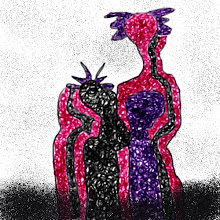


 "Autism is a way of being. It is pervasive; it colors every experience, every sensation, perception, thought, emotion, and encounter, every aspect of existence. It is not possible to separate the autism from the person."
- Jim Sinclair
"Autism is a way of being. It is pervasive; it colors every experience, every sensation, perception, thought, emotion, and encounter, every aspect of existence. It is not possible to separate the autism from the person."
- Jim Sinclair


