Whooping cough has again made the news in recent weeks. The subject has hit closer to home for me, as there have been cases in an elementary school not far from where I live. I have contacted that county's Department of Health--as thus far the media nor the county's website have spoken of these. I do have confirmation (letters from the school officials) however that there are indeed cases. Will update as I receive more information.
So often, people who are anti-vaccine tout that measles and whooping cough really aren't that bad. They tend to cite a child they knew who got one of the diseases and is fine. As I've mentioned before, whooping cough nor measles are anything to take lightly. And, certainly for the parents who have lost a child due to either of these diseases, these diseases are an absolute nightmare.
Last month, the East Bay Waldorf School in El Sobrante, California closed down due to a whooping cough outbreak. As the writer, Matt Keller, notes in his article, this entire event, and the whooping cough is "easy to avoid with a simple vaccine." An unknown writer at the San Francisco Chronicle ends his May 28 (2008, on page B-8 of the newspaper) editorial with this,
The Waldorf school closure offers some perspective: There is a risk in any medical decision - including the decision not to act. In this case, the choice of each parent became the shared infection of an entirely preventable disease.There's also this report out today, that reminds us of the importance of booster shots. And, at the very least, of ensuring those who work with the youngest in our population are immunized against these diseases (and, also trained to realize symptoms and to not continue work when symptoms may be related to whooping cough or other serious, fatal diseases):
I wrote yesterday about "Do Vaccines Cause That?" One of the sections that really stood out was regarding pertussis (whooping cough) and outbreaks that occurred following concerns over the vaccines. It is startling. And one can only wonder, when will we learn from history?NEW YORK (Reuters Health) - Public health officials investigating a 2004 outbreak of whooping cough, or pertussis, among newborns in Texas identified the source as a health-care worker where the babies were born.
Staff members at a children's hospital in Texas noticed that six infants admitted with whooping cough had been born during the first half of June at the same general hospital.
A review of records uncovered a total of 11 such infants, on average about a month old, whose symptoms included cough, congestion, vomiting and arrested breathing. Nine infants had to be admitted to the hospital, including five treated in the intensive care unit.
According to their report in the Morbidity and Mortality Weekly Report, published by the Centers for Disease Control and Prevention, J. L. Hood and colleagues identified a 24-year-old health-care worker who had symptoms of cough, which brought on vomiting, and difficulty breathing while working in the newborn nursery from early June until mid July.
During that time she directly cared for 113 infants, including the 11 who came down with whooping cough.
All the babies recovered after treatment.
The health-care worker in this case had been fully immunized against pertussis during childhood. However, the CDC points out in an editorial note that the Advisory Committee on Immunization Practices recommends that health-care workers with direct patient contact and adults who have close contact with infants should be given the Tdap (tetanus toxoid, reduced diphtheria toxoid and acellular pertussis) vaccine.
SOURCE: Morbidity and Mortality Weekly Report, June 6, 2008.
Because of the concerns about whole-cell pertussis vaccine, immunization rates had dropped in 1978 from 80% to 30% in the United Kingdom—and whooping cough epidemics soon followed. Indeed, between 1977 and 1979 the United Kingdom experienced 102,500 cases of whooping cough with 36 deaths...Bold for emphasis by me, of course. Does that register with anyone who doesn't give their child the pertussis vaccine? 102,500 cases in 2 years, 36 deaths. Are you really willing to gamble your child's life?
In Japan a national debate resulted in the Ministry of Health and Welfare changing the recommended age for immunization because of concerns about the whole-cell pertussis vaccine’s safety and claims that it was no longer necessary to immunize because pertussis was not present in the community any more. Vaccine coverage for infants fell from about 85% in 1974 to 14% in 1976.4 Then, in 1979, a whooping cough epidemic resulted in 13,105 cases and 41 deaths. In the early 1980s Japan re-introduced pertussis-containing vaccines—using the newer acellular pertussis vaccines that cause less fever and local reactions—and the number of cases of whooping cough went down.8Again, figures put in bold by me. 13,105 cases in one year, with 41 deaths in Japan. In Sweden, you have 2,282 children hospitalized, 4% of those have brain injury. Again, I ask--are you willing to gamble your child's life? To hold onto a belief that cannot be supported by any scientific data (that vaccines cause autism), and make serious (possibly life or death) decisions regarding your child's health is at best utter ignorance and selfishness, at worst, child endangerment.
Sweden had a similar experience. After discontinuing pertussis vaccine, rates of whooping cough returned to the levels seen in the prevaccine era. Of 2,282 who were hospitalized for whooping cough in 1981–1983, 4% had brain injury from the illness.4
Still feel whooping cough is no big deal? Watch this. And don't turn it off after 2 seconds, thinking your unvaccinated child is somehow "immune" from this. Watch the entire video. This is what whooping cough is. This is what a non-immunized child could sound and look like if they catch this horrible disease.
EDITED: I altered the time on this, as I wanted it to be the lead story for the day (not Jenny on TV)


 Kev at Left Brain/Right Brain






 This Way of Life

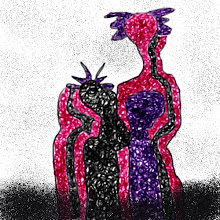










 "Autism is a way of being. It is pervasive; it colors every experience, every sensation, perception, thought, emotion, and encounter, every aspect of existence. It is not possible to separate the autism from the person."
- Jim Sinclair
"Autism is a way of being. It is pervasive; it colors every experience, every sensation, perception, thought, emotion, and encounter, every aspect of existence. It is not possible to separate the autism from the person."
- Jim Sinclair