This one from ABC News especially caught my eye. The article itself isn't anything earth-shattering, but I was impressed by the link to the National Network for Immunization Information on the bottom of the article (above the TACA link, and in bold no less). Kudos to ABC for being balanced on this. What really struck me, was the video of Jim and Jenny's interview from Good Morning America. This particular part, when Diane Sawyer is narrating how Jenny's son "recovered" from autism:"but doctors now say he was likely never autistic to begin with. Undaunted she remains an advocate fighting for Evan and other children..."
I wonder--is it doctors that ABC consulted with for the story, or physicians who are familiar (as in face to face) with Jenny's son? I think we are owed clarification on this. This idea, of children being wrongly diagnosed with autism is something I've visited before in the comments at Autism Vox here (and my other statement). I think there are children who have dietary sensitivities and allergies, who have some autistic-like (or ADHD-like) symptoms. Perhaps they get prematurely diagnosed, when really the issue is something else. Now, I will say this, in an environment of acceptance and love, a premature diagnosis doesn't necessarily do any harm to the child. I don't think there is any child who would not benefit from, say, speech or occupational therapy, etc. Harm can occur, however, when parents (and Jenny is not alone on this one, far from it) claim that this diet or this treatment "recovered" or "cured" their child.
As in the case of Jenny's son, he apparently had significant changes when the GFCF diet was started. Perhaps his issue was sensitivities to foods and gastrointestinal problems. My daughter has had her fair share of G.I. issues. We have managed them rather well, our physicians are incredible. Had we not been on the ball with her tummy troubles, or had our doctors made wrong diagnoses, I imagine our child would be in tremendous pain much of the time. Luckily, most of her issues were addressed before she was two. For a child who cannot verbalize at all, or only limited, how does that pain get expressed? Through screaming, self-injury, etc. If a child has a speech delay plus gastrointestinal issues, this could very well look like autism.
But let's make one thing clear: having autism and having something "else," are two very separate things. There are children who may exhibit autistic-like symptoms or signs, as well as signs of ADHD, etc. when really there is a food intolerance or other sensitivity. For those children, diet alterations will make all the difference. For a child with autism, you cannot assume that dietary changes will add up to speech or any other drastic changes, let alone "recovery." I've yet to meet one parent in real life who has said "we started the GFCF diet, and weeks later my child was doing X." I have heard some parents say they think they've seen some small positive changes, and in one case, a mother felt her child's sensory issues were "a little better." I'm not bashing the GFCF diet. I've known several people with Celiac Disease who are thriving due to it. I think it has its place. I also feel that if your child and your family can stick to such a diet, and if some positive comes from it, then go for it. Strangely enough, a lot of our foods are gluten-free (we shop at Whole Foods and such, these cookies are awesome!). However, it so happens that my youngest will not consume any of those foods (she eats about 5 different foods regularly, that's it). A few of the parents from my daughter's school also say they too are unable to follow the diet. Their child, like mine, may eat only one fast-food brand of chicken nugget, or a specific brand of frozen pizza, etc. Some of us have worked for years to get our child to eat anything resembling a meal. For us, if you simply present a new food on our daughter's plate, it will send her into a rage. She barely eats as it is. So, if anyone can realistically offer how to switch her to GFCF, be my guest. But, for some, if not many, of us, this diet is not feasible. And so I beg of you, do not point your finger saying we are failing our children by not following the diet--or any other "treatment." As the saying goes, walk a mile in my shoes...
Let me also say this--I'm happy that Jenny's son had so much improvement once he began the GFCF diet. That is fabulous. I hope he continues to do as well as he seems to be doing. I don't think there is a single parent out there who wouldn't love to give their child certain foods and within two weeks have that child be speaking. The world is a nicer place when you abide by what they have declared as "normal" and "typical." Don't we all want our kids to have an easier time in society? I have never and will never seek a "cure" for my child. That's not to say we haven't worked tirelessly on providing her with all she needs, on keeping on top of the school to ensure they are helping her, and seeking out the best (for our daughter) doctors and therapists. We don't want our child to have meltdowns, to gag at the mere sight of a certain food, to injure herself (or others), etc. And, yes, if it was as simple as altering our pantry, and my child would not have the struggles she currently has, I'd jump at that.
But my daughter's "autistic-like" symptoms are actually autism, and that's a major difference here. She isn't acting a certain way because of a belly ache, or allergies. The reality is that a lot of our kids are square pegs (and we embrace every side--even those sharp edges) and society constantly tries forcing them into round holes. For many of us, the answer isn't in diets or supplements, it is in parenting and working with our child, loving them unconditionally, and perhaps along the way, even rounding those corners just a tad. But more importantly, it is our duty to accept who they are, and work to make this world a friendlier, maybe even more square, place for them.
I am saddened that Jenny's preachings on autism and recovery make my battle (the one of acceptance for those on the spectrum and for the creation of programs for autistic individuals, especially adults) much harder. If you are going to represent the "autism community," let's be 100% certain your child is indeed autistic first though. And, I would also caution, as I have before, that when we describe an autistic child as "recovered," there comes great responsibility. Responsibility for those who never "recover" and the issues that stem from that (at best you are left with parents feeling like they messed up, kids feeling that they're never quite good enough). Responsibility for your child who you claim to be "recovered" when in a few years may no longer be able to wear that label. Many parents will tell you that the teen years can be very difficult for autistic kids. So, the child who seemed to be "doing so much better" can suddenly be a child requiring much care and services as a teenager. There's just a lot of burden that does, and should, come with announcing your child is "recovered," and especially at such a young age.
6/4/08
Is it autism--or isn't it??


4/28/08
Is It Fever? Mercury? Thimerosal?
 Pick a cause, any cause. The growing list of possible causes of autism continues to grow. It could be mercury, thimerosal, ultrasound, french fries, the television, excessive hygiene, and we can't forget "refrigerator moms." Now, is fever the new cause du jour of autism?
An idea being tossed around by people commenting on this piece, is now that it's the "vaccine-induced" fever that is affecting these children with "mitochondrial dysfunction." Is this becoming an idea that is adopted by Mr. Kirby and others?
Are we to blame fever now for autism (ala mitochondrial dysfunction)? How shall we go about "greening" fever or banning it? One can easily predict that even if we "green our vaccines," fever would still be a common side-effect. Likewise, splitting up vaccines does not lessen the chance of fever post-immunization. The fever is due to our immune system's response to the microorganisms in the vaccine. So, is this idea of the "vaccine-induced" fever just another stepping stone to banning vaccines altogether?
Is it fever or is it mercury or is it thimerosal or is it vaccines altogether that are to blame? I wait with bated breath for the next autism "cause" that will be "uncovered."
4/9/08
Can We Agree On This: Your Child Does NOT Have Autism?
So, I've been milling over this for a few weeks now. I realize some of my friends may disagree with me on it. I wonder if we are able to get past this hurdle, that perhaps those who are working for adult services can move forward, with real change?
Can we agree that perhaps, there are forms of autism--or perhaps something completely else (not autism, but rather vaccine encephalopathy or something like that?), that are either caused by or worsened by vaccines? Perhaps there are a very small number of children who have something going on with their mitochondria or their immune system, and it makes them susceptible to autistic-like features post-vaccine (or illness, allergen exposure, etc.). For those whose doctors can prove their child is such a case, step aside. I am not for the rebranding of autism ala Kirby, but for cases like these, I say call what your child has something other than autism.
Step aside, stand on a soapbox with a name other than autism. I realize you parents are passionate about your children, and about how you feel your child "became" autistic. But, what you may not realize, is that all the time you are in the media, writing, and visiting message boards spreading stories of so-called recovery and cures for autism, you are taking away from our message. Those of us who have either tried biomed treatments and had no success, those of us who have been tested for and found a proven genetic link, and those of us who feel strongly our child was born autistic--we are fighting for rights and services for our children when they become adults and for the many adult autistics living in the world today.
Every time someone goes on television or writes an article, telling the world that autism is reversible, or that an autistic child can be recovered, you are telling the world that there is no need for adult programs. If the message is that autism can be "cured," then why would anyone want to support or create services for adult autistics? if we can make a distinction between what your child has (not autism) and what my child has (autism), we can all move along further toward our (very different) goals.
Ethically, I have many disagreements with how autistics are often referred to by those who are adamant about recovery. I am saddened that so many parents have great difficulty seeing the gifts that their children are, and I also fear that such beliefs can pull some over the edge. But, for the sake of my child's future and for the benefit of adult autistics, I would be willing to overlook this for now. Allow us to make real change for our children--those who won't recover, and who will need some type of support throughout their adult years.
I am so tired of trying to fight the massive media attacks on vaccines, the profiles of those who have "successfully recovered" their children, and all the viciousness I feel from those who disagree with me. I want to blog and discuss all areas related to autism. However, lately it is those who are attempting to rebrand autism and find blame that are consuming the autism world. I'd love to move past this. Changing the diagnosis is the only way I can think of to make progress.
This is what I wrote when I was feeling much more stressed (& and frustrated, among other emotions) the other day:
TO THOSE WHO FEEL THEIR CHILD'S "AUTISM" WAS CAUSED BY MERCURY, VACCINES, ENVIRONMENTAL TRIGGERS, AND SO ON:
CAN YOU START CALLING YOUR CHILD'S CONDITION MITO DYSFUNCTION OR VACCINE INJURY OR SOMETHING OTHER THAN AUTISM? THEN YOU CAN PACK YOUR BAGS AND LEAVE THE ISLAND. MY CHILD HAS AUTISM, NOT FROM VACCINES OR ANY OTHER ENVIRONMENTAL FACTOR. PERHAPS ONE DAY, IT WILL BE PROVEN THAT SOME CHILDREN HAVE AUTISTIC-LIKE FEATURES OR SYMPTOMS BECAUSE OF ALLERGIES OR SOMETHING ELSE. FINE. GET YOUR DAN TREATMENT AND 'HEAL' YOUR CHILD. BUT, DO NOT SPEAK FOR ME OR MY CHILD. DO NOT POUR MILLIONS OF DOLLARS INTO THIS VACCINE FAR-FETCHED THEORY. YOU ARE NOT HELPING US. YOU ARE NOT DOING ANYTHING FOR MY CHILD. WHEN MY CHILD BECOMES AN ADULT, YOU WILL HAVE DONE NOTHING TO HELP HER. YOU WILL NOT HAVE CREATED ANY NEW PROGRAMS OR SERVICES FOR ADULT AUTISTICS. MY CHILD WAS NOT HIT BY A BUS, SHE WAS NEVER MOWED OVER. SHE WAS BORN WITH AUTISM. SHE IS DOING WONDERFUL, AND I LOVE HER MORE THAN WORDS COULD EXPRESS. I NEED ASSURANCE THAT THE FUTURE WILL BE A HOPEFUL ONE. I WANT OPTIONS FOR HER, AND I WANT SOCIETY TO RESPECT HER AND SEE HOW TRULY AMAZING SHE IS. YOU DO NOT SPEAK FOR ME, I AM NOT PART OF THE SO-CALLED AUTISM COMMUNITY YOU CLAIM TO BE REPRESENTING. GO FIGHT YOUR FIGHT, BUT DO NOT CLAIM IT AS MY BATTLE TOO.
4/2/08
A Measles Primer For Jenny
"Give my son the measles. I'll take that way over autism any day."
"In a heartbeat," she adds later on.
Perhaps Jenny hasn't used her Google PhD to look up measles yet. Maybe she could ask her own pediatrician, Dr. Jay Gordon. On his own website, you'll find this:Measles still causes a million deaths worldwide even though a very effective measles vaccination program in the United States has just given us our third year in a row with fewer than 100 cases of measles in our country.
Has Jenny ever read about measles in developing countries? This blog, Nigeria Health Watch, discusses another outbreak there in December 2007. The author asks, "How many children will have to die from measles in Nigeria?" After reading that entry, Jenny may want to visit KidsHealth where she can read this information:
A child who is diagnosed with measles should be closely monitor for fever and other symptoms to detect any complications. In some cases, measles can lead to other health problems, such as croup, and infections like bronchitis, bronchiolitis, pneumonia, conjunctivitis (pinkeye), myocarditis, and encephalitis. Measles also can make the body more susceptible to ear infections or other health problems caused by bacteria.My child is prone to croup and bronchitis, she has been hospitalized for RSV, and for a bacterial infection called pseudomonas (which she caught during a hospitalization for surgery). I can't imagine ever saying I'd prefer measles, or pseudomonas, to autism.
Further information on measles, and the importance of vaccines, Jenny may want to visit the World Health Organization (WHO). WHO offers some startling facts:
- Measles remains a leading cause of death among young children, despite the availability of a safe and effective vaccine for the past 40 years.
- In 2006, it was estimated that there were 242 000 measles deaths globally: this translates to about 663 deaths every day or 27 deaths every hour.
- Vaccination has had a major impact on measles deaths. Overall, global measles mortality decreased by 68% between 2000 and 2006. The largest gains occurred in Africa where measles cases and deaths fell by 91%.
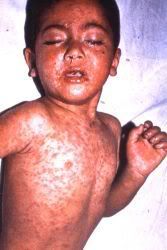
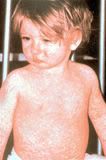
I hope many will come forward and speak out against Ms. McCarthy, and this outrageous statement she made. I also wish Jenny would study up on measles, and realize how ridiculous she is to ask her son be given measles, any day, over autism. It is ignorant, and even offensive (to those who have suffered and died from measles, to the 27 mothers who every hour lose their child to this disease, and to autistics who are here, alive on this earth).
The Worst of CNN's Coverage...
Plenty to choose from, here is what I jotted down today, bits and pieces that made me cringe (or at times, laugh even):
- Lou Dobbs referring to autism as a "rapidly advancing and spreading disease." Was he confused, perhaps he thought it was the eighties and the topic was A.I.D.S.? Autism isn't spread, Mr. Dobbs, it is not contagious.
- On their commercial for today's programming, that families (with autistic children) wonder if friends will ever think we are normal. I've never worried if anyone thought I was normal, and surely these days, I don't have much time to be concerned with what people are thinking about me.
- That autism "tears families apart" from Larry King's intro.
- Autism referred to as a "dreadful disease" by Larry King
- "This debate is over. Vaccines can trigger autism." David Kirby says he's confirmed it, so it MUST be true.
- "The tide has come in." From Jenny, claiming the CDC is "softening" and realizing that vaccines do cause autism. Can we say reaching?
- Viruses & environmental triggers cause autism, with vaccines most to blame, according to Jenny. Um, so no genetic cases? I'm scratching my head, trying to figure this one out. She essentially denied any genetic instances of autism occurring. I'd love to send her my child's medical records, and perhaps she can tell me what trigger "gave" my child autism.
- Jenny suggests immune tests. Test infants for immune system issues? Would most of these actually show up at birth? Would any of this actually do anything to prevent autism?
- Jim Carrey adding anything to this discussion.
- Jenny bringing up the Amish. Perhaps she should look here, here or here, and realize that autism is in the Amish community, or here where a genetic link has been found, in the Amish community. This disorder features seizures followed by regression, with onset at 14-16 months. Oh, wait, it sounds like Jenny is trying to say that autism is never genetic. So perhaps these Amish children, and my child don't have autism?
- Jenny raising her voice, cursing at, and interrupting two respected physicians.
- Dr. Jay Gordon insisting that the vaccines "disordered" Hanna Poling's mitochondria. Funny that I don't recall the government ever stating that, nor is is there any proven evidence to support such a statement.
- Jenny repeatedly bashing the CDC, saying that Julie Gerberding will "eat her words," and soon admit that the government is poisoning children via vaccines.
- Kirby going silent once the doctors joined the group. Hmm...
Jim Carrey--Autism Expert??
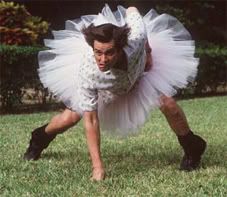 Larry King read a message from Jenny's "mate" on his show:
"Vaccines are more of a profit engine than a means of prevention. And that's why there are so many vaccines."Since when did Jim Carrey become an expert on anything in the medical world? On vaccines? On Autism? I realize he is the "Autism Whisperer," but wow, never realized he had received his PhD. To that point, why is anyone listening to a ditsy Playboy model? And, David Kirby, a PR person, again, not a physician or scientist. Really makes you wonder...
Jenny herself may need some medication (or perhaps she should try the GFCF diet, chelation, HBOT??). You don't go on Larry King, scream "bulls**t" to respected physicians, ranting and raving. Her voice is shaky, she really needs to sip some water and take a deep breath. I too get very emotional over my child. I have to really prepare myself prior to her IEP meetings. I bring a bottle of water, take slow deep breaths, read some inspirational quotes I have written in my notebook, and look at her picture I bring in with me. I remind myself continually to remain calm, regardless. I realize I will look like a raving lunatic if I lose my cool. I also am aware that if I get emotional and go off-course, nothing will get accomplished.
She wants measles over autism, any day??? Wow, is all I can say. She's been brainwashed by the conspiracy theorists, she is insisting that all the multiple studies on vaccines are whack, demanding an independent study.
Jim & Jenny are marching on June 4 for Generation Rescue/TACA Now, in Washington D.C. Joy. Gives new meaning to Dumb and Dumber. I'm curious if the walk in Atlanta, against the CDC is still on? I hope so, otherwise my plane ticket will go to waste (sarcasm!).
3/18/08
The Money Trail...

Where will all the money raised by Toys R Us go?
Autism Speaks and Toys R Us have had a relationship for over a year now. This year, it appears, they are going all out. Which, like I said earlier this week, one can only wonder what all will come in April. In addition to the in-store donations, "the world's greatest toy store" is also accepting them online. At the time I write this, $539,448 has been raised (which, is up over $20,000 from the $519,229 they were at when I began drafting this last night). They are raking in, on average, more than $30,000 a day. Given that, they very easily could raise over 2 million dollars. This campaign began on March 2nd and continues until May 2nd. We all know where this money will go to: research, research, research--the Autism Speaks mantra. Of course, some money will go toward entertainment, catering, private jets, salaries to people like Allison Tepper Singer, and who knows--maybe an Autism Everyday Part II? Read about it on the Autism Speaks' website (their 2006 report, I can't wait to read 2007's). As Lisa Jo Rudy writes,
"Personally, I'm encouraged to see community grants and insurance issues are making it to the front page of the Autism Speaks website - though I'd love to see the organization create a division dedicated to living - and thriving - with autism."We shall see if Autism Speaks ever gets a clue and decides to actually support autistic individuals. Then perhaps so many of us wouldn't cringe when we checkout at the Toys R Us, turn on Oprah, or see that the Sundance Channel is premiering "Autism Everyday" on April 2nd. I won't hold my breath though. Here's how they prioritize those living with autism, as per the "goals" statement from their website:
We are dedicated to funding global biomedical research into the causes, prevention, treatments, and cure for autism; to raising public awareness about autism and its effects on individuals, families, and society; and to bringing hope to all who deal with the hardships of this disorder. We are committed to raising the funds necessary to support these goals.
Notice the order:
1. make LOADS of money for research into causes, prevention, treatments, and cure
2. raise public awareness (via depressing "documentaries" apparently)
3. and, if and when we get around to it, "bring hope to all who deal with the hardships of this disorder"
They never actually say they want to help autistics, or create programs for teens and young adults, or support job-training, independent living, etc. for adult autistics. Bringing hope is a rather broad term. What hope exactly are they bringing? That one day a "cure" might exist, or that prenatal screening will be available? Once again, painting the bleak picture of the "hardships" we live with is getting rather old by now. Now compare Autism Speaks' goals with The National Down Syndrome Society's values and The National Autistic Society's vision and mission statements. Keep in mind, also, that the NDSS began in 1979 and the NAS has been around for over 35 years.
I'm not sure what "puzzle" Autism Speaks wants the public to think they are concerned with solving. To those of us who take personal offense by their messages and continue to receive zero support from them, we understand what this "puzzle" is. They promote the idea that if your life is touched by autism, you are miserable, your child has been "stolen," you are in debt, your marriage is falling apart (if it hasn't ended horribly already), and your life is one long nightmare. When you combine those viewpoints, the statements made by the "leaders" of Autism Speaks, read over what research their money is going toward, and see their tax return, it becomes clear. The puzzle they are struggling to solve is how to end any future generations of autistics. They want nothing more than to annihilate autism, all together, all of it--all future autistics, and frankly nothing else. They've even convinced politicians like Hillary Clinton to make public statements about working to "prevent and cure anything along the Autism spectrum." As for the autistics living (and thriving!) today, well, let's just disregard them altogether.
Autism Speaks could learn a lot from The National Down Syndrome Society and The National Autistic Society. The day that Autism Speaks actually reaches out to Autistics, and makes supporting those individuals a priority, then perhaps I would like to "help autism" at the check-out line.

3/4/08
Enough With All The Causes, Causes, Causes
People have often asked me how I think my daughter "got" autism. At Bloomingdales may be my answer to the next person who asks! Kind people will send me articles, with the best intentions, of the latest & greatest quack-cause du jour. I believe my daughter was born autistic. I have no evidence to prove otherwise. I'm at total peace with that, I accept autism, I accept my daughter. I have moved on from scratching my head, trying to figure out what and why. I have the what, the why has been answered, at least for me (genetics).
I suppose if I had an extra, say 15 hours a day or so, I might give more thought to french fries or air pollution. But, I doubt it. I'd more than likely opt to sleep (or eat the french fries), or do something more beneficial than endless searching for a possible cause that more than likely I would never find (unless I was staring at my and my husband's DNA). I prefer to live in the moment, embrace my life, and go with it. My heart really does go out to families who are so consumed in finding the cause of their child's autism. I know they spend countless time, money, and energy on it. It must be extremely tiring and stressful, and I often wonder about the effect of it all on their child.
Mercury, Lyme's, environmental triggers, viruses, cigarette smoke, air pollution, prenatal aspartame consumption, maternal stress, folic acid, ultrasound, excessive hygiene, television, french fries...
For each supposed "cause" of autism, people claim there are studies that have been done to prove them. Granted, the study may be some quack-pseudo-scientist talking to 3 families who all ate glazed donuts on a Wednesday, and they all had autistic children. Yes, that's a bit exaggerated and comical, but it's not too too far off from how a lot of these "studies" are done (and then presented in a scientific manner). Typically, people who passionately believe in the cause of their child's autism, will say that studies have been hidden by the government.
The conspiracy theorists are alive and well in "causes of autism" world. They say that the government (think Men In Black), is intentionally keeping us, the public, uninformed. They (the Men In Black) continue "poisoning" our children, mostly so that "big pharma" can keep ringing in the big money. And, that they (the Men In Black again) are hiding these mountains of studies. I wonder how many of the autism conspiracy theory folks carry around their own copy of Catcher In The Rye (which, I have to add: it was my most beloved book in my teen years, and second, I do believe true government conspiracies exist, just not about autism!).
Anyway, it always goes back to "big pharma," whether you are talking about vaccines or "autism fries." Most who believe these various conspiracies, which at last check seem to be more of them that here are of Grimm's Fairy Tales, feel that the government and others have kept things hidden for one reason: money. They often state that doctors, therapists, pharmaceutical companies, and many others, are making big money on autism. So, they'd not want to find a "cause."
Apparently with all the diseases, psychological disorders, traumatic-brain/car-accident/work-related/sport injuries, birth defects, organ transplants, plastic surgery, viral and bacterial infections, genetic disorders, etc., doctors simply weren't making enough money. No, hospitals, drug companies, therapists, and physicians wanted more. So when they discovered that x, y, or z was causing Autism, they quickly hid that "fact," for the sake of making bigger bucks.
Yeah, because diabetes, heart disease, cancer, epilepsy, stroke, and whatever other assorted health issues you'll encounter at the doctor's office just wasn't cutting it. They needed something more, and apparently were so desperate for cold cash, they didn't care about the individuals or families involved. They didn't give a rat's arse about how "giving" Autism to all these kids would affect society, our school systems, government programs, etc. Nah, it was all about making that precious dollar. And, what's even more interesting, is that apparently doctors from all over the world were in on this. There must have been secret meetings--perhaps held at U.N. Headquarters? So that in every country, every nation, autism would be "dispensed" in whichever method one is arguing for (vaccines, pollution, etc.).
Um, yeah...that makes perfect sense to me.
3/1/08
And It Begins...
Someone warned me this wasn't going to go away, and that I'd surely be writing about it again. They were right. By the end of this, I'm not sure if I'll have any hair left to pull out. I figured it was only a matter of time before some of the big groups ran with this. However, I really hoped that at the very least, organizations would read the facts of the case and realize it has nothing to do with their "cause."
The National Autism Association (by the way, isn't this a sports league?) has announced that the ruling in the now infamous case (you know, the one that is really about mito and vaccines, not autism and vaccines, that one) confirms what all those parents have known all along: Vaccines cause autism. And now, they delight, the government is finally admitting it.
You know, it's one thing for a handful of people to skim through the case documents and conclude something like that. It's quite another to have person upon person, and now organization, to declare some sort of warped victory in all of this. It's really upsetting to me how many people will simply take someone else's word. It's the Operator Game theory--some of the case papers are released, a couple of anti-vaxers write on it (in their opinion), and next thing you know, the headline reads: "Government Finally Admits Vaccines Are Bad," or "Government Finally Comes Clean, They've Been Giving Autism To Generations," and so on!
The National Autism Association (NAA) sees the ruling as confirmation of what so many parents have been saying for years. "This case echoes the stories of thousands of children across the country. With almost 5,000 similar cases pending in vaccine court, we are confident that this is just the first of many that will confirm what we have believed for so long, vaccines can and do cause children to regress into autism," says Wendy Fournier, parent and president of NAA. "We call on the Centers for Disease Control (CDC) to acknowledge that the current vaccine schedule is not safe for every child and as with the administration of any medicine, individual risks and susceptibilities must be considered for each patient."
This may come as a shock to some...but I am actually speechless after that!
2/28/08
This Whole Mito Thing (My Final Vent...Hopefully!)
This began on AutismVox when comments began rolling in here over the supposed autism-vaccine case that the Government conceded on. Truth is, it was a mito-vaccine case, and people who feel vaccines caused their child's autism have no reason to celebrate over this. The government is not declaring that vaccines cause autism, or mito, or anything. While I disagree with the government's decision on this one, I also see how very different it is from the autism-vaccine cases. For one, this one could actually prove that vaccines MAY have done harm BECAUSE of the mitochondrial disease. I still don't feel there was a case here, I think this child would have been diagnosed with mito vaccines or not.
Here is my comment I posted on AutismVox:
FYI...vaccines ARE recommended for children with mito!!!! Some are advised to avoid a shot, ONLY if a history of bad reactions exists (which holds true for the general population). My friends whose children have mito ALL vaccinate their children and are mortified by people who opt to not give shots to their kids because of quack science (vaccines=autism). Those un-vaccinated children put my child and my friend's children at risk for contracting serious diseases. Diseases that most certainly would land a child with mito in the ICU & possibly kill them.
Go here: http://www.umdf.org/site/c.dnJEKLNqFoG/b.3616911/apps/s and read. I will also add, it is HIGHLY unlikely that a child with autism has mito, especially if that child has never been hospitalized, doesn't have severe health issues, eats on their own, there is no muscle-wasting, vision impairment, heart defects, etc. Read more about mito at umdf.org & see how autism doesn't equal mito, and how this case has nada to do with what Kirby is fighting for!/content.asp?ct=4211851
From a "mito mom" on a message board:
"For mito kids with no history of reaction, no family history of reaction, etc... the general agreement is that vaccines are not only reccomended but htey are more critical, as viruses are so dangerous for mito kids."
And, from actual doctors who work with mito patients:
To our understanding - it is not the immunizations themselves that are harmful in mitochondrial disease - but rather the potential for associated fever after the injection, since a fever might precipitate a "metabolic crisis."In regards to immunizations and autism, medical authorities on the matter world-wide feel that there is nothing about the vaccines or the mercury in them that cause autism. There may potentially be a subset of children inherently at risk of autism that have their symptoms become more noticeable after any illness - including the fever brought on by immunizations. However, there is no good medical evidence to support such a theory either.
Your son seems to have had both, an allergic reaction (splotches) and regression (autistic behavior) correlating with the time he received the MMR vaccine.If you have a concern that he will have another allergic reaction to the immunizations, I recommend that your pediatrician consult an allergist, to ensure that such a reaction is avoided. The allergic reaction might have been enough of a 'catabolic' reaction to bring out metabolic symptoms in him. For the vast majority of children and adults, the benefits of the vaccines do outweigh their risks - but in case your child is one of a few individuals who is more sensitive to the body's changes that occur after an immunization - I agree with approaching this matter with caution. In such a case, holding off on a 'booster' vaccine until he is older or more developmentally stable, is a reasonable decision.
There are no other specific guidelines or precautions that I can provide - except that any post-vaccine fever should be treated, and that he should be kept well-hydrated afterwards.
Answered by: Sumit Parikh, MD
And:
The medical literature has absolutely no articles on immunizations/vaccinations in individuals with mitochondrial disease. In the absence of any studies, there is only clinical experience and opinion. Personally, I know a few cases of severe complications following routine immunizations in children with mitochondrial disease, generally in those who were later diagnosed as such. However, in almost all of these cases the child stopped eating because of feeling ill, and I believe that most of the complications were actually provoked by fasting. Fever may be more common following immunizations in mito kids than in children in general, possibly because abnormal autonomic nervous system responses (dysautonomia) are very common in mito disease. Of course, febrile children are fussy and may not want to eat much. Since immunizations protect against serious diseases that could really cause complications if a mito kid were to get them, and because of my own clinical experience in that over a hundred mito kids safely received immunizations when certain precautions were taken, with my own patients my practice is as follows:
Immunizations act like common viral infections in that they can cause a child to have fever, nausea, poor appetite, and/or malaise (generally feeling bad). At these times, pay extra attention that your child is getting adequate calories. Fruit juices are one option to get quick calories in a child who is eating poorly. Fever increases energy demand, and should be treated with the proper amount of acetaminophen (Tylenol, etc.) or ibuprofen (Advil, Motrin, etc.). Seek prompt medical attention for continued vomiting, inability to take almost any calories for over 24 hours, and especially for lethargy (excessive tiredness) or an otherwise altered behavior (including excessive fussiness, confusion, etc.). Occasionally, IV fluid with D10 (10% sugar) may need to be given.
Any mito kid with a severe immunization reaction in the past should probably avoid immunizations altogether.
Answered by: Richard G. Boles, MD
To read the questions for the answers, please go here.
I'm going to just let it all go now, after I say these next few things. And, hopefully this will be the last time I post on this. This has got me so angered because of what mito is versus what autism is. Mito kills many children each year. A friend of mine lost her daughter at the age of 2. That is not autism. Trust me, anti-vax parents, you do not want mito. And, should it come out your child does indeed have mito, you'll wish you had gotten those vaccines.
I do feel Kirby perhaps brought to the attention of many one important thing: that in some cases, autistic symptoms can be attributed to a genetic, metabolic, or mitochondrial disorder. So, if you have an autistic child, it is worthwhile to do some screening for that. With regard to mitochondrial disease, I would only recommend testing IF a child had autism accompanied with feeding difficulties, hypotonia, movement disorders, organ defects, lactic acidosis, elevated liver enzymes, multiple hospitalizations, etc. If my child had autism that began with a true regression, I would more than likely look into mito as well. More advice, seek out the top doctors in the field. We had to hop on an airplane for our daughter's testing. It was all very expensive also, even with insurance coverage. Also, keep in mind that testing for mito includes having your child be sedated while getting a skin & muscle biopsy, a spinal tap, catheter for urine sample, as well as blood drawn. There is also substantial pre-op workup as well. This is not something to be taken lightly.
Lastly, I might add, with hesitation, something about these parents who are now jumping at the bits about mitochondrial disease. Hope beyond hope that your child does NOT have it. If your child has never been hospitalized, has never had surgery, is able to walk, doesn't need a tube in order to receive nutrition, be grateful. The injury you feel your child received--autism--from a vaccine, and I don't mean to be rude, pales in comparison to what most families who battle mitochondrial disease have to contend with.
I am so glad my child's results for mito came back negative. The period of testing & waiting was a nightmare, I was so scared. I wouldn't wish mito on my worst enemy. I pray that a real treament for mito is found SOON. My child has autism, and she also has a long list of other diagnoses and medical issues. She was born with heart and kidney (requiring surgery) defects, shd has a feeding tube with which she gets most of her liquid intake through, she has had various GI problems, many neurological issues, as well as breathing problems, the list goes on. The first 1-2 years of her life was filled with doctors visits, tests, and procedures. We have boxes, BOXES for her medical records. She's been hospitalized for rotavirus, RSV, and surgeries. She ended up in the PICU following one surgery. She has had 2 PICC lines. She's had MRSA four times.
I have incredible discontent for people who do not vaccinate their children. I read a mom's comment one time about when her children had one of those diseases (she doesn't vaccinate her kids), and how it was no big deal. Okay, maybe for your kid--but not for mine. My child, along with thousands of other special-needs kids would most likely be hospitalized, and be at far greater risk than her child. Kids like mine typically catch more germs when they are in a hospital. During an illness, things can literally be touch & go. My daughter has already contracted chicken pox (thankfully, she had receive the vaccine, so it was fairly mild, although she did have seizures during the illness), I cringe knowing the number of kids she is in contact with who are not vaccinated grows each day.
Each time my daughter gets sick, even with the "common cold," our reality is waking up every 2-3 hours to give her medicine and push fluids through her feeding tube, as well as monitor her for seizure activity, all of this to keep her out of the hospital. Often, her colds require breathing treatments as well. For her protection, and again with an end-goal of keeping her out of hospitals, our doctor prefers we call to receive medical advice (& even prescriptions) or in the event we have to come in, they immediately put us in a room. Her specialists whose offices are inside of a children's hospital ensure her follow-up appointments are not during the winter (flu season) months. We've been lucky that with each year, her overall health improves. I'm so thankful for her doctors who have been proactive and helped her overcome such odds.
To see her, you may not even realize how hard she's had to fight. But I remember, I will never forget the truly heart-wrenching times. I've said it before, the "worst" day with autism is the brightest most wonderful day compared to 5 seconds in the PICU with your child.
I truly hope that all these parents who are now chatting on and on (and in a sick way, getting excited) about mito realize how lucky they are. If they've not been touched personally by a disease like mito, or if their child has never been in the intensive care unit, or if other than autism, their child is pretty healthy, they have no idea. For the majority of them, they have no clue what it's truly like to see their child suffer.
2/26/08
More Questions for David Kirby--More thoughts too...
Added this, from my comments in reply to Leila, but felt it was worthwhile to paste it here:
...you are born with a mitochondrial disorder (it's passed genetically from mother to child). Most people get diagnosed in childhood, others not until they are adults. Often, if a child is more affected, they'll be diagnosed & subsequently other family members, siblings, mother, etc. are then diagnosed (& may be asymptomatic).
It varies as to when the disease may "show its face." For some, it's apparent at birth that something is wrong, but often the accurate diagnosis isn't made for months to years. For others, the affects of the disease worsen with time, and others it remains "dormant," if you will, until older childhood. The pattern that is described in this particular case, a child with chronic ear infections who then develops neurological symptoms, would fit the mito mold. Regression, and/or addition of symptoms is not uncommon in mito. Sometimes, it is an illness that puts the disease in the spotlight. For my child, it was a liver enzyme test result and lactic acidosis (plus history of neurological issues, delays, physical defects, etc.) the led them to suspect mito and send us for testing. Our case was fairly typical, among other families I have met who have mito.
I really don't know how or who could point right to the vaccine, and say that's what aggravated or worsened her mito. Yes, people with mito can have immune reactions, etc. But, was it the vaccine? A virus? It could have been any number of "triggers" OR simply the disease escalating on its own.
I really, really would love to read more as to why the gov't conceded. I have a strong feeling it was due to lack of understanding of mito and/or assuming the vaccine was the only possible agitator. How strong does the burden of proof need to be in a case like this? I assume if there's the slightest chance that a vaccine could have negatively affected this child, then they had to concede. But, again, this does not set a precedence for the majority of vaccine-autism cases, as it has nothing to do with those. So, I read more into this case, regarding the "Government Concedes Vaccine-Autism Case In Federal Court - Now What?" article by David Kirby. And, I'm throwing some questions back at him.
This is my reply to Kirby's piece. The link I refer to is this (please read!!).
Please go to the link above and READ THE FACTS:
This child has a mitonchondrial disorder, as diagnosed by one of the foremost experts in the field. Learn & understand mito, and realize this case has NOTHING to do with the views you have regarding autism & vaccines.
I know most here are energized by this case's decision, but there is no connection whatsoever to this child's case and the majority of you here. Furthermore, if you read the case information and educate yourself on mitochondrial disorder, it becomes apparent that solely blaming vaccines, even in this case, is utterly inappropriate. I am dumbfounded by the decision made here. With all that is known about mitochondrial diseases, its symptoms and patterns, it cannot be said whether this child would not have had a regression without the vaccines. Additionally, who is supposed to be held accountable here? This child has a DISEASE that affects every organ in her body, no one knew that when she had her vaccines. Whose fault, exactly, is that?
After reading the additional information for this case, I am even more enraged. What is extremely interesting is that NO WHERE in the case documentation does it state this child was ever diagnosed with Autism. I'll repeat, despite the title of Kirby's article, and his own claim that the "girl also met the Diagnostic and Statistical Manual for Mental Disorders (DSM-IV) official criteria for autism," this child was not diagnosed officially with autism (unless that one key point was left out of the now-open records). Instead, the child was given labels like "with autistic features," etc. Furthermore, this child had a history of ear infections, requiring tubes, prior to the last dose of vaccines and subsequent regression. Also, once tests were begun on this child, abnormalities were apparent:
In his assessment, Dr. Kelley affirmed that CHILD’s history and lab results were consistent with “an etiologically unexplained metabolic disorder that appear[ed] to be a common cause of developmental regression.” Id. at 7. He continued to note that children with biochemical profiles similar to CHILD’s develop normally until sometime between the first and second year of life when their metabolic pattern becomes apparent, at which time they developmentally regress. Id. Dr. Kelley described this condition as “mitochondrial PPD.” Id.This led the family to Dr. Shoffner in Atlanta (the same physician we in fact saw for our daughter), he is an expert in the field and highly respected. He ran the same tests on this child as our daughter, and several irregularities were found:
A CSF organic acids test, on January 8, 2002, displayed an increased lactate to pyruvate ratio of 28,1 which can be seen in disorders of mitochondrial oxidative phosphorylation. Id. at 22. A muscle biopsy test for oxidative phosphorylation disease revealed abnormal results for Type One and Three. Id. at 3. The most prominent findings were scattered atrophic myofibers that were mostly type one oxidative phosphorylation dependent myofibers, mild increase in lipid in selected myofibers, and occasional myofiber with reduced cytochrome c oxidase activity. Id. at 7. After reviewing these laboratory results, Dr. Schoffner diagnosed CHILD with oxidative phosphorylation disease. Id. at 3. In February 2004, a mitochondrial DNA (“mtDNA”) point mutation analysis revealed a single nucleotide change in the 16S ribosomal RNA gene (T2387C).How and when vaccines came into this, I have no idea. Again, as a parent who at one time feared my child had mitochondrial disorder, one of the things I feared most was regression, loss of skills, etc. How and who actually proved it was the vaccines at fault, and not the mitochondrial dysfunction? And, once again, if it was indeed the vaccines that affected or worsened this child's condition, who really is to blame? Her mother for giving her affected mitochondria? The doctors for not being psychic and testing her at birth for this disease? The vaccine companies, for not knowing that a pediatrician was going to inject vaccines, as a safeguard from illnesses like mumps, rubella, and pertussis, into a child whose body may not be able to handle it like the majority of the population?
Kirby tries to make some point here:
Okay, Mr. Kirby, so then do we sue Planters & all the other peanut companies out there? Do we sue the grocery store for selling them? Do we ban peanuts completely? Do we hold someone accountable, if no one was even aware that the child had a peanut allergy and died or became very ill from ingesting a peanut????When a kid with peanut allergy eats a peanut and dies, we don't say "his underlying metabolic condition was significantly aggravated to the extent of manifesting as an anaphylactic shock with features of death."
No, we say the peanut killed the poor boy. Remove the peanut from the equation, and he would still be with us today.
Seriously, can anyone explain how the Division of Vaccine Injury Compensation, Department of Health and Human Services (DVIC) came to this conclusion? I'll be scratching my head for a good, long time on this one.
Bolds & large fonts added for emphasis by author!
David Kirby Asks Now What?? I'll Tell You...
 Nothing, Mr. Kirby, now nothing. This case has done nothing for your "cause." This will not change nor does it declare that vaccines somehow cause autism. Read the facts! Perhaps educate yourself on mitochondrial disease. Oh, and Mr. Kirby--it is Rett Syndrome not Rhett (it was not named after Gone With The Wind), once again, get your facts straight!
Once again, he's at it, and he's pretending to be a balanced journalist by blurring all the facts. He almost entirely dismissed the MAJOR fact here that this child had a mitochondrial disorder (verified by a test, a gene identified). Having been through mito testing for my own child, and having a few friends whose children have a mito disorder, it's comparing apples to oranges (autistic children to those who have a mitochondrial disorder, along with or presenting as ASD). A child with mito cannot handle certain vaccinations, or need to use extreme caution with them. Likewise, these children have fragile immune systems, and often will be hospitalized for illnesses (ones that most children would never be so sick or be in the hospital).
Our daughter has several physical & developmental diagnoses. For some time, the basket of names included "autism-like symptoms" or "atypical autism." After age 3, she received the diagnosis of autism. This was after all (for the most part) genetic and mitochondrial disorders were ruled out. There are MANY disorders that can either have autism as part of it or in which the child's symptoms are similar to ASD. Children who are "mildly" affected by their genetic or mitochondrial disorder can sometimes go years before diagnosis. Because of my daughter's many physical health issues, the doctors still feel we have eventually have an "umbrella" diagnosis (i.e. genetic, mito, or metabolic identified disorder) in which all of her symptoms fall under.
If my child was found to have a mitochondrial disorder, there would be several immediate changes:
*Review of vaccine schedule, depending on the disorder, she may not have been able to receive further shots or have a unique shot schedule with multiple precautions
*Extreme precautions with anesthesia
*A letter outlying the steps for emergency personnel to manage the child's health during illness and/or emergencies
*A "mito cocktail" would be started, things like CoQ10 & L-Carnitine have been found to help those with mito disease
*We would have seen multiple specialists to rule out other signs or problems related to mito (a cardiologist, endocrinologist, nutritionist, etc.)
From the U.M.D.F.'s website:
Also from their site, the U.M.D.F. lists these symptoms: developmental delays, seizures, mental retardation, neuro-psychiatric disturbances, migraines, (OH AND) autistic features. So, if David Kirby took anytime to read up on mito, he'd be well aware that is nothing new. Many children either first diagnosed with mito go on to present with autistic features or that children diagnosed with autism may then go on to be found to have a mitochondrial disorder. This is true for other diagnoses too--how many kids are first diagnosed with speech delay, sensory processing disorder, atypical cerebral palsy, seizures, or static encephalopathy who go on to receive an autism diagnosis? I know of many.
Diseases of the mitochondria appear to cause the most damage to cells of the brain, heart, liver, skeletal muscles, kidney and the endocrine and respiratory systems.
Depending on which cells are affected, symptoms may include loss of motor control, muscle weakness and pain, gastro-intestinal disorders and swallowing difficulties, poor growth, cardiac disease, liver disease, diabetes, respiratory complications, seizures, visual/hearing problems, lactic acidosis, developmental delays and susceptibility to infection.
There's this KEY piece of Mr. Kirby's "article" in which he, again, adds his own two-cents as fact:
Seven months after vaccination, the patient was diagnosed by Dr. Andrew Zimmerman, a leading neurologist at the Kennedy Krieger Children’s Hospital Neurology Clinic, with ‘regressive encephalopathy (brain disease) with features consistent with autistic spectrum disorder, following normal development.’ The girl also met the Diagnostic and Statistical Manual for Mental Disorders (DSM-IV) official criteria for autism.Yes, that last sentence is Mr. Kirby's own. My child had the diagnosis of "static encephalopathy with features consistent with autism spectrum disorder" for a time. At that point, the doctors were quick to point out that didn't necessarily mean she had autism, or that in time, she would still exhibit those features. Of course, in time, she was diagnosed with Autism officially. If you were to research "encephalopathy" one would see that there again, PDD is a feature of, along with seizures, sensory issues, etc. Static Encephalopathy is my daughter's umbrella neurological diagnosis, encompassing her many neurological symptoms.
It is a shame that in this particular case, the child was not earlier diagnosed with mito, so that precautions could have been taken. However, I don't see anyone being at fault here. The only reason why I would think someone would be held accountable here would be if a doctor determined this child had mito disease, but failed to let the parents know (& then the child went on to have vaccines, bringing on more severe autistic features). The fact is, while it may be likely these vaccines affected this child and brought on the autistic features, children with mitochondrial disorder can often suffer regressions. Simple colds for you or I can land these children in the ICU. Illness can also cause them to lose previously achieved skills. So, even in this case and with the court's judgement, I do not think it can be said 100% that is was solely the vaccine at fault.
The silver lining is that the form of mito that she has, is one that does not immediately threaten to shorten her life. There are children with mitochondrial disease, who if they make it to their eighth birthday, it would be a miracle. A close friend lost their child at 2 years of age from mito. There are children who are never able to walk, to attend school, etc.
The real tragedy here has nothing to do with vaccines, mercury, thimerosal, or even autism. No, the tragedy is that this child has mitochondrial disease, and that it is something she'll have to deal with for the rest of her life. The silver lining is that the form of mito that she has, is one that does not immediately threaten to shorten her life. There are children with mitochondrial disease, who if they make it to their eighth birthday, it would be a miracle. A close friend lost their child at 2 years of age from mito. This child is now receiving the medical care she needs and will need for the rest of her life. Someone left this comment for Mr. Kirby's article, I have not verified it:
Now 6 years old, our patient has been treated with vitamin supplements since 2�����years of age. Even before starting supplementation, the patient began speaking again at 23 months old and had a four-word vocabulary of "bubbles," "ball," "drink," and "cracker." Levocarnitine 250 mg and thiamine 50 mg three times per day were initiated when the patient was 29 months old. Coenzyme Q 10 was added at age 33 months. Although she still exhibits mild autistic behaviors, our patient has continued to improve in language functions and sociability such that she now attends a regular kindergarten with an aide. There have been slow yet steady improvements in muscle tone, motor coordination, and gastrointestinal symptoms with occupational therapy, applied behavioral analysis interventions, and mitochondrial enzyme cofactor supplements. After the age of 2 years, growth trajectory has continued along the 75th percentile for both height and weight. Laboratory tests were repeated at ages 2 years and 10 months (aspartate aminotransferase 47 IU/L, normal <>So, essentially this child no longer has the "Autism" diagnosis. But rather, she requires help for manifestations of her mitochondrial disease. So, once again, Mr. Kirby--what does this have to do with your "followers" whose (as far as they know) children do NOT have mitochondrial disease? Nothing.
If you read the facts, Mr. Kirby, it should be clear to even you that this case stands alone. I would perhaps suggest that if a child has autism or "autistic features," along with any physical issues, that the parents ask their pediatrician or neurologist about mitochondrial or genetic disorders. The treatments that may be available for those diagnoses, may help their child. Aside from that, there is nothing in this case to help "your side" or your ongoing anti-science declaration that vaccines cause autism.
To ready Kirby's "article," go here: http://www.huffingtonpost.com/david-kirby/government-concedes-vacci_b_88323.html#postComment
1/16/08
What Autism Speaks Chooses To Report On...
From the most recent newsletter from our friends at Autism Speaks:
IAN Reports on Treatment Methods Used by Parents
A new finding from the Interactive Autism Network (IAN) indicates that children who are registered in the database with autism spectrum disorder are receiving, on average, five simultaneous treatments for autism. This preliminary data on treatments was issued today by IAN, a project collecting information online from families of children with ASDs throughout the United States.
I have several issues with this, both the email and the project. When I first saw that the newsletter was featuring a story from IAN, I wondered if they would ever make their recent poll to autistic adults a feature story?
Yes
9%
No
80%
I'd wait and see what happened to others
6%
Don't know
"IAN is a web project of the Kennedy Krieger Institute sponsored by Autism Speaks."
Let's NEVER forget this, when we are looking at anything IAN-related.
IAN Research Findings: Treatment Data
The Interactive Autism Network (IAN), a project collecting information online from families of children with autism spectrum disorders (ASDs) from throughout the United States, reports on treatments. How many autism treatments are families using at once, and what do these tend to be? What are the most popular treatments? The IAN Project hopes the collective experience of individual families can guide research priorities.
Autism Treatments: The Great Experiment
Dozens, if not hundreds, of autism treatments are currently in use. In many cases, there is little or no scientific evidence to support their effectiveness. Parents of children with ASD, driven to help their children and knowing time is of the essence, are unable to wait for answers. They find themselves making all sorts of choices and trying all sorts of remedies, often in the absence of adequate information.
I've never looked at my child, or any other autistic person as an experiment. I've never thought of a certain therapy, medication, etc. as an "experiment." The use of the word "experiment" again makes us look at autism as something scary. You envision a mad scientist doing evil "experiments" in his dark and spooky lab. That's not my life, not my experience.
They admit there's little to NO scientific evidence to support their effectiveness. No one ever dives into this fact, it's something that's simply mentioned here and there. Nothing that important. Well, if I "had" a diagnosis, with which didn't affect my physical health, and certainly wasn't fatal, I wouldn't hop on the bus to try "questionable" treatments. Now, our child takes medication for seizures and G.I. problems--all of which have been studied a ton by real scientists and doctors. That is different, I'm not talking about the conditions that can occur along with autism. I am talking about just the autism itself. I would never allow my child to be a guinea pig, not for autism. If she had a fatal disease, I would, most likely, try any treatment available--even a controversial one! That is a completely different topic here.
Why is "time of the essence?" Why can't we "wait for answers?" There again, they ensue panic. I've spoken to so many parents who look at their child as a ticking time-bomb. "If I don't get intervention or answers or whatever by the time he's 3, it's all over!" That is how so many parents have been told to look at autism. God forbid your child be diagnosed at age 4 or 5, well, it's too late then. Give up on him! This again, is propaganda. Does it appear that the earlier one is diagnosed, loved, and accepted (okay I added those, firm believer here!), they will ultimately do better? Yes, but by no means does it mean you should give up on any child, at any age, because of autism.
In the absence of adequate information: yes, this pretty much sums up all that Autism Speaks, TACA, mercury & biomed folks, do everything. Would we accept that type of uncertainty if we were speaking about a different group of people? If this discussion was regarding deaf or blind persons, would parents make such thoughtless, abrupt decisions? Would anyone, any charity, support this type of careless and rash behavior by people in the medical community?
So many parents have gone through this: researching, agonizing, choosing, evaluating, dropping treatments, adding treatments … trying to find a combination that keeps their child stable, healthy, present, and able to learn and grow. Most would agree that going through this process is a nightmare.
Agonizing...
Nightmare...
Agonizing Nightmare = Autism?
Is that how they really see things? That is sure how it comes off. And, to think, this is not even an ad, a "documentary," or other publication asking you for money. No, this is Autism Speaks and IAN, supposedly reporting on one of their research projects. I'm confused also, about parents "agonizing" and trying to keep their child "stable, healthy, present." As far as autism goes, the terms "stable" and "healthy" have very little involvement. Stability, if you are speaking in terms of psychiatric issues that may be comorbid to one person's autism, is different. But, they make no mention of that. Are they talking about an autistic child who also has bipolar? Yes, there is a need to stabilize this child--but in terms of autism, overall, stabilizing someone just doesn't make sense. It is, again, a fearful word--stabilize is what they do in emergency rooms, during tragedies, etc.
Most autistic people and children I know are relatively healthy. Yes, some have immune-related issues, but again, that is not the autism. Not every autistic has autoimmune issues. So, if you are speaking in generalizations, most autistics are healthy and would not require any medication (above or beyond the average population) to remain healthy. And then, there's the use of the word "present." This is most offensive, and most concerning. If your child is in front of you, aren't they "present?" The word again, leads us to assume, that an autistic person is either always or at least some of the time, not really present or with us. This gives distance between us and them, this makes them again closer to inhuman or something completely different. They are not present. They should not be counted.
"...this process is a nightmare." For who? My life is not a nightmare. Most autistic adults will tell you, the only nightmare they deal with is when they have been institutionalized, put on improper medication, abused, bullied, treated like aliens, disregarded, denied human or civil rights, etc. There is no need to go through this "process" or to "agonize" over it, and feel like you are living a "nightmare." Accept your child, accept that autism is an essential part of your child. Your child cannot be separated from their autism. Love your child, unconditionally. Realize, your child is human, and is present always. Then go forth, and discover what works for your child, what makes them comfortable, be creative, be kind, and be loving.
Parents need answers. Too many have participated, unwillingly, in the great autism treatment experiment.
This last sentence sends chills down my spine. I have a child. I love my child. Anything involving my child, is not done unwillingly. I haven't been forced into parenting. Therefore, anything regarding my child, is simply a part of my life. I may not like it all, but I would never tell people I was forced into this unwillingly. This type of statement is akin to the idea that autism holds a family hostage or has kidnapped your child. More propaganda, more falsehoods.
The average number of simultaneous treatments that children with ASD participating in IAN receive is five, although more than half receive four or fewer. (See Figure 1.) About 5% of children currently receive no treatment at all, while others receive dozens. (The child with the most concurrent treatments is on 56!)
So, after all the fear-mongering in the above paragraphs, they finally present the "startling" information regarding these "treatments." I was expecting to read all about chelation, B12 injections, supplements, etc. But, no, these "treatments" that parents "agonize" over, this "nightmare experiment" that these families are talking about are very basic therapies. In fact, most of the so-called treatments are helpful tools and well-accepted therapies. When I first read this, my first thought was "ugh, I would never make this list!" Well, come to find out now, my daughter has had a lot of these "treatments." I just never looked at it from this point of view. They are simply things that doctors had advised or suggested, and most have been very helpful for my daughter. Here is the list:
Figure 1.
The most common treatments used by IAN families are listed in Table 1. These treatments, taken all together, account for more than 50% of the treatments that families list.
Table 1. Top Individual Treatments Used by IAN Families
Rank Treatment
1 Speech and Language Therapy
2 Occupational Therapy (OT)
3 Applied Behavioral Analysis (ABA)
4 Social Skills Groups
5 Picture Exchange Communication System (PECS)
6 Sensory Integration Therapy
7 Visual Schedules
8 Physical Therapy (PT)
9 Social Stories
10 Casein-free Diet
11 Gluten-free Diet
12 Weighted Blanket or Vest
13 Risperdal
14 Melatonin
15 Probiotics
My child has been in speech therapy since before her first birthday. Back then, it was mostly to help with oral motor dysfunction and feeding difficulties. It's continued, still for those reasons, but also to help with communication now as well. It's all been a positive experience, and she has fun with her speech therapist. My daughter calls her her friend and likes "playing" with her.
My daughter has also been in (& out) of OT from early on, this has helped with her fine motor skills delays and feeding difficulties. We have never sought out an OT who deals solely with autism. We have found, and prefer, therapists who work with a wide variety of patients. For some reason, it seems to us they have better perspective, and a better view of the "big picture." They also don't seem to be attached to stereotypes, or to be selling us on biomed cures.
No ABA for us. For one, we had a brief "encounter" with a milder style, if you will, of ABA. Basically, entice or bribe child into doing something, child screams, blow bubbles or give other such reward. We quickly ended this, a we saw little improvement and felt it was simply wrong! We then read up more on "real" ABA, and were really sickened.
No social groups here, yet, either. Now, we do bring our child to parties, friend's houses, etc. So, you could call those "social skills training," just like every other child partakes in. Yes, my daughter often has difficulty with outing, there are meltdowns, she may opt to remain by herself, but we deal with it. If we have to leave early, so be it. We read social stories, sometimes even make up our own, and these have helped over time. We also make sure we give our daughter plenty of warning prior to the outing, pack her special bag with her favorite things and snacks. We don't force her to be a social butterfly.
We have used and still use PECS. I would never think of this as a "treatment," but more of a helpful tool. Our daughter has PECS picture books, schedule, choice boards, etc. She is verbal, but the visual reminders are helpful, and some days, she prefers using the cards. I think PECS are fabulous and should be encouraged.
Sensory Integration Therapy, again, yes, we use this "treatment" and have since early on. Our daughter was diagnosed with Sensory Processing Disorder at around 10 months old (it was quite obvious and severe). So, sensory integration is more of a part of our life. We see an OT regularly, more for ideas on making our daughter more comfortable with certain situations, etc. This has been so key, and has helped our child feel safer with bath time, grooming, bedtime, etc. We have a lot of "sensory" items in our home, both our kids use them, as they are a lot of fun. They have extremely therapeutic benefits, and help our child immensely.
Our daughter started PT while still in her infancy, as she has always had hypotonia and delayed gross motor skills. She goes in and out of PT, depending on how her strength and stamina are. Again, I can't say it enough--all of her therapies have been done in a very positive, child-led way. For the first couple of months, the PT never even touched my child. She would scream and be upset, so the PT would guide me along each visit, teaching me what exercises to do. As my child became more comfortable, felt safe, and started to have fun in her therapies, she would lead the session. She was able to choose what toys to play with, etc. Her therapists keyed into what our child liked, they'd pick out those toys or borrow them from others, and present them to her at the start of a session. It was and always is fun. The minute my child seems upset or scared, they stop. We hug her, comfort her, etc. If she can't settle down, the session is over. There is no forcing or dog-training going on. All of her therapies were focused on helping our daughter become stronger and feel more comfortable, not make her "normal" or appear to "like all the other kids."
We have never done a special diet. My child does have some dietary restrictions, these are for documented medical reasons.
My child has a weighted blanket, again, this is something I would recommend. I don't necessarily consider this a "treatment" though. Our daughter's blanket is adorable, I will post a link here sometime to the company we ordered it from. This has helped her go to sleep, and sleep longer.
At this point, the medications my child is on are related to physical medical issues.
Our other child is on Melatonin, though...she is not autistic. She has major sleep issues, literally cannot sleep. Melatonin has helped her a lot. I don't consider this a "treatment," simply a natural sleep aid. Again, that my non-autistic child uses!
Probiotics are great, and for a family with GI issues, they have been very helpful. So, again, not an autism treatment to us. Simply something that has helped our physical health issues.
So, let's see...if I was a part of this study, my autistic child has had 7 or more "treatments," and just for good measure, my non-autistic child has had at least 2 "treatments." I think they hype this study up, far too much. Most autistic children I know have never needed all the therapies my child has needed. Again, a lot of her therapies were most likely needed to help with non-autism diagnoses. And, a lot of their "treatments" are better described as "tools to help" And, most of them are far from being autism-specific.
So, what really can one conclude from this information? Very little, when you look at the big picture. If you look at "treatments" and therapies that children with other developmental delays or disabilities use, you would not see much difference. One could then conclude that the difference between having an autistic child compared to a child with any other developmental disability may not really exist. One could most likely draw more similarities than anything else. So, is every parent, raising a child with a developmental disability, in agony? Are they all part of an evil experiment? Are they all living a nightmare? Interesting enough, I've never heard this type of language used with regard to Down Syndrome, Cerebral Palsy, Rett Syndrome, Angelman Syndrome, etc. I wonder then, where is the line that makes life with autism in it, that much dire?
1/15/08
Autism Everyday: Exploitations & Misconceptions (Part III)
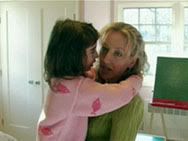
 "He will never get married."
I'm sorry, but, who is to say this? The child she refers to is around kindergarten age. How can she predict this? I have seen videos of adult autistics from their childhood, and one may have predicted a grim future for them as well. Yet, they are doing SO much in their life. These parents promote the misconception that children with autism do not learn, grow, and change as they get older.
She speaks of seeing a mother dance with her son at a wedding, and how she'll never get to experience that. What parent can guarantee their son is going to get married? I know plenty of adult men and women who are not married, and a lot of them will tell you adamantly, they will never get married. So, what makes her think if her child was NT, that she'd get that dance?
Autism Everyday: Exploitations & Misconceptions (Part II)
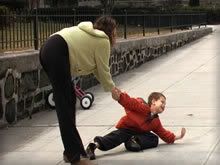 "The $50,000.00 that we're in debt...it's all about the autism"
As far as I can tell, the child in this family is under the age of 5. I could be wrong. Either way, let's assume the child was diagnosed with autism around the age of 3. So, in two years or less, you have spent $50,000.00? On what? I'm rather curious as to what that money was spent on. The mother did discuss some special therapy room they built. Interesting, of all the many families I know who have autistic children, a very minute number of them have therapy rooms. The only ones who do, had plenty of money to do so. The rest of us, haven't felt a need for a "therapy" room in our home. Now, for quite a time, we transformed our kids' playroom into a sorta-therapy room. That is, when my daughter's ECI therapists came to the house, we put a few mats down, exercise ball, etc. and that's where her sessions were. Total cost was, I think...oh, right, nothing. Certainly, I would attend to a leaky roof--something that could be not only a safety but also a health hazard, before I went about creating a therapy room.
Aside from the therapy room, I'm still struggling to add the numbers up to $50K. They are in the U.S.A., and if I'm not mistaken, they reside in New York. New York is said to be one of the best states to live in, if your child is autistic (as far as schools, programs, etc.). I assume, if her child has so many issues, that he is getting therapy in addition to a special ed school program. Perhaps they do not have insurance, but then one would have to assume they receive coverage via medicare or medicaid, right? That's typically the way here. So, if they are doing private therapy in addition to what the school district is giving them, I would guess most of that is covered? I'm just trying to think of our healthcare coverage, what is covered, etc. and the experiences of our friends.
I still find it difficult to get to $50,000.00, that is, unless one was also using quack-cures. Perhaps that's where they are blowing their money and getting themselves into debt with? Huh...so it's not really the autism then is it? No, the $50,000.00 that you're in debt--it's all the insane autism fake-cures and biomed b.s. NOT the autism. Again, I may have missed some things here, and perhaps my math is a bit fuzzy, perhaps I'm too ignorant. But, the only way I can imagine getting ourselves into $50,000.00 debt in anyway related to autism is if I bought into the whole DAN!, TACA, etc. mindset, and allowed myself to get ripped off.
Autism Everyday: Exploitations & Misconceptions (Part I)
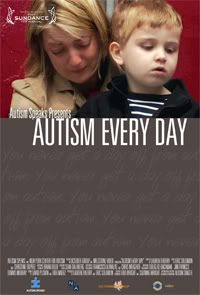
 If you've ever read my blog, you probably know I'm not a big fan of Autism Speaks. But, in case you don't know, I take issue with the "Autism Everyday" video.
It disgusts me the way the children in this video are exploited. I am sick at how careless the filmmakers were and the message this video sends out. I've written previously about Alison Tepper Singer and how she was applauded for her bravery when she admits to contemplating killing her autistic child. That is by far my biggest grievance with the film. Here are some more...
The way the parents force their children to hug or kiss them. The effect of despair that comes from parents repeatedly saying "I love you" and not getting a response. It all comes off as very gut-wrenching. How bewildering it must be to be a parent to an autistic child, and never feel your love reciprocated. Guess what? My daughter can be very affectionate, at times and on her own terms. If a film crew, strangers with strange equipment were in our home, I highly doubt she'd feel much like hugging or kissing me. There is a chance she would cling to me for dear life; but I highly doubt we'd see the sweet and charming child I know her to be, in the calm safety of her home. No, with strangers here, following her every movement, she would have meltdown after meltdown, run and try to hide anywhere, it would be a nightmare for her.
I do not and will not ever force my child to hug or kiss me. For quite some time, the closest we would get to a hug, was an arm that would quickly wrap around our leg and then let go. That later turned into a brief half-hug near our back if we were sitting down. And now, we get full-fledged bear hugs! She will come up to us and squeeze us with all the love in the world! We are careful to ask her if we can get a hug, before we approach her. I am aware of her delicate sensory system. A hug at a certain time, and if she is unprepared for it, may not feel good to her.
Kisses often aren't something my child enjoys. You know what though? I can name you several alternatives to kisses, and they are all just as wonderful. We sometimes touch foreheads, chins, or noses to each other's. Recently, we've discovered our daughter is okay with "lipless" kisses. We press our lips against her cheek or forehead, and she smiles. She now says "no sound!" when she wants this type of kiss. If I forced her to hug on demand or kiss her with my lips puckered, she would pull away. What good would that do?
The majority of times that we say "I love you" to our daughter, we do not get a response. I've yet to cry over this. I won't ever cry over this. I realize that a lot of times, my daughter really doesn't hear us, especially if she is enthralled in an activity, television, etc. So, why would I get upset and take it personally? There's no reason, unless I wanted other parents, people with fat wallets, to feel bad for me and donate to my charity. Another discovery we made was that our daughter likes to sign "I love you." Even though she is verbal, and capable of uttering the words, "I love you," she prefers to sign it. It's a beautiful sight. I'll never demand she answer me when I say "I love you," nor will I want sympathy from others if she doesn't reply.
If these parents would simply throw out the criteria they have for what a sign of love is, be it a hug, kiss, or verbalization, they'd pity themselves much less. They need to quit taking it all so personally. Find alternatives. Meet your child somewhere in the middle, where he or she is comfortable. Doors will open, and I promise you, the new ways you discover to express love, will be even better than the "old" standbys.
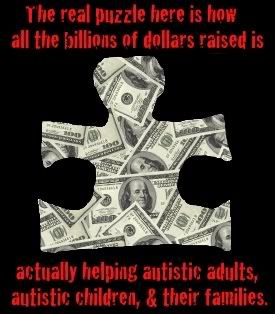






 This Way of Life









 "Autism is a way of being. It is pervasive; it colors every experience, every sensation, perception, thought, emotion, and encounter, every aspect of existence. It is not possible to separate the autism from the person."
- Jim Sinclair
"Autism is a way of being. It is pervasive; it colors every experience, every sensation, perception, thought, emotion, and encounter, every aspect of existence. It is not possible to separate the autism from the person."
- Jim Sinclair