Having an autistic child is not the end of the world--far from it. It is my hope that through this blog, at least a handful of people will get to understand that. My child is amazing, she brings us tremendous joy. We have good days & bad days, but we CHOOSE to focus on the good. Our belief is that by loving our daughter, giving her the most comfortable environment we can, and by most of all accepting her differences, she will continue to blossom--in her OWN way.

Showing posts with label Human and Civil Rights. Show all posts

7/6/08

Attention Autistics & Fellow Family Members: ABC Wants To Hear From Us Again

I'm not entirely sure what this presentation will turn out like, what the focus will be, and so on. I thought I'd send this along though, hopefully we can ensure that our voices can be heard (once again).


ABC News Seeks Submissions for iCaught: OnCall+ Autism
Thursday, July 3, 2008
By: Carin Yavorcik

Share your stories via video

ABC News is presenting an opportunity for you to share your personal experiences as part of a special hour on Good Morning America Now: "OnCall+ Autism." You can also send a question about autism that may be answered by a top medical expert in the field.

ABC News is looking for video submissions on the following topics:
1) Your thoughts on living with autism or with loved ones with autism
2) Any questions you might have on autism to be answered by our medical
experts

Most digital cameras now have a video function that allows the user to record 30-second to 1-minute videos. Once recorded, you can upload the video to your computer the same way you'd view digital snapshots. ABC News is specifically requesting 15- to 45-second videos.

How to submit:

1) Via cell phone:
Record a 15- to 45-second clip and email it to: icaught@abcnews.go.com

2) Via the web
Click on the red "RESPOND NOW" button

Videos submitted by the end of July may appear on ABC News NOW!

6/27/08

Gabriel Poirier - We Cannot Forget

I wrote about the death of Gabriel Poirier the other day, but this article was emailed to me, and I wanted to post it here. I wanted to write more about Gabriel, for one because many (like myself) had not heard about his death until this week (he died in April). Also, and most importantly, because I don't want any of us to forget him--a nine year old boy, innocent, simply attending school. We have to remember Gabriel, and his parents. Please visit this article by Graeme Hamilton at the National Post.

MONTREAL - After nine-year-old Gabriel Poirier was discovered lifeless in his classroom last April 17, his parents were told their autistic son had stopped breathing after hiding under a heavy therapeutic blanket.

Now a coroner has revealed that Gabriel's teachers had tightly wrapped him in the buckwheat-stuffed blanket, leaving only the tips of his ears sticking out, as punishment when he became disruptive. They left him unsupervised in a corner for 20 minutes, returning when a timer sounded.

Gabriel was unconscious and blue in the face. He was rushed to hospital, where he died the following night surrounded by his family.

It's pointed out in the article that weighted blankets can have therapeutic benefits. Our eldest happens to use one, it helps her sleep issues. Our youngest has used weighted lap pads, backpacks, and utensils. She also enjoys being "squished" by two pillows, bean bag chairs, etc. It is very calming. But, as Gabriel's father points out, what this school did to his son was not therapy, it was abuse.

"He was only 53 pounds, he was so small," Gilles Poirier, the boy's father said at a news conference yesterday. "How can they wrap him up like that in a 40-pound blanket? How can this treatment be tolerated?"

Not only was he wrapped four times by such heavy weight, but his entire face was covered, and obviously, he was trapped. Even more disheartening were the lies the school told the media and to Gabriel's parents. More from the family's lawyer, Jean-Pierre Menard:

Mr. Menard said the parents were surprised to learn Gabriel had been placed in the blanket as a punishment. The school board had initially said it was a natural death and that Gabriel had gone under the blanket on his own.

"The principal said they found Gabriel under the blanket and he wasn't breathing. The parents thought that something had happened while he was sleeping and that was how he died," Mr. Menard said. He said the school board later told the media that Gabriel had hidden under the blanket.

How a school could lie about Gabriel's death is beyond me. I hope they will be held accountable, and that real change is made regarding restraints. The article ends with this:

Mr. Poirier said he cannot understand why his child was placed in a restraint. "He was a very gentle boy," he said. "Sometimes he was loud, but he was never aggressive or violent. I just don't understand how this happened," he said, tears streaming down his face.

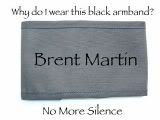
We can't sit idly by while such tragedies occur. My heart goes out to the Poirier family. I have not seen a picture of Gabriel, but there is a picture of his parents here--I feel images are so crucial to making an impact. We have to vow to never forget Gabriel.

6/26/08

Where Is All The Autism Awareness?

This is a new story, yet the theme is nothing short of disgustingly familiar. Another autistic child being kicked out, this time from an airplane. We've seen this play out time and time again, with children being booted from school, church, the movies, and Boy Scouts. Where is all the Autism Awareness?

Here we are, trying to live our lives with our children. And all too often, the treatment we receive from those in society ranges from rude to cruel. The stares, snickers, and whispers are one thing. But lately, it seems the job of parenting an autistic child and that of simply being an autistic person has become increasingly more difficult. The message that we, and our children, are an inconvenience and need not be tolerated is becoming quite clear. There was a time when it was thought community was where you turned to when you needed assistance. The idea of reaching out--whether to your church, your school, or other community groups, seems more difficult for autistics each day.

Now, I will say, I look at things on both sides. In fact, prior to my experiences with my youngest, I may have agreed with the airline's position. I may have believed that kicking this mother and child off the flight was the only option. And to any who feel this way, I say walk a mile in our shoes. I have seen time and time again, the intolerance toward autistic people, and people with disabilities in general, is shameful. I am not surprised that this flight crew was forceful and abrupt, and that they did not attempt to work with this mom and her son. It was only a few weeks ago, that AutismVox wrote about an incident in the security line with her son. What more is needed, for society to become tolerant of our children? The sad truth is, most would prefer we keep our kids away.

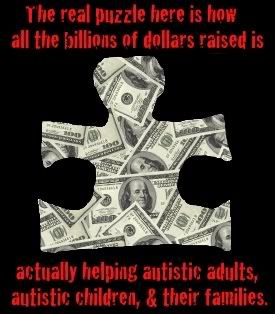
With all this "autism awareness" everywhere, I ask you this: where is all the understanding? Does it matter that someone knows what autism is, or the figures 1 in 150, or that Jenny McCarthy "recovered" her son? No, obviously it doesn't. It's gotten us nowhere. Proper care is still very limited, we are still lacking in options for teen and adult autistics, services are frustratingly limited. Autistic children and adults are being abused and killed, as I wrote about recently. Autistic individuals, and their families, are discriminated against. All of the money raised in the name of "autism awareness," all the signs at Toys R Us, the pretzels, the CNN coverage...and where has that gotten any of us?

Here We Go Again: Autistic Boy Kicked Off Of Flight

I have to tip my hat to society--if it weren't for its' continued intolerance of autistics, we'd never hear "autism" uttered so frequently by every news agency in this country. The last several weeks have brought on a barrage of stories about autistic individuals. Some have been more positive, sadly, most have been about autistic children being excluded (or much worse).

On Monday, two and half year old Jarett Farrell and his mother were on an American Eagle flight, on their way to visit family in New Jersey. Jarett, who is autistic, was having a tough time and was upset. It it should also be pointed out--many young children have difficulty on an airplane.

His mother says she was doing all she could to calm the autistic boy, but got no sympathy from the flight crew.

"If they just would have been a little more understanding I think that none of this would have been a problem," Mother, Janice Farrell said.

Instead, it only got worse:

"She kept coming over and tugging his seatbelt to make it tighter, 'This has to stay tight'. And then he was wiggling around and trying to get out of his seatbelt. And she kept coming over and reprimanding him and yelling at him," Farrell said.

One of the pilots came back to the cabin with a stern warning and Farrell says the frustration level escalated.

The pilot turned the plane around, and the mom and child were "escorted" off the flight. And, just to ensure no one would be confused about what was going on:

"The pilot made an announcement that there was a woman and her child on the plane and the child is uncontrollable. And at that point I just broke down," Farrell said.


We are taking a family vacation this summer. After much discussion, we decided to travel by car. This decision will take much longer, be more costly, and we still are not certain how either of our children will handle it. However, when we thought about flying, and the many delays and cancellations my husband has faced, it seemed we were better off driving. We'd also heard of at least one other child whose flight made an emergency landing, because she was crying. Friends of ours recently had an experience where a flight attendant placed her hands down on their son's (who is not yet 3) legs, trying to force him to sit in his seat (they were about to land, and he wanted to sit in his mother's lap). Other passengers were outraged, and made complaints over this crew member's behavior.

We thought long and hard about our daughter, at the airport, on the plane, and so on. What if our flight was delayed? How would she handle long security lines (this story in particular was concerning)? What if we were stuck on the tarmac? What would happen if she had a meltdown mid-air? All of those questions and concerns made us lean toward driving.

Yes, our decision to drive (which we made almost 2 months ago) was our own. I feel better knowing we will be in our familiar car, and not have to deal with strangers and others who may interfere or do otherwise should our child have a meltdown. Knowing how the airline companies have handled other situations, I was honestly anxious thinking of flying with my daughter.

I have to wonder though--if society (including airline crews and airport staff) was more tolerant and these stories weren't so common, would I still feel the same?

6/19/08

Another Senseless Tragedy...

People who prefer to find blame in vaccines, often look at us who embrace neurodiversity as being unrealistic. We even are accused of not having our children's best interests in mind. First and foremost, after years of studies continue to find no link between vaccines and autism, why is there still a debate? Why is anyone wasting their breath on this? All the money and media mention--for what?

Those who hold onto the hope of a cure for autism and support pouring millions into such research, also look at us in this same light. Let's be brutally honest here: there will never be a true "cure," not in the traditional sense of the word. What will come in the next several years, most likely, is a prenatal screening for well-documented "autism genes" or other markers for autism. Then, just like we've seen with Down Syndrome, pregnant women will be counseled to abort their fetus based on the positive autism test. A secondary "cure" would most likely be a combination of medications and supplements. There will never be a "magic pill" or procedure to "rid" someone of autism.

So, with all of that in mind, these same people continue to attack those on the ND side of things. We are called every name in the book. There is plenty of confusion as to what Neurodiversity means (as well as what Autism awareness should be), and what so many of us are fighting for. For me, and for most of the parents I know, we are fighting for better services for our children. We want programs created and funded now for teen and adult autistics. We demand better teacher training, employer seminars, first-responders' awareness on autism. We see a dire need for better options for autistics and their families: living arrangements, vocational and education programs, and so on. We also desire our children to be accepted by society, and at the very least tolerated in our communities. We want the world to embrace our child, and see all the gifts we see (for all our children, all over the spectrum).

Our concerns stem not only out of the love we have for our children, but from our fears that arise hearing about stories of abuse. Talk about intervention and treatments (that are respectful to autistics), yes. But how can any of us spend another minute blaming vaccines and promising cures, when our children are being abused, neglected, and killed?

Gabriel Poirier was nine years old when he was suffocated to death at his school. The details of his death are horrifying, and we yet to have all of the facts (like, why the teacher thought this was a viable option?). From The Gazette:

On April 17, Gabriel began to disturb his class with loud sounds. After being told repeatedly to calm down by a teacher, he was rolled in a weighted blanket. With his arms by his side, he was left on his stomach for over 20 minutes with only his toes exposed.

When the teacher went to check on him, he was "listless and blue in the face," the Coroner's report said. The teacher called 911 but the boy was already in a deep coma and passed away the next day in the Sainte-Justine hospital.

"He was a very gentle boy. Sometimes he was loud, but he was never aggressive or violent," Gilles Poirier, the boy's father, said today.

The parents' lawyer, Jean-Pierre Ménard, said vulnerable children like Gabriel need better protection.

"We're asking Minister Courchesne to implement a legal framework to regulate how these children are handled," Ménard said.


To think of how terrified Gabriel must have been as he gasped for breath, and the pain his parents are feeling--we cannot look the other way. My heart goes out to his family and friends. We must all learn from Gabriel's story, and not let his death be in vain. This is yet another wake-up call: our attitudes toward autism and autistics needs to change. What is it going to take to for all of us, autism parents and society, to come together and ensure such a tragedy never happens again?

In the words of Gabriel's father:
"Things, or action should be taken to prevent this, to never happen again."

For more information on how you can get involved, please visit these sites:

End Abuse of Children in Residential Programs: ACT TODAY!


APRAIS - The Alliance to Prevent Restraint, Aversive Interventions, and Seclusion

CAICA - Coalition Against Institutionalized Child Abuse

6/16/08

High Functioning? Then Shut Up!

That's the message sent loud and clear by nearly every autism organization (in the media spotlight: TACA, Autism Speaks, et al.) these days. They don't care what you were like as a child, what your struggles were, or the issues you face now. If you are able to speak to reporters or blog or live independently or hold down a job, they don't need you. Rather, they'd prefer you just shut up and go away.
Photobucket
Oh, but wait...but they do need you. Sometimes, at least.

A lot of the comments from the ABC piece were, as expected, the same regurgitated message we hear lately. The idea that those with Asperger's (or that are "high/er functioning" as they put it) can't possibly be on the same journey as those with classic autism. Don't listen to them. That's not the autism my child has! Those people have no right to speak for the autism community! And yet, it's amazing who they do want to represent the "autism moms" of the world. It's also interesting to see how these people determine what "high functioning" is and what it isn't. It's also curious to learn their criteria, if they have any, for "Autism Recovery."

This group (typically the anti-vaccine and pro-cure folks) presumes that an individual living with Asperger's has not faced any struggles. That they don't have sensory issues, meltdowns, social or communication issues. Basically, in their eyes, they have no business being on the autism spectrum (hello?!). They apparently have never been bullied, don't have problems at school, have no trouble living independently, and all can easily find jobs. Anyone who knows an Aspie or someone who is (as others would classify as being) "higher functioning," can attest, this is not the case. Not to mention, the now-Aspie adults who were previously diagnosed with classic autism as a child. Unless those individuals can be used to further sell their "cures" and you agree to be exploited, labeled "recovered," they don't want to hear from you.

They treat us parents who find joy in our autistic children in the same manner. We are crazy, foolish, and even sometimes seen as harming our children. Really--harming them by not injecting them and not forcing supplements down their throats. Harming them by not subjecting our children to needless and harmful chelation and a myriad of other "treatments." Harming our kids by letting them know we respect and love them? We parents who are not suffering, we are a major inconvenience for these organizations. The parents and autistics who believe in and promote neurodiversity, are even described as being "radical."

Neurodiversity is about real civil (and human) rights. People all along the spectrum are being abused, discriminated against, and are not given equal protection. Many have to fight (and sometimes lose) in order to get the right to an education, to work, and even to participate in our culture--and that is the entire spectrum.

It's interesting to me--those who are seeking a cure (and are disgusted by acceptance or "neurodiversity"), are very quick to use the "1 in 150" stats, and employ them to make a case that there is indeed an "autism epidemic." Yet, they continually discredit adult autistics. When autistics speak, they are the first people to dispute what is being said.

The "1 in 150" includes the entire spectrum. You can't pick and choose how you interpret that number (the one that points to an "epidemic"). You can't use a certain subset of autistics only when they, as a number or statistic, suit your needs.


I had drafted this last week just following the Neurodiversity segment on TV. I read Joy of Autism last night, where this myth along with others are brought to our attention:

4. Biomed autism advocates like Jenny McCarthy's TACA group need and use "higher-functioning" autistic people in their statistics to try to prove there is an "epidemic" on the one hand, while stating on the other that they are not "severe" enough to speak for autistic people.

These myths really need to be addressed by all of us, and especially by groups like TACA, Autism Speaks, and so forth.

6/10/08

End Abuse of Children in Residential Programs: ACT TODAY!

I received this from ASAN and wanted to spread the word. Please call your Representative and urge them to support and vote yes on H.R. 5876!

Grassroots Action Needed for Approaching Vote

June 10, 2008-After swift approval by the House Education and Labor Committee
on May 22, The "Stop Child Abuse in Residential Programs for Teens Act of 2008"
(H.R. 5876) appears headed to the House floor for a vote next week.

The bill is a welcomed response to thousands of allegations of child abuse and
neglect at private residential programs (therapeutic boarding schools, wilderness
camps, boot camps and behavior modification facilities) for teens with emotional,
behavioral or mental health needs, reported by the Governmental Accountability
Office
(GAO).

Although some parents find such programs helpful, protections are needed
because too many children are being abused and nobody is watching. H. R. 5876
would make available information to help parents make informed choices about
their children's care in these placements.

H.R. 5876 was introduced on April 23 and is sponsored by committee chairman
George Miller (D-CA) and Representative Carolyn McCarthy (D-NY). It would:

  • Keep teens safe with new national standards for private residential programs.
  • Prevent deceptive marketing by requiring disclosure to parents of qualifications,
    roles and responsibilities of current staff and of substantiated reports of child
    abuse or violations of health and safety laws. Programs would also have to
    provide a link to or web address for information on all private residential programs
    kept by the U.S. Department of Health and Human Services (HHS).
  • Hold teen residential programs accountable for violating the law by requiring
    HHS to conduct unannounced site inspections at least every two years.
    Civil penalties up to $50,000 would be levied for every violation of the law and
    parents would have a federal right to sue program operators that violate the
    national standards.
  • Ask states to step in to protect teens in residential programs by providing grants
    to states that develop their own standards that are at least as strong as the
    national standards and inspect the programs in their state at least every two years.

Under Chairman Miller's leadership, this issue has garnered much-needed
attention. The Committee's website has links to testimony from an April 24
hearing, where the GAO and other experts testified and presented a follow-up
GAO report
.

Please Act Today!

Urge your Representative to support H.R. 5876 today and to vote yes when
the bill is considered on the House floor.

  • Call the Capitol switchboard at 202-224-3121 and ask for your Representative's
    office. You can also call your Representative's direct lines, available on his
    or her website through www.thomas.gov/

Now is the time to end abuse and neglect in private residential programs that are
intended to help teens with behavioral, emotional and mental health problems.

Autistic and Proud

PhotobucketIf you missed the piece this morning on Good Morning America, you can find it online here. There were some wonderful moments, both from Ari Ne'eman and Kristina Chew. I was delighted that ABC included the Ransom Notes campaign, and how our community came together and dissolved it. Transcripts from the show are also available on ABCNews.com as well.

Ari Ne'eman said this early on in the interview, when speaking about a cure for autism, and why some parents are upset over this:

"I think that one of the key issues to remember is that anti-cure doesn't mean anti-progress," he said.

That is so important. People hear "acceptance" and they assume ignorance and even laziness. Accepting my child, accepting autism, does not mean I sit around and allow her to struggle through her life. What it means is that first and foremost, I see her and treat her as the unique, beautiful individual she is. I respect her and love her. I have learned so much from her, she is a gift, and I really am lucky. I do all I can to help her, to ensure she has the skills she needs to reach the next step (realizing it may take a long time to get there, and there may be hurdles along the way).

"Where does disability come from? It comes, in many respects, from a society that doesn't provide for an education system that meets our needs. From people who often discriminate or bully or even injure us, and from a society that is largely intolerant," Ne'eman said.

Society is very intolerant, we see that time and time again. I have always thought of my home as refuge from the world--and now for my youngest, refuge from a society that can be very cruel. I see it in stranger's eyes when she is having a meltdown in the store (the "can't you control you child?" or "what is wrong with you?" stares and glares). Or the perplexed look on another child or even parent's face if she is struggling to do something (a milestone achieved by children younger than her) or when she is hyper, spinning in circles or making odd vocal noises. You don't realize how judgmental the world is until those moments. I always had such hope for the world, it's easy to become jaded when you are in my shoes. Judge me, that's one thing. But, I never dreamed society would judge a young child. It's disgusting.

Lenny Shaffer, a writer with an autistic son, says of the movement, "You're a handful of noisy people who get a lot of media attention, but you don't represent a broad swath of the autism community."

Ne'eman believes history is on his side.

"I can't think of the civil rights movement throughout history that hasn't been faced with resistance and misunderstanding on the part of its detractors," he said.

I really have to disagree with Mr. Shaffer's perception of the "Neurodiversity" or autism acceptance or autistic pride (or whatever else one may call it) movement. I see our numbers growing each day. I see it most apparent out in the world, with parents of other children in our community. To be honest, most of the parents who I know who feel as I do, they simply go about their day and their life. They aren't seeking media attention or attending rallies. They have no beef with the government or with vaccines or anything else. They focus on helping their child, dealing with the schools, and just with living life with autism. Those who feel it is wrong for us to "accept" autism, they tend to shout louder and love the camera. But, I honestly feel that we are a rather large, and growing, part of the autism community.

"We really try and understand him on his own terms," she said.

That is her advice for parents dealing with a child's autism diagnosis and feeling hopeless.

I couldn't agree more with Kristina. I'm grateful for having (by coincidence and luck I suppose) known a few parents of older autistic children just prior to and around our diagnosis time. They gave very similar advice. There was always a lot of optimism in their message. I have never forgotten their words. My daughter has made tremendous progress, I credit part of that to the fabulous doctors and therapists we have (and knowing she was delayed and needed help before age 1). The other part, and I strongly believe this, is that she has a loving place of acceptance to live in. We do not force her into how we think she should be. We realize she often finds comfort in rocking, flaps when she is excited, and has her own "brand" of play. We understand that eye contact can make her uncomfortable. We do our best to prepare her for social outings, changes in routine, etc. We follow her lead, in many ways. I don't think she would be where she is today, if we focused on changing behaviors or actions that society perceives as odd. She is so connected to us, and each day opens up more to us. We'll be able to help her so much more, because she will know we are trying and that we respect her.

The interview ends with Kristina saying this, a beautiful message that we all should remember:

"Acceptance, to me, is the beginning of hope," Chew said.

I want to thank Ari Ne'eman and Kristina Chew for their wonderful interviews. I truly feel these messages are what will lead to change for our children and for adult autistics. I applaud ABC, along with Deborah Roberts, Michelle Major, and Jonann Brady for doing this piece. I hope it is only the beginning of many more.

6/5/08

The Autism Whisperer Cometh

From Jim Carrey's speech during the "Green Our Vaccines" really.

Autism is everywhere. It's on every street, in every town. It's a warning from the universe that there is a serious imbalance in our environment and that immediate changes must be made.
Woah--almost sounds like some of that new-age Indigo type of talk. I wonder if he is a crystal? He continues on,
To quote Burton Goldberg, an expert on the new age of medicine, 'autism is the canary in the coal mine.'
Bev at Asperger Square 8 has a different take on the canary metaphor (which apparently is also popular with a one Dr. Bryan Jepson). Dr. Burton Goldberg, I feel it should be noted (since we are referencing autistic children, vaccines, and other medical-related issues) received his Doctor of Humanities Hon. from a Capital University of Integrated Medicine (it may also be of interest that this school closed down in June 2006). He is a publisher, and the self-proclaimed "Voice of Alternative Medicine." That's right--he is not a medical physician.

Mr. Carrey continued on with the importance of trusting a mother's instinct, not trusting the government, and bashing the drug companies. He then adds, in reference to the pharmaceutical companies:
...they are far too busy fighting the scourge of restless leg syndrome.
Roars of laughter, hollering, and applause. He continues,
Also known as lazy ass disease.
This also is met with screams and yelps and more laughter. I loved it the one time when I was at a fund-raiser for cancer research, the speaker cracked a joke about people with diabetes. It was hysterical! Oh, wait, that never happened. That would never happen--would it? No, I think only people with the mindset that autistic individuals (along with any person with a neurological or mental difference, disability, or disorder) are not afforded the same respect or rights as others would say such a thing.

There is making light of one's differences, and then there is outright bashing. This was not funny (although it appears the audience was rather entertained), and certainly not amusing to the people who really do suffer from Restless Leg Syndrome. My mother has it. She is not on one of the new medications for it, but on some nights she does take Ambien. It is something that has plagued her for as long as I can remember. She simply has had an official name for it in recent years; but she stayed awake many a night well before a name existed for this condition. I simply can't imagine making fun of someone else in such a manner, at such an event. But, then again, we are speaking of the same group of people who time and time again present themselves as less than professional (see below for more on that!).

Jim Carrey does actually say that "these children have a purpose" at the end of the speech. However, the tape shifts to Jenny's speech. So, I'm unsure what he perceives as the purpose of "these" children. Is it to be a part of society, respected and welcomed? Or is it to make some great change via the "greening" of vaccines?

Jenny goes on to speak, and describes herself as a mom of a child "who had autism." I wonder if she's changed her mantra--which used to be that he'd never be "cured" of autism. In every article, they define her as the mother of an autistic child. I believe my favorite Jennyism from that day was this:
"...and the ingredients like the freakin' mercury..."
What class. Once again, please don't group me in with the "autism community" and the "autism moms" you, Jenny, claim to represent.

Can someone who has watched the YouTube video posted here, please explain what the headless child sculptures are at the end? Please, please, tell me that is in no way related to this rally or to autistic people.

6/3/08

Society's Sad State

I was reading Odd One Out in the days immediately following Alex Barton's reprehensible ousting from his first grade class (a la Survivor). I was so deeply affected by the post on this inexcusable act. Primarily on the comments that Lastcrazyhorn had compiled and was writing on. I was outraged and then very saddened by the bias and ignorance I was seeing. Suggestions like this child just needed some discipline, or that his behaviors were due to poor parenting, or commending this teacher for bringing order back into the classroom, honestly make me wonder what country we live in and exactly what year it is.

The case of Alex Barton has done two things. For one, it has brought Autism, inclusion and mainstreaming, and special education into the public eye (at least temporarily). All the major news stations covered the story in some form or fashion. Furthermore, the story has brought bloggers together all across the world. I've seen bloggers who have no connection to autism writing on it; others whom I have many disagreements with are just as passionate about this child's rights. It's been amazing to see us, once again, all come together to make change. We do have to remember that this is far from over--both for Alex and for the rest of our children. So, we need to keep writing those in the government and making our voices heard.

The other thing this case in particular has done is clearly brought forward how a great many in society truly feel about autistic individuals: put them away. The vast majority of us parents speak about how relieved we are to be living in a day where we do raise our children. Gone are the days that we are forced to (or strongly advised by our physicians and others we trusted) institutionalize our children (well, in most cases: please read about Nate Tseglin). However, it seems that a number of people would prefer we do just that. They don't want our kids interfering with their child's education. They speak of our kids as if they have some rancid, contagious disease. One that if our kids area allowed in their child's classroom, will seep through and infect the whole school. They claim it's unfair for their child to be in a room with our child. Unfair? Why? Because our child may help your child learn about tolerance and acceptance? Because they may learn to not judge a book by its cover, once they get to know our child? I'm sorry those lessons are so appalling to these parents.

I hate to break it to you who think my child will so horribly disrupt your child's education that she should be dumped somewhere else: my kid isn't the only one having issues in class. Have any of you spent time in a public school classroom? In Vanillaville, USA, you are going to see a SPECTRUM of children in any given room. You will have kids of varying intelligence and skill sets, children who have learning disabilities, health issues, and those that are gifted. You are going to have kids who are poor, kids who are rich, and all those in between. There are going to be adopted kids, foster kids, kids whose parents are divorced, and so on. You may want to point the finger at my child and say she is the one affecting your child's education--but really, can you prove that none of those other children do?

My oldest child is in fact labeled "gifted and talented" based on an evaluation (IQ score, plus various tests of knowledge and ability). She is in a classroom with children of varying abilities, and all those differences I mention above. Do I sit and whine that any of those kids is disrupting my kid's education? No. She is in public school, that's all part of it. She does have a few children in her classroom that receive special ed services. I've witnessed a meltdown by one of her peers, another child who is literally unable to sit still, and another who has significant trouble with reading. Shall I begin a protest to take these students out of my child's class? I would never. School should be a place where children learn to be good citizens. That is still a part of today's lesson plans, right? I want my daughter to acknowledge and accept children who are different from her. I don't want my daughter to judge a peer based on their skin color, family situation, physical appearance, or so-called "behaviors" ala Autism.

If you feel that my autistic child, or any other autistic, disabled, or different kid is so horribly affecting your child's education, guess what? You have a choice. Go to private school. I'm sure there are some better-suited schools out there--you know, ones where only blue-eyed, blonde-haired, strong, "neurotypical" children are accepted (I wonder if there are any schools who support a program like T4, that may be more your liking). People will say I'm crossing a line, that these views of society in 2008 are nothing like Hitler. I beg to differ. I think many would agree that if and when a prenatal genetic screening for autism is available, abortion will become common place, as in the case of Down Syndrome. We have professors speaking--and smiling--at universities, about eugenics.

This is the state of our society today. In this country, it is touted that we are the land of the free, and that each citizen has the same civil and human rights. This is not the case when it comes to disabled persons. What have we learned from history? Why are so many unwilling to give our children and autistic adults a shot? Why is there such intolerance and ignorance? It is my hope that through Alex Barton's horrible experience (and, sadly, many others) that a dialogue can begin. I want real change, for my child, for the many other individuals I've come to know on this journey. I can only hope that society is ready to listen.

Response to Comments: Alex Barton & Inclusion

I received this comment by Eric (you can watch the interview here):

"This child needs special attention for his disability- he should not be in a class room with children of a normal performing level. After reviewing the interview from "The Early Show" http://www.breitbart.tv/html/103693.html the child looks extremely disruptive and probably is a distraction in class. Placing those with disruptive disabilities in normal classrooms detracts from everyone else's education and occupies too much of the teachers time. The classroom is better off without him."

Yes, he does need special attention. His mother was meeting with school officials, this teacher included, to make such provisions. From what I understand, he had an IEP in place, and most likely a BIP (and if not, the school was indeed failing him well before Wendy Portillo's disgraceful actions). He should be in a class with "children of a normal performing level" (whatever that is in kindergarten!). For one, it is the law. Alex, just like my child, just like your child, has rights. You're not saying that autistic people don't deserve the same rights as other citizens, are you? Please read about Least Restrictive Environment, and perhaps you'll better understand why Alex deserves to be in this class. A side note, when you say "normal performing level," I wonder what that means. Are you talking about behavior, academics, or IQ? Odds are, Alex has a rather high IQ and is very capable of keeping up with (or soaring past even) his peers in academics (when the right supports are in place). What would be your definition of "normal performing level," do you have a specific criteria a child must meet before being allowed in a classroom?

I watched the interview. Can you tell me exactly which behaviors were so deplorable that Alex should not be in his classroom? You state he "looks extremely disruptive." Really? I can't imagine how my eldest (the gifted one, remember) would act in front of a camera. Actually, I bet she'd act out in ways I'd be mortified about! I don't even think I could get my youngest to sit on my lap or be anywhere near the camera crew and those spotlights (to which I greatly applaud Alex!). You can't base how a child acts, in front of bright lights with odd sounds and such. I personally did not see any behaviors indicative of Alex being a nuisance in class. Perhaps it's because I spend 24 hours a day with two very quirky kids, but I saw an inquisitive child. He didn't seem much different than any other child I've seen on T.V. while his parent is being interviewed.

With regard to the behaviors of this child in school, no one denies that Alex wasn't having difficulties. That is part of autism, at least for every autistic child I know. There are steps in place for schools to help a child with this. IEP's and BIP's help, as does open communication with teachers, counselors, and therapists. It sounds like not all was being done to help Alex, that could be done. I sincerely hope that now that he has an official diagnosis, steps will be taken to help him out. He may benefit from having a para or other support services.

How would you define "disruptive disabilities?" Is it just the autistic children? A child with ADHD? Does this include a child in a wheelchair? A child who stutters? The child with emotional issues due to their home life? I have actually seen so-called "neurotypical" children in the classroom be more "disruptive" (although I feel that word is rather harsh) than an autistic child. A child with ADHD may have a hard time focusing or sitting still. Yet, I don't think anyone would suggest placing a child with ADHD into a special education class. A child in a wheelchair may require more time going to and from the classroom, and certain class activities may need to be adjusted to accommodate his/her needs. The child who stutters will take longer to read a sentence aloud. A child with emotional issues may get into fights, may have trouble concentrating, may cry or act out. Would you argue as strongly for those children to be in a separate classroom as you do for Alex (and apparently all autistic children)? In any given classroom, there's plenty of distraction. It's not just Alex or my kid who may require more of the teacher's time on any given day.

The last sentence is the one that really felt like a punch in the gut. The idea that Alex's classroom or any other autistic kid's class is "better off without him" is so disturbing. It is the same barbaric mindset that once institutionalized our children, giving them no hope of any type of life, our kids were seen as having no value. This same senseless thinking leads to these very crimes, and disgusting preaching like this. This is why we fight, this is why we are so passionate, this is why we rally. Until society sees our children as human beings, as individuals with the same rights as anyone else, and accepts them for who they are, we will not be silent.

Another reply I received:
"anon So, lets see here, this little kid in Florida was being a t*rd and the rest of the kids voted him out of the class? whats the big deal? He's probably the same kid who gets picked last or doesnt get picked at all for any team sports. It's amusing to see the mothers cry out in harmonic outrage for their little precious bundles of stupid reject. Your kids are t*rds. Deal with it"
This comment deserves no response, and therefore I won't give it any justification. I do want to have it up here, just so that those people who may be unaware of what we, what our children, what autistic individuals, and what disabled citizens face day in and day out. These hateful, ignorant viewpoints are everywhere. Prejudice is very real in our world.

5/24/08

"I'm Not Special"

Those are the words that Alex Barton has come to say repeatedly to himself. He screams in the car when his mother drops his sister off at school. He's refusing to eat and unable to sleep in his own room. Alex was recently kicked out of his school, by his classmates--after his teacher took a vote on it. Alex is thought to have Autism (currently being evaluated for Asperger's). He is also just five years old, in kindergarten at Morningside Elementary in Port St. Lucie, Florida.

Remember Kindergarten? That time of our lives when we are supposed to be taught to be good citizens, to learn social skills, to learn how to "get along," and how to obey the school rules. We're also supposed to have fun, play, and make new friends. Kindergarten is supposed to be the foundation upon which our next 12+ years of education will rest upon.

And yet, in Alex's classroom, the lessons being taught by Wendy Portillo appear to be ones of prejudice, intolerance, and outright cruelty. Alex's peers learned from their teacher that if someone is different, and you have a hard time understanding their habits, actions, delays, etc., then you simply dismiss them. Get rid of them. Kick them out. Take a vote, and out the classroom they go.

And, before you do, you might as well tell that person what you think of them. Five year old obscenities like "disgusting" and "annoying." This is brutality, no doubt. Melissa Barton (Alex's mother) reports that Wendy Portillo confirmed that this indeed happened. If that is the case, this teacher is cruel and inhuman, a person who has no business being in the education sector. She is teaching innocent, naive five year olds a lesson of hatred. A lesson that these children will not soon forget. We can only hope that these kindergarteners' parents have enough sense (and compassion) to explain to their children how wrong this is. It's far better to teach their children tolerance, acceptance, and understanding, and it's my wish they realize that.

If these reports have been confirmed, I see no reason why this teacher still has a job. She should have immediately been fired, no questions asked. One can't help but wonder--if this child wasn't autistic, what steps would the district would have taken? Had this been any other child in that classroom, all hell would have broke lose. There would have been protests, and no doubt, due to massive political pressure, this teacher would have received her walking papers STAT.

We've all seen how autism continues to be portrayed on television--as children who are violent, angry, withdrawn, and out of control, who were "kidnapped" or "lost their soul." The parents desperate and depressed, their lives "spiraling out of control." So, when the public hears that this child has autism, and was having "behavioral issues," most say "well, I can understand why you wouldn't want a kid like that in the classroom." They presume to know Alex all because of what they've seen or heard, these biased reports in the media. Society doesn't want to understand (let alone accept) autism or autistics--at any age. They're being constantly fed these ideas about recovery or a cure, not ever about the dignity or acceptance of autistic individuals. The message that those lives are not worthy of our respect or our time is what the public hears.

So again, when an autistic child is kicked out of class, they don't much care how or why it was done. They think nothing of the ramifications, not only on the autistic child, but also of the other children in that classroom. We are living in a culture of un-acceptance. We all must fit into the public's cookie-cutter mold, or we are just not good enough to be an equal member. Our society likes to preach a lot about being diverse, and about supporting those with disabilities. Yet, when it comes down to it, in the real day to day stuff, society would rather look the other way.

When people ask me why I cringe at a celebrity bragging about her "recovered" child or a politician working to "prevent and cure anything along the Autism Spectrum" or a grandmother declaring that "Autism knocked on the wrong door," I don't need to look far for my reasons. The case of Alex Barton clearly shows us that this propaganda reaches far and wide, not only into our homes, but even into our schools and churches. I want the Barton family to know that they have my full support, along with many others. I was grateful to read this, and learn that Alex's mother, Melissa Barton is a very strong woman, who will not let this slide:

“He has many of the symptoms of Aspergers” says his mother. “The teacher knew that he was under evaluation even having a part-time assistant just for Alex, and she decided that the best way to handle him would be through humiliation from his peers. I cannot imagine how he must have felt as his teacher encouraged the other students to bully Alex by telling him he is disgusting and they do not like him among other things. This is abuse and discrimination among other things; I will not soon let this go” says Melissa Barton. “The moment he needed me the most, I was at work. I do not know if he will ever trust teachers again, I do not know if I will ever trust the Port St Lucie School District again. I know it will be a while before I can convince my little boy that learning is fun. I am deeply sorrowed by the pain my child suffered at the hands of his Port St Lucie school teacher.”

Mrs.. Barton went on to say, “This is a sad day for parents of disabled children across the USA. I am now seeking the help of a physiatrist for my son as he refuses to eat, sleep in his own room and other problems that arrived directly after the abuse."


Make your voice heard, tell the Port St. Lucie school district that this type of discrimination and hatred will not be tolerated.

CONTACT INFO:

Morningside Elementary School Principal:
Mrs. Marcia Cully

cullym@stlucie.k12.fl.us
(772) 337-6730

St. Lucie County Schools Superintendent:
Michael J. Lannon
4204 Okeechobee Road
Ft. Pierce, FL 34947-5414
Phone: 772/429-3925
FAX: 772/429-3916
lannonm@stlucie.k12.fl.us

St. Lucie County School Board Chair:
Carol Hilson
772-519-0397
hilsonc@stlucie.k12.fl.us

Vice Chair:
Judith Miller
772-528-4545
millerj@stlucie.k12.fl.us


The Autistic Self Advocacy Network is asking all those who write to express their outrage to cc: info@autisticadvocacy.org so that ASAN can keep track of the strength and sources of the response. They also advise us to be mindful that abusive messages hurt our cause--please be respectful in your comments.


A special thanks to Bev at Asperger Square 8 for bringing this to my attention.
Others who have blogged on this:

ballastexistenz
Whose Planet Is It Anyway?
Whitterer on Autism
Maternal Instincts
The Joy of Autism
LeftBrain/RightBrain
Action For Autism
Along the Spectrum

5/19/08

Jenny's New Book

I was checking out Amazon.com when I stumbled upon Jenny's new book. It is entitled, "Mother Warriors: A Nation of Parents Healing Autism Against All Odds," and is available for pre-order, with a release date of September 23, 2008. Mother Warriors? Really? That title is hefty, it's sure to raise more than a few eyebrows. I assume Ms. McCarthy got the "Mother Warriors" from Oprah. On her show, she said to Jenny and Holly Robinson Peete (and perhaps to all us "autism moms" or maybe just the ones who are fighting autism?), "You're mother warriors is what you are." I've heard Jenny use the "W" word before, but I'm not sure if it was before or after her appearance on Oprah.

I have no doubt this will be another bestseller. Good for Jenny and TACA. Bad for us. I've written on my concerns of such a book previously. I'm curious to see what the criteria for being "healed" from autism is? Is there a set of tests or surveys? Are the families profiled subjected to testing, if so with what and by who?

Bigger than my doubts on what "recovery" from autism is, is the issue I have with this mentality. The idea that "recovery" is within every autistic child's reach, and that we as parents (or more often, as mothers) are staring down some doom and gloom timeline to "fix" our kids. We have seen parents who feel they have done all they were "supposed" to do, they had tried everything, and still had not gotten "rid" of their child's autism. Children have been murdered by their parents (and other carers) or died during chelation and some of these other so-called treatments. This idea that your child needs to be cured, that it's like they've been "hit by a bus," and that we should try various treatments (keeping in mind that like chemotherapy, these treatments won't help every child) until they are "recovered," can be very dangerous. Nobody, especially the media, wants to tell this side of the the cure autism movement.

Celebrating only the autistic children who are able to supposedly be "healed" or "recovered" only devalues the life of autistic individuals. It distracts society from the dire need for adult services, and blurs the reality that autistic children do really grow up to be autistic adults (yes, Jenny, once again--there ARE autistic adults). It also further burdens parents who do not see the same progress in their child--especially if they bought into the propaganda and tried all those supposed treatments. This growing mindset, and a book such as this, can be very dangerous.

5/1/08

On Disablism

Blogging Against Disablism Day
Disablism is something is something new to me. Actually saying that now sounds ridiculous. It is true, I've come to realize, that until disability touches your life, most remain completely unaware of it (and yet many are guilty of it). As a parent of a disabled child, I'm slowly learning and seeing it in the world. I see it at times when other parents look at my child, I see it when some "professionals" give their opinion of her, and I even see it (although they have no clue of it) in the eyes of other kids on the playground. I am very aware that, unfortunately, this is only the beginning of my experiences with disablism. I hear from other parents who deal with it in their lives, with their older disabled children. I hear about it from disabled adults who face it on a daily basis. For those who feel disablism doesn't exist, you are sorely mistaken.


"DON'T STARE!!!"

That is what so many parents teach their children. Children are naturally curious about anyone who is different from them. Even a small infant may seem especially interested in seeing someone with glasses or with a different hair color, anything that is unlike their own parents. It is natural for a child to want to investigate. The first time they see a person in a wheelchair, for example, they are most likely thinking "wow, what is that cool chair with wheels?" Whether it is a walker, a guide dog, a wheelchair, someone flapping their hands--it's all curious to a child. So, they stare and observe. Upon noticing this, well-intentioned parents say those two words, in that tone, "DON'T STARE!!"

Most parents, having been raised with that same mindset, don't bother to explain differences or disabilities. They prefer to simply pull their child along and move on. Such a shame. A valuable life-lesson, lost. This message of don't stare, don't look, don't connect with "people like that" continues. I think often it's "innocent ignorance" on the part of parents, and how they too were raised. They're are afraid of the differences they see between themselves and a disabled person (differences are generally not embraced by society). They fear that if they ask a disabled person questions about their disability, that person will be offended. If we never open up a discussion, how will we ever understand one another? People sometimes seem awkward when my husband and I openly speak about autism, or even seizures and feeding tubes. It's not expected, we're not supposed to be open and honest about that sort of thing. This is not supposed to be dinner conversation. Except, it is. It is our life, and we want to educate you--we want to change your perception.

People have been told it's rude and improper to look, so how can they ever approach a disabled person? Trust me, there's nothing rude or improper to say "hello" to a disabled person, just as you would say "hello" to anyone else. Things like "how are you?" or "wild weather we're having" or "this line is ridiculous" and so on, will not offend a disabled person. I assure you. Granted, depending on the disability, a response may not be possible. But, have you lost anything by not even making the attempt, and by treating your fellow human being as just that--a fellow human being?

I was raised this same way. I do not fault my parents, they simply didn't know any better. They thought what they were doing was right. In middle school, I had major back surgery. I wore a cast that began just under my armpits, down my torso, and down one leg to the knee. After 6 weeks, the cast was replaced by a brace of the same size. About 2 months after that, the leg part of the brace came off. It was a months before I was without a brace. Following surgery, I slept in a hospital bed in our dining room, it had a trapeze on it so I could get myself on and off the bed. I had a commode that had to be kept in the laundry room. Our house was not friendly to me, the doorways and bathrooms were too small, my room was upstairs, getting outside required taking 4-5 steps to the front or back yards. My mother had to bathe me. I had a walker and a wheelchair. I remember being ashamed of it all--the cast, the commode, the walker. Part of it was just normal adolescent stuff. I wanted to be healthy, and to just be doing all the things my friends were doing. The other part, was that I felt I had lost my identity. People wouldn't see me--they'd see the cast (or brace), the walker, or the wheelchair. They would see what was wrong with me.

I learned many valuable lessons from that experience. I valued being able to move freely, like I never would have been capable of before my surgery, and will never lose sight of that. I valued privacy and independence, more than any of my friends could imagine. I valued my family even more, for all the support they gave me. I learned how to roll with life's punches, and make the best of it. I learned discipline, from grueling PT sessions. It took years for me to understand the emotions of that experience. I was too young to really understand it all--why I felt the way I did. As I grew up, I realized what I associated with the wheelchair, the special bed, etc. I saw it as weakness. I felt damaged. It took many years for my self-esteem to recover. Why did I feel those things?

Part of it was just my personality. I am stubborn, and I have a lot of pride. This was a challenge, one that I had little control over. I had to learn patience, and in the middle school years, let's face it--that's a tall order. The other part was, back again, to those early lessons and views on disabilities. I was the one I didn't want anyone to stare at. I didn't have a single friend come visit me--that was my choice. I shut myself in. I didn't want my friends to see the medical equipment, to see me in this big, bulky cast. I didn't want them to stare. It took a while for me to realize I was still the same kid. I still loved watching videos, playing games, and having fun. The cast or the wheelchair or any other equipment didn't change who I was on the inside.

It took that experience for me to realize that neither an ability nor a disability doesn't change who we are at the core. We're all human, we all have our likes and dislikes, we are all far more similar than we often think. It's sad to think that it was only being placed in that situation that changed me. From that moment on, I always felt a silent kinship to the disabled people I would pass on the street. I no longer stared at their equipment, at their differences. I saw a person.

I suppose my that was only part one of this lesson for me. I am now raising a beautiful, amazing, disabled child. As a parent of two children, one disabled, one not, I feel a two-fold responsibility (when it comes to disablism). My first, is to make sure my youngest child is respected, that she has the same rights as any other human being, and that she is appreciated for who she is.

For my eldest, it is to make sure I never say "DON'T STARE!" and end any communication about disability with that. I also make it my job that she learns to look past a disability. She has been "exposed" to more disabled kids than her peers, I would bet. From hospital visits, to doctors' appointments, to coming to some therapy sessions with us, she has seen many different disabled kids. I tell her that it's not nice to stare at someone, jut because they are different. Would she like it if in this world, people with blue eyes were considered "not normal" and so people often didn't talk to blue-eyed people like her, and most just stared? How would that make her feel? We are all different, I explain. Just like your sister's feeding tube, someone else may need a walker, or equipment to help them breathe, etc. That doesn't change who they are--they are just like you and I. Like your sister, they may have more challenges. But, it doesn't mean we can't be friends with them. And it certainly doesn't mean we can't be friendly toward them. You can say "hi" or wave, and you can look at a disabled child just like you would any other kid, but don't just stare, as that's rude. You wouldn't like it if someone was just staring at your sister because she is different, would you?

Growing up with a sister who has worn AFO's and has a feeding tube ("equipment," visual signs of disability) is a good starting point for my child to look past the disability. Living day in and day out with autism and seizures, offers a perspective and understanding like nothing else in the world. She and I have discussed many kinds of disabilities, with openness and honesty. This discussion will continue. I see the compassion my daughter has for her younger sister. I have no doubt that when she is an adult, she will not discriminate against disabled persons. She will see them for who they are, and value them, as she would any other individual.

I would ask every parent, next time you see your child staring at a disabled person, not to say "DON'T STARE!" If they are old enough, use that opportunity to open their minds. Don't be afraid, parents, of disabled persons. Whatever the disability that you see on the outside, look past it. They were born to this earth, same as you. Accept disabled persons, give them the respect and dignity you expect for yourself, and without hesitation, ensure that every person be afforded their human rights. Each and every human being has a gift. How sad if ignorance kept you from seeing all those gifts. Autism is referred to as a spectrum. I see the world quite similarly. It is an amazing collage, and all you need to is an open mind and willing heart to embrace all of its beauty.

Blogging Against Disablism Day, May 1st 2008

4/9/08

Giving Credit Where Credit Is Due...

PhotobucketI can't believe I'd ever be applauding an act by either of these two gentlemen, but alas, here I am. David Kirby and Dan Olmsted don't agree with Kathleen Seidel's subpoena, and apparently have even urged Mr. Shoemaker to drop it. The two clearly support Ms. Seidel's First Amendment Rights, and I applaud them for coming forward and speaking out. You can read their entire reply on Respectful Insolence, following Orac's Open Letter to David Kirby and Dan Olmsted.
Left Brain/Right Brain and Natural Variation have posts on this as well.

Can We Agree On This: Your Child Does NOT Have Autism?

So, I've been milling over this for a few weeks now. I realize some of my friends may disagree with me on it. I wonder if we are able to get past this hurdle, that perhaps those who are working for adult services can move forward, with real change?

Can we agree that perhaps, there are forms of autism--or perhaps something completely else (not autism, but rather vaccine encephalopathy or something like that?), that are either caused by or worsened by vaccines? Perhaps there are a very small number of children who have something going on with their mitochondria or their immune system, and it makes them susceptible to autistic-like features post-vaccine (or illness, allergen exposure, etc.). For those whose doctors can prove their child is such a case, step aside. I am not for the rebranding of autism ala Kirby, but for cases like these, I say call what your child has something other than autism.

Step aside, stand on a soapbox with a name other than autism. I realize you parents are passionate about your children, and about how you feel your child "became" autistic. But, what you may not realize, is that all the time you are in the media, writing, and visiting message boards spreading stories of so-called recovery and cures for autism, you are taking away from our message. Those of us who have either tried biomed treatments and had no success, those of us who have been tested for and found a proven genetic link, and those of us who feel strongly our child was born autistic--we are fighting for rights and services for our children when they become adults and for the many adult autistics living in the world today.

Every time someone goes on television or writes an article, telling the world that autism is reversible, or that an autistic child can be recovered, you are telling the world that there is no need for adult programs. If the message is that autism can be "cured," then why would anyone want to support or create services for adult autistics? if we can make a distinction between what your child has (not autism) and what my child has (autism), we can all move along further toward our (very different) goals.

Ethically, I have many disagreements with how autistics are often referred to by those who are adamant about recovery. I am saddened that so many parents have great difficulty seeing the gifts that their children are, and I also fear that such beliefs can pull some over the edge. But, for the sake of my child's future and for the benefit of adult autistics, I would be willing to overlook this for now. Allow us to make real change for our children--those who won't recover, and who will need some type of support throughout their adult years.

I am so tired of trying to fight the massive media attacks on vaccines, the profiles of those who have "successfully recovered" their children, and all the viciousness I feel from those who disagree with me. I want to blog and discuss all areas related to autism. However, lately it is those who are attempting to rebrand autism and find blame that are consuming the autism world. I'd love to move past this. Changing the diagnosis is the only way I can think of to make progress.


This is what I wrote when I was feeling much more stressed (& and frustrated, among other emotions) the other day:

Photobucket
TO THOSE WHO FEEL THEIR CHILD'S "AUTISM" WAS CAUSED BY MERCURY, VACCINES, ENVIRONMENTAL TRIGGERS, AND SO ON:
CAN YOU START CALLING YOUR CHILD'S CONDITION MITO DYSFUNCTION OR VACCINE INJURY OR SOMETHING OTHER THAN AUTISM? THEN YOU CAN PACK YOUR BAGS AND LEAVE THE ISLAND. MY CHILD HAS AUTISM, NOT FROM VACCINES OR ANY OTHER ENVIRONMENTAL FACTOR. PERHAPS ONE DAY, IT WILL BE PROVEN THAT SOME CHILDREN HAVE AUTISTIC-LIKE FEATURES OR SYMPTOMS BECAUSE OF ALLERGIES OR SOMETHING ELSE. FINE. GET YOUR DAN TREATMENT AND 'HEAL' YOUR CHILD. BUT, DO NOT SPEAK FOR ME OR MY CHILD. DO NOT POUR MILLIONS OF DOLLARS INTO THIS VACCINE FAR-FETCHED THEORY. YOU ARE NOT HELPING US. YOU ARE NOT DOING ANYTHING FOR MY CHILD. WHEN MY CHILD BECOMES AN ADULT, YOU WILL HAVE DONE NOTHING TO HELP HER. YOU WILL NOT HAVE CREATED ANY NEW PROGRAMS OR SERVICES FOR ADULT AUTISTICS. MY CHILD WAS NOT HIT BY A BUS, SHE WAS NEVER MOWED OVER. SHE WAS BORN WITH AUTISM. SHE IS DOING WONDERFUL, AND I LOVE HER MORE THAN WORDS COULD EXPRESS. I NEED ASSURANCE THAT THE FUTURE WILL BE A HOPEFUL ONE. I WANT OPTIONS FOR HER, AND I WANT SOCIETY TO RESPECT HER AND SEE HOW TRULY AMAZING SHE IS. YOU DO NOT SPEAK FOR ME, I AM NOT PART OF THE SO-CALLED AUTISM COMMUNITY YOU CLAIM TO BE REPRESENTING. GO FIGHT YOUR FIGHT, BUT DO NOT CLAIM IT AS MY BATTLE TOO.

4/7/08

I Am Also Kathleen


I haven't had the proper amount of time needed to truly digest the subpoena of Kathleen Seidel at Neurodiversity.com. Many others have written incredibly about it, and I have linked to them below. What I have been able to conclude about the subpoena, is that some people enjoy wasting paper, and worse, wasting the time of free citizens as well as judges. I have the utmost respect for what our founding fathers fought for--our freedoms, and I hold them dearly. I detest frivolous lawsuits, and I can now add ridiculous subpoenas (Kathleen is NOT being sued) in addition to that. Aside from seeking to silence and intimidate Kathleen (along with the long list of Autism Hubbers mentioned in paragraph #5), this subpoena also attempts to threaten her freedom of religion.

This subpoena is so far-fetched and has utter disregard to an American citizen's rights (freedom of speech, freedom of religion, to name two!), and is truly a fishing expedition, that at first glance one would assume it was a joke. Sadly, it is not a joke. Kathleen is having to take time out of her life, time better spent with family, friends, a hobby--whatever she chooses. She is forced to respond to the subpoena, and then wait to see what comes of it. There is a possibility she could incur major expenses as a result of this subpoena. This is very real, and the requests that Mr. Shoemaker makes are very absurd. I often felt that at least some on the DAN! side of things had a touch of conspiracy theorist in them. One needs only glance at a biomed message board to pick up on that. Lately, it becomes more obvious that the vast majority of them do, and it's not just a touch. So many appear to be full-fledged conspiracy theorists, having zero trust in any government agency or pharmaceutical company. They freely (without subpoenas) author blogs, books, and articles in newspapers and magazines. They are seen on various talk shows to speak on this distrust, promote their beliefs, speak out against vaccines, and increasingly appear in mainstream media's news coverage.

Somehow, they've connected the dots, and decided that we on the Autism Hub are all covert agents of the government, pharmaceutical companies, et al. They so hate that we are speaking out, that our children are thriving, and that we are finding joy in our life (autism and all!). They don't understand us parents, our autistic children, or the many autistic adults who are blogging. I imagine it is mostly fear over the dollars they are not getting from parents like me who have never been to a DAN! doctor. When we speak out, they may fear, perhaps others will follow suit, and that means dollars lost to the biomed industry. I can't think of any other reason for the complete paranoia they have over the Autism Hub, other than money. Especially when you consider that none of us have had the press (see above) that David Kirby, Jenny McCarthy, the Polings, and others have had. The one thing I keep wondering about is this: if they really are making such progress, in proving that the CDC is pure evil and vaccines are giving all our kids autism, then why the need for a subpoena like this? If "the tide is turning," then why are they all still so indignant, irrational, and suspicious?

Here's some wonderful writings I came across.

I took the "I Am Kathleen" from Stranger Than You Can Imagine. I think it's brilliant.

Orac has An open letter David Kirby and Dan Olmsted about the Kathleen Seidel subpoena, which I too would like to see Kirby & Olmsted's response. But, I won't hold my breath...

The Voyage has it ALL covered, nearly all the blogs that are talking about this are listed here.

4/2/08

The Best From Today

There were several good stories that came out of CNN's coverage today. This, by far, was the best. Please visit here, and play the story of Joshua Eisenstat, as told by his mother, Selma.

Thank you, Selma, for sharing your story.

The Kirton Family RULES!

After several tense moments on Larry King (mostly Jenny, interrupting the sane members of the panel, yeah, she's a great public speaker), they introduced the Kirton family. They have 6 children who are all on the autism spectrum. Larry seemed disturbed by the fact that this couple continued to have children, he even asked that very question. He even seemed to throw in a little jab at Mormons.

They "keep having children" Larry King, because they LOVE children. They LOVE being parents. They LOVE their autistic children. That may be appalling or confusing to people who feel their autistic child kicked their butts, but indeed, this family actually loves having all of their beautiful, autistic children. Certainly, no one would tell this family to deny their deep-rooted religious beliefs. This, obviously, has been an important aspect for this family. We have freedom of religion in this country, and surely we can all agree that the Kirton family is afforded this freedom like the rest of us. It is cruel for any of us to judge this family.

Mom26children and her family have been subject to similar finger-wagging by those who feel they know better. Both families, by all accounts I have seen, genuinely love their children, acknowledge the challenges, battle through some tough times, and through it all they find happiness in their lives. I think this is why they are the focus of criticism. If the story was presented as these sad families, with multiple children on the spectrum, parents crying and pleading for help, lives out of control, I don't think there would be as much negativity. But when the media shows us a family who is making the best of things, with 5 or 6 autistic children, some groups shudder. It's awfully hard to argue how miserable your life is with your one autistic child, when a prime-time show has just profiled one of these families.

If one's main concern over the fact that either of these families has multiple children with autism is that they are a burden on society, that argument is off base too. Shall we put limits on how many children you may have based on income? Some families would struggle with 3 neurotypical children. Do we force them to be sterilized then, or have abortions should they become pregnant a fourth time? When it comes to families with autism, do we set a cap? Perhaps they can only have one subsequent child? What if that second child ends up not having autism, is this family allowed to have a third? What about families whose children have diseases, genetic disorders, etc? Shall we tell them also if and when they are allowed to get pregnant?

None of us have any right to judge these families or question their decisions. Personally, both are inspirations to me. I'm quick to say I "can't imagine how they do it." Yet at the same time, I know precisely how (some possible answers: love, acceptance, prayer). I applaud the Kirton family for stepping into the spotlight and telling the world their story (or, shall I say their 6 stories?). It was a nice contrast to have their video clips played during Larry King tonight.

The Kirtons are starting a foundation called AutismBites:

We are forming a non-profit, The AutismBites Foundation. We will be raising needed funds and passing them directly into the hands of Autistic parents for basic needs, home renovations to keep their children safe, for treatments and interventions to improve their children’s lives, etc... without a lot of red tape and hoops to jump through.
On causes, Mr. Kirton added that he feels there is a spectrum of causes, just as autism itself is a spectrum. Bravo to you!

**edited to add several paragraphs after I accidentally published this before I was finished. Also, I want to say the title for this, was because of how this family presented themselves on Larry King. They RULE because of the love they show their children, and how they move forward every day (doesn't appear to be many pity parties going on there).


ALSO...
Applause to the doctors (Drs. Harvey Karp & David Tayloe ) who are also on the show, trying their best to reiterate that the REAL science, real data, shows not vaccine-autism connection. If I didn't think that Kirby & Jenny could cause real harm to families, this would be comical. Between their lack of understanding for autistic adults, mantra of "you can recover your child/vaccines are horrible" (I loved when the doctor asked Jenny which disease she'd like her son to have!!!), and their abuse of the public forum for what is really needed for autistics (ADULTS services!!!!), they irk me beyond belief.

Photobucket